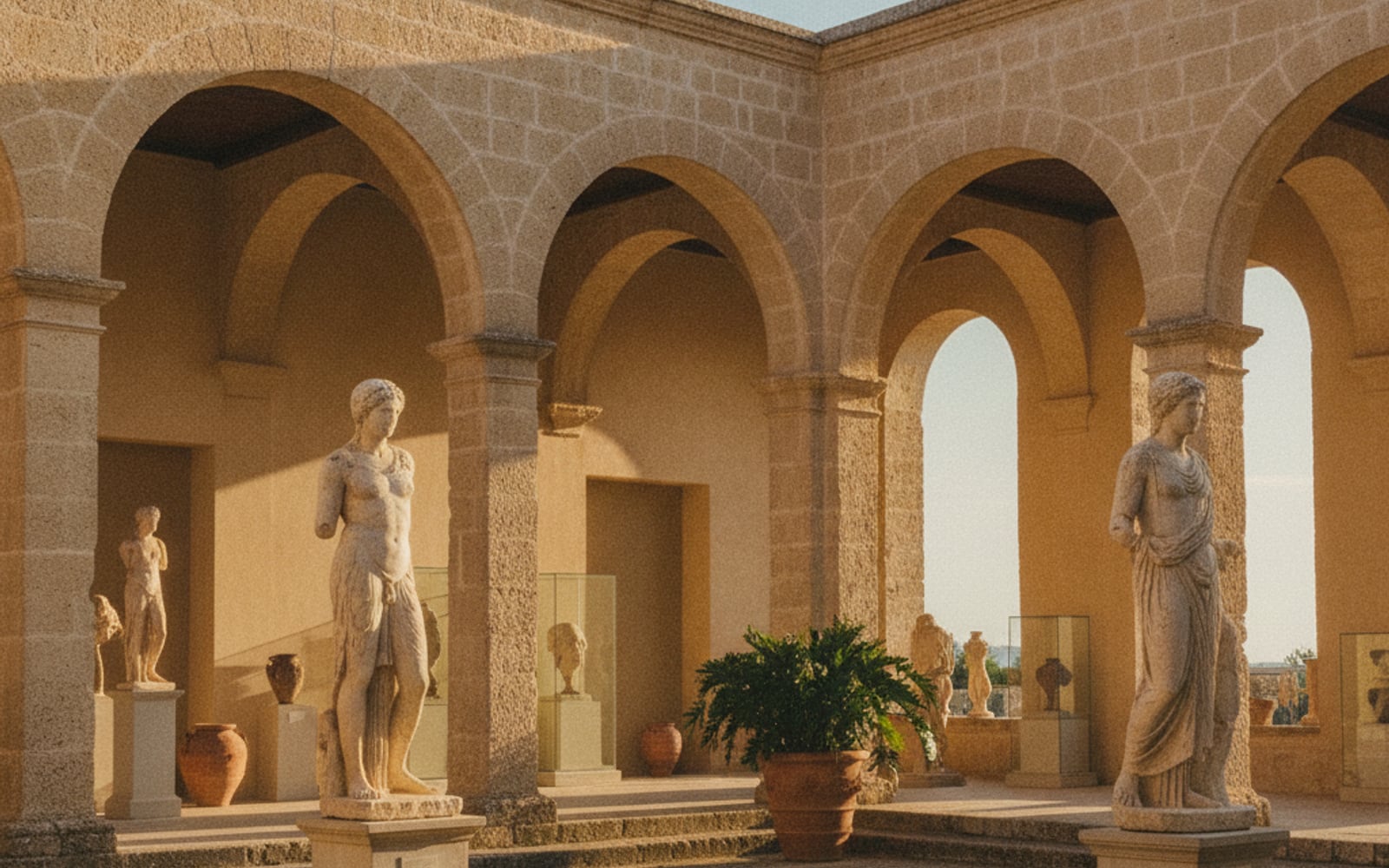
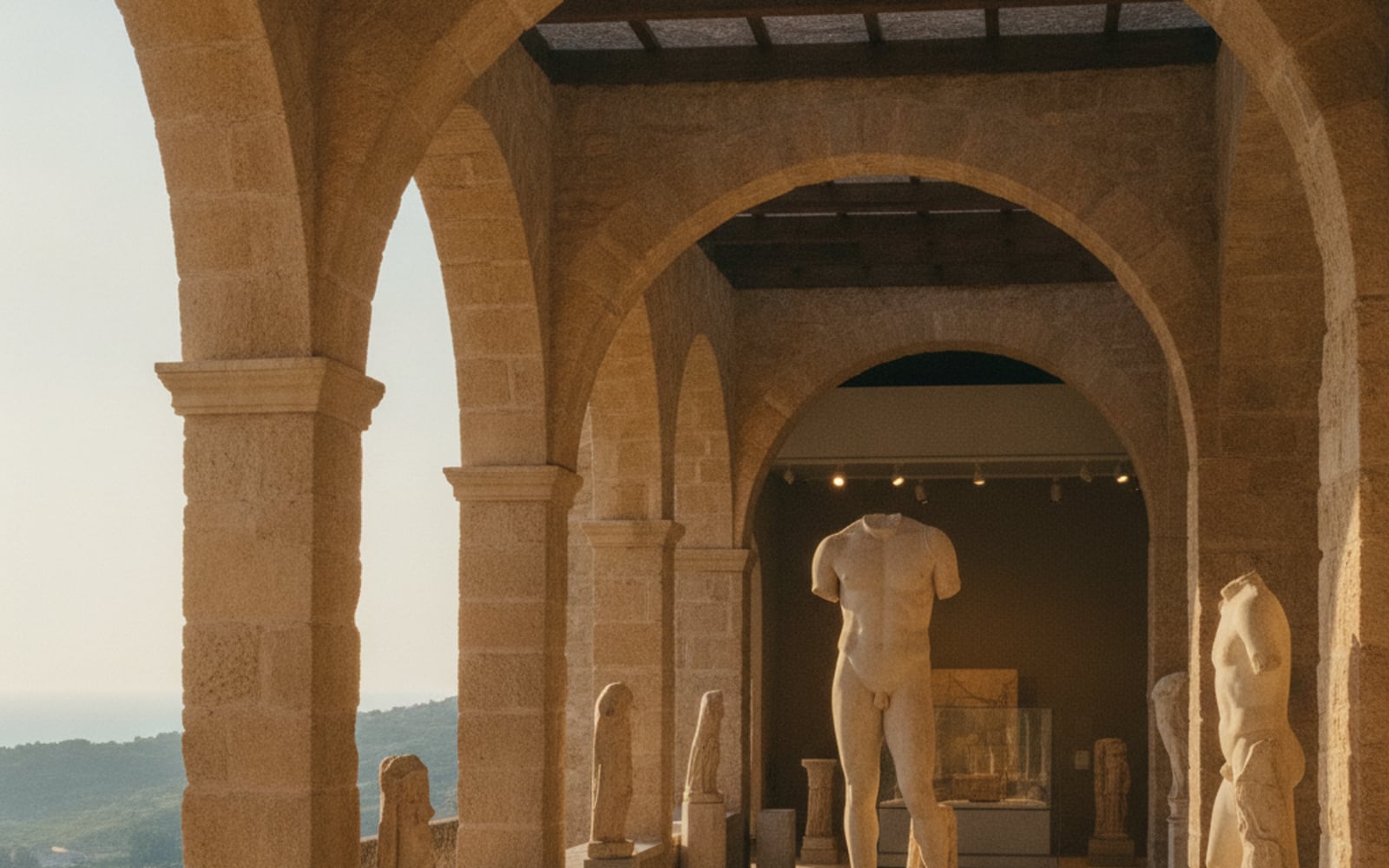
Calabria, Guardian of Millennia-Old History: A Cultural Renaissance Amidst Magna Graecia and Enchanted Villages
Calabria is experiencing a golden age in the enhancement of its invaluable historical and archaeological heritage, with significant investments and ambitious projects ranging from the glorious Magna Graecia to charming medieval villages. A wave of cultural rebirth is transforming the region into an unmissable destination for lovers of history, art, and the most authentic traditions, projecting its millennia-old past towards a future of sustainable development and widespread accessibility.

Calabria, a land of myths and legends, a crossroads of millennia-old civilisations, is rediscovering and enhancing its invaluable historical and archaeological heritage with renewed vigour. From the vestiges of Magna Graecia to majestic Norman and Aragonese castles, from museums housing priceless treasures to villages narrating centuries-old stories, the region is undergoing an intense phase of cultural rebirth. Ambitious projects, targeted funding, and a strategic vision are transforming Calabria's image, making it an increasingly attractive destination for conscious tourists seeking authenticity.
Investments and Strategies for a Prosperous Cultural Future
The enhancement of Calabrian heritage is supported by a substantial injection of resources and a long-term promotional strategy. The Ministry of Culture has unlocked funding of 5,785,112 euros for the years 2025-2027, as part of the 'Major Cultural Heritage Projects' Strategic Plan, as announced by Undersecretary Lucia Borgonzoni on 7 August 2026. These funds are earmarked for crucial interventions across the entire regional territory. Concurrently, an investment of over 9 million euros, drawn from PNRR funds, has been utilised for the redevelopment, energy efficiency, and accessibility improvements of 12 sites managed by the Calabria Regional Directorate of National Museums, interventions presented on 13 October 2026 in Cosenza by delegated director Fabrizio Sudano.
Calabria is not only investing internally but also projecting itself onto the national and international stage. Participation in the XXVIII Mediterranean Exchange of Archaeological Tourism (BMTA) in Paestum, from 29 October to 1 November 2026, saw the region actively promote its excellences, with prominent figures such as Fabrizio Sudano, Filippo Demma (Director of the Archaeological Parks of Crotone and Sibari), and Elena Trunfio (Director of the Archaeological Park and Museum of Locri). At a regional level, the 'Extraordinary Events: Enchanting Calabria' call for proposals saw 126 fundable applications (provisional rankings of 14-15 January 2026) for heritage promotion, alongside the Public Notice for Cultural Activities 2025, which supports cultural events and promotional activities to be concluded by 31 December 2026.
Magna Graecia Reborn: Discoveries and UNESCO Projects
Calabria's ancient heart beats to the rhythm of Magna Graecia, a legacy the region intends to elevate to global recognition. A bill, presented in November 2023 by MP Simona Loizzo, aims to nominate Magna Graecia sites for UNESCO World Heritage status, involving historically significant municipalities such as Reggio Calabria, Locri, Crotone, and Sibari. This ambitious project seeks to consolidate the universal value of an area that shaped Western civilisation.
Among the projects funded for the 2025-2027 period, a notable 1,308,600 euros are allocated for the recovery, restoration, and enhancement of a precious 5th-century BC shipwreck in Monasterace (RC), an eloquent testimony to ancient maritime trade. In Cirò Marina, the Temple of Apollo Aleo received 209,000 euros in 2025 for safety measures and the creation of a reception facility, improving the visitor experience. Other significant interventions include the maintenance of the Tauriani Archaeological Park in Palmi (120,000 euros), restoration and excavation at the Urban Archaeological Park of Vibo Valentia (80,000 euros), and the protection of underwater cultural heritage between Reggio Calabria and Vibo Valentia (87,000 euros), a fascinating front of research and conservation.
The European project 'OlympicEU' strengthened the bond between Calabria and Greece from 29 March to 2 April 2026, involving Crotone, Cirò Marina, and Squillace in twinning initiatives and cultural synergies that recall their common roots. In Crotone, on 8 and 9 October 2026, the Aiutante Tower of Charles V's Castle hosted the fourth edition of the Castello Crotone Award, with events dedicated to Magna Graecia. The Magna Graecia Foundation has also been awarded two PNRR tenders, in partnership with the Municipalities of Scilla, Riace, Stilo, and Pazzano, for the regeneration and enhancement of Magna Graecian heritage, demonstrating widespread and capillary commitment.
Museums and Rediscovered Treasures: New Accessibility Pathways
Calabrian museums are being renovated and reopening their doors, offering modern and accessible exhibition routes. Twelve sites of the Calabria Regional Directorate of National Museums have undergone significant redevelopment thanks to PNRR funds, improving not only energy efficiency but also accessibility for all visitors. Among the most anticipated reopenings, the Lametino Archaeological Museum in Lamezia Terme welcomed the public again on 24 October 2026, followed by the Mètauros Archaeological Museum in Gioia Tauro on 27 October 2026, after a long period of closure that had limited its use.A culturally significant event was the return of the marble sarcophagus of Eremburga of Mortain (2nd century AD) to the National Museum of Mileto (VV) on 23 October 2026, having come from the National Archaeological Museum of Naples (MANN). This initiative is not only the recovery of a work of art but also marks the first step towards the Year of the Normans 2027, an opportunity to celebrate another crucial phase of Calabrian history. To encourage the discovery of these gems, the 'Calabria
CulturaPass' has been launched, offering 20% discounts for specific routes with a single admission ticket, also involving the prestigious National Archaeological Museum of Reggio Calabria (MArRC), custodian of the Riace Bronzes.
Castles: Sentinels of History and Cultural Hubs
Calabria's castles, imposing witnesses to past eras, are establishing themselves as true cultural hubs and tourist attractions. The Aragonese Castle of Reggio Calabria, reopened after almost twenty years, recorded over 21,000 visits in 2025, with an income of 50,750 euros by 31 October, confirming its place among the city's main tourist destinations after the Riace Bronzes. The fortress has hosted over two hundred cultural events, demonstrating its capacity for revitalisation.
The Ducal Castle of Corigliano-Rossano, a National Monument since 1927, participated in the National Castle Days on 16 and 17 May 2026, with free visits and the presentation of the volume 'In Calabria. Studies, Restorations and Enhancement: What Future?', edited by Prof. Francesca Martorano. In Scalea (CS), the Talao Tower and Casa Armentano will benefit from 1,676,512 euros for seismic safety and conservative restoration between 2025 and 2027, ensuring the safeguarding of these assets. The Fortress of Le Castella in Isola Capo Rizzuto saw restoration interventions to improve cognitive and sensory accessibility, presented in October 2026. The 'Cultivating Culture' initiative in 2026 saw palaces, villas, and castles, including the Acton Estate in Calabria, open their doors to promote the indissoluble link between culture and agricultural landscape.
Festivals and Traditions: The Pulsating Heart of Calabrian Culture
Calabria is a vibrant land of festivals and events celebrating its cultural richness and identity-defining traditions. Reggio Calabria hosted the Gaia Festival – Near Future | Present Mediterranean from 14 to 31 October 2026, an opportunity for dialogue between art, culture, and scientific research. The 'Calabria Theatres in the City' festival brought together the programmes of theatres in the five Calabrian provincial capitals from 27 November to 19 December 2026, with a preview in Catanzaro's historic centre, promoting regional performing arts.
Tropea celebrated the 14th edition of the World Folklore Festival on 21 and 22 August 2026 in its enchanting historic centre, attracting visitors from all over. Summer 2026 also saw the Roccella Summer Festival, with concerts from 22 July to 21 August, and the Kaulonia Tarantella Festival, with ethnic dance workshops that enlivened Calabrian evenings. The Krimi Sound Festival concluded its edition on 24 August 2026 with a concert by Claudio Baglioni, while the BOB Fest, the first Calabrian festival dedicated to pizza and food and wine, took place in various locations from 26 to 29 June 2026, uniting taste and culture.
Historic Villages and Identity-Defining Traditions: Roots for the Future
The enhancement of historic villages and identity-defining traditions is a cornerstone of Calabria's cultural strategy. The 'Land of the Three Villages' project, funded by the European Union (Next
GenerationEU), took shape in March 2026, uniting roots and technology to revitalise Caccuri, Castelsilano, and Santa Severina. Four historic villages have received funds for recovery and enhancement, totalling 3,414,833 euros: Fiumefreddo Bruzio (595,000 euros), Oriolo (1 million euros), Badolato (950,000 euros for a diffused museum), and Savelli (870,000 euros), demonstrating a concrete commitment to safeguarding these jewels.
The Calabria Region participated in Roots-IN 2026 – International Exchange of Roots Tourism, in Matera on 10 and 11 November 2026, to enhance the connection with Calabrian communities abroad, a tourism segment that involved approximately 6.6 million people in Italy in 2024. A Strategic Project is underway for the 'Enhancement of the intangible heritage of cultural-linguistic deposits of linguistic minorities', protecting the Albanian, Griko, and Occitan dialects, a living expression of Calabrian identity. The regional strategy, presented in Paestum in October 2026, aims to connect the sea, inland areas, villages, museums, archaeological parks, and food and wine excellences for an integrated enhancement of the territory. The Mediterranea University of Reggio Calabria, through its Department of Agriculture, promotes scientific research to enhance identity matrices such as bergamot, as highlighted in an October 2026 event, uniting science and tradition.
Key Initiatives for Calabrian Culture:
PNRR Funding
Magna Graecia UNESCO Proposal
Monasterace Shipwreck Recovery
Museum Reopenings
Return of Eremburga's Sarcophagus
CalabriaCulturaPass
Castle Enhancement
'Land of the Three Villages' Project
Protection of Linguistic Minorities
Calabria, with its profound history and vibrant culture, is demonstrating an extraordinary ability to look to the future, valuing its roots. Investments, recovery projects, and promotional initiatives are creating a dynamic cultural ecosystem, capable of attracting visitors and generating development. The path is set: Calabria is establishing itself as a beacon of culture in the Mediterranean, a place where the past is not just memory, but vital nourishment for a richer and more conscious tomorrow.