Calabria, Cradle of Civilisation: A Journey into the Rebirth of Historical and Archaeological Heritage
Calabria is experiencing a phase of extraordinary enhancement of its invaluable historical and archaeological heritage, with ambitious projects ranging from the grandeur of Magna Graecia to the hidden treasures of its villages, from innovative museums to restored castles. A concerted effort is restoring lustre to millennia of history, projecting the region towards a future of sustainable and conscious cultural tourism.

Calabria, a land of myths and legends, a crossroads of peoples and millennia-old cultures, reveals itself today more than ever as an authentic treasure trove of history and archaeology. From the imposing vestiges of Magna Graecia to the charming medieval villages, from museums housing invaluable artefacts to castles narrating eras of splendour and battles, the region is experiencing a period of intense and profound enhancement of its heritage. This commitment is not just a duty towards the past, but a strategic vision for the future, capable of attracting visitors from all over and generating sustainable development, rooting Calabrian identity in a global context. The goal is to move beyond mere conservation to embrace a dynamic and immersive narrative, making history accessible and alive for everyone.
Magna Graecia: A Heritage Reborn and Innovated
Calabria is the beating heart of Magna Graecia, and attention to this historical period is more vibrant than ever today, with projects that combine the rediscovery of roots with the most advanced technologies.
The Magna Graecia Park Project: Vision and Development
An initiative of epic scale is the Magna Graecia Park, an ambitious project that promises to redefine the tourist-cultural offering of Southern Italy. With a projected investment of over 1 billion euros over twenty years, this thematic and cultural park, initially presented in Crotone on 16 December 2024, found its definitive location in Belcastro, in the Magliacane area, as announced on 14 August 2025. Extending over an area of more than 1.6 million square metres, the park will reproduce life-sized historical buildings and offer innovative attractions, utilising immersive technologies such as augmented reality and holographic theatres. The estimates are impressive: it is expected to create over 1,700 direct and indirect jobs and provide 3,000 beds in accommodation facilities, an unprecedented economic and cultural driving force for the region.
Archaeological Sites: Restorations and New Installations
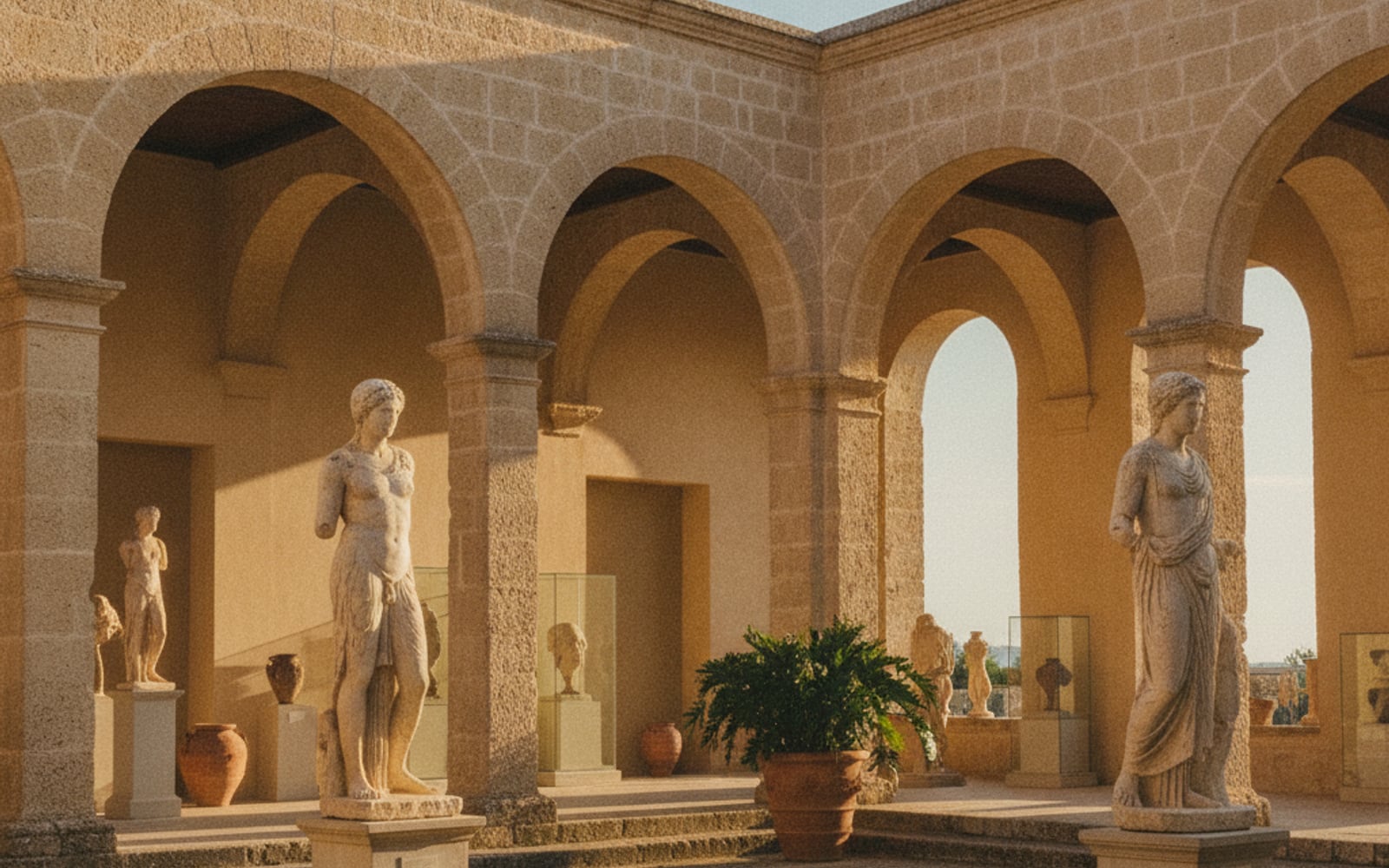
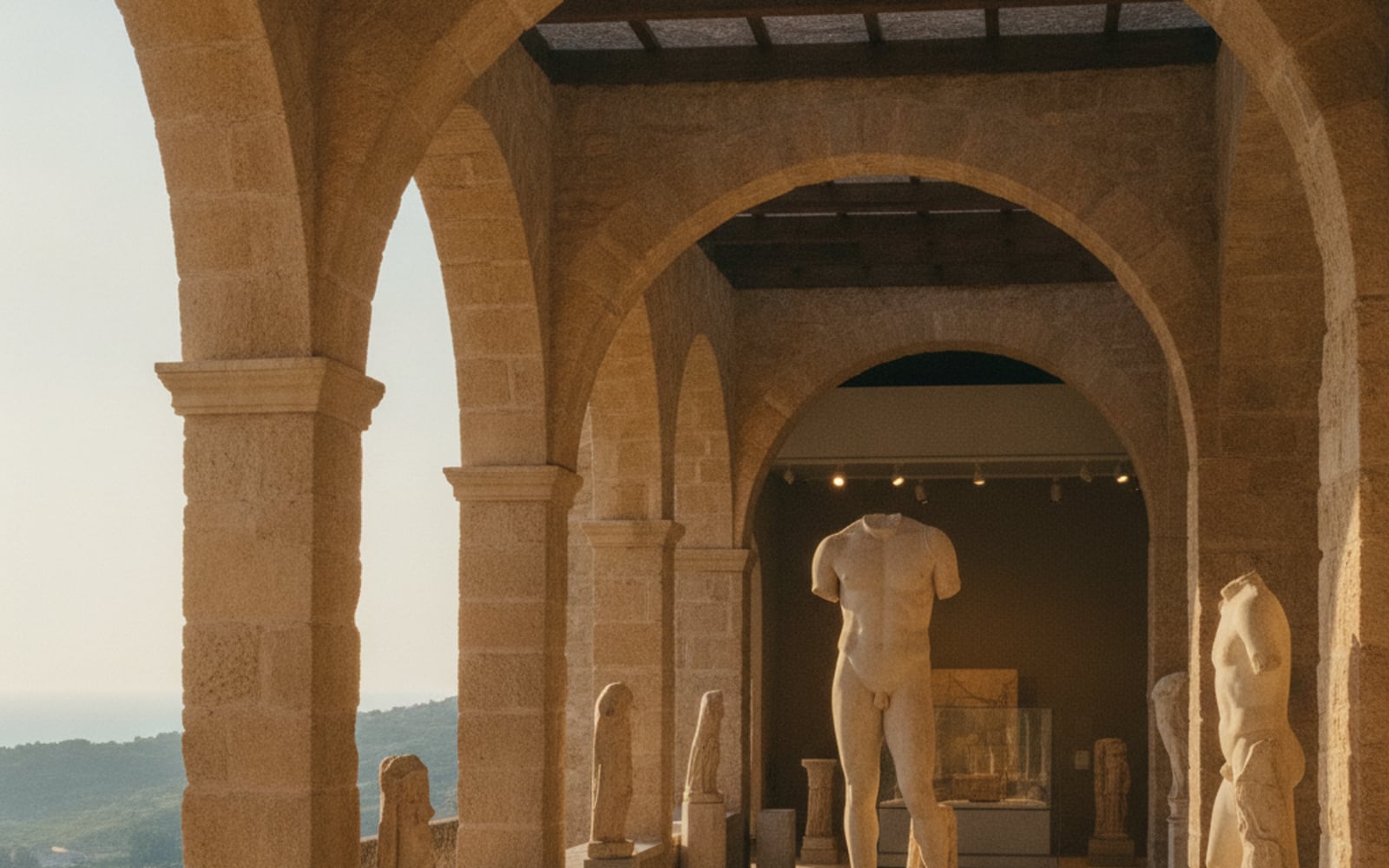
The enhancement of Magna Graecia also involves the recovery and innovation of its most emblematic archaeological sites. The National Archaeological Museum of Capo Colonna in Crotone recently inaugurated a new multimedia exhibition, celebrating the long-awaited return of the 'Treasure of the Goddess' with engaging videos and 3D models. This intervention was made possible thanks to a mix of PNRR funds, resources from the 'Antica Kroton' project, and state funding, with the valuable collaboration of the Carabinieri Unit for the Protection of Cultural Heritage. In parallel, the Temple of Apollo Aleo in Cirò Marina received funding of 209,000 euros, earmarked for securing the site and constructing an energy-self-sufficient reception facility. This intervention is part of a broader 8.7 million euro plan, approved on 21 October 2025, aimed at safeguarding and enhancing Calabria's cultural heritage.
Museums and Castles: Guardians of Calabrian Memory
Calabria is dotted with museums and castles that represent true bastions of history and art, now subject to significant renovation and accessibility interventions.
The Museum Network: Accessibility and Digital Innovation
The Regional Directorate of National Museums of Calabria has embarked on an ambitious modernisation path, benefiting from an investment of approximately 10 million euros through PNRR funds. This funding is allocated to the renovation of 12 cultural sites, with the primary objective of improving their accessibility and energy efficiency. The interventions, presented on 13 October 2026 in Cosenza by delegated director Fabrizio Sudano, include the implementation of tactile-paving routes for the visually impaired, tactile maps, electronic canes, and the introduction of low-impact golf carts to facilitate movement. Among the affected sites are the National Archaeological Museum and Park of Scolacium (Catanzaro), the Archaeological Museum and Park of Locri, the 'Vito Capialbi' National Archaeological Museum of Vibo Valentia, and the Lametino Archaeological Museum of Lamezia Terme. A highly significant event will be the return of the marble sarcophagus of Eremburga of Mortain (2nd century AD) to the National Museum of Mileto (VV) on 23 October 2026, coming from the National Archaeological Museum of Naples (MANN), in view of the Year of the Normans 2027. The University of Calabria (Unical) has also contributed to this cultural ferment, inaugurating two new museum installations on 23 September 2025, one for zoology and one for mineralogy and petrography, which offer immersive and augmented reality experiences, making science and natural history more engaging.
Castles: Rediscovered and Enhanced Fortresses
Calabrian castles, silent sentinels of a glorious past, are at the heart of important recovery and enhancement projects. The Castle of Palizzi (RC) saw the completion of the second phase of restoration on 10 November 2025, thanks to 2 million euros in funding, which breathed new life into this imposing fortress. For the Castle of Cirò, the definitive project for the first phase of restoration, valued at 2 million euros, was deposited with the Municipality by 27 February 2021, providing for the securing and full usability of the manor, including the installation of a planetarium in the evocative Norman Tower, a blend of history and science. The Castle of Santa Severina received a prestigious recognition, the 'Targa di Segnalazione' (Commendation Plaque) from the Italian Institute of Castles, the first in Calabria to receive such an honour for the excellence of its restoration and public accessibility. Finally, on 2 October 2026, the restoration project for the Norman-Swabian Castle of Rende was approved, a decisive step for the protection of the city's historical identity and its future cultural enjoyment.
Historic Villages and Traditions: The Beating Heart of Calabria
Calabrian villages, with their cobbled streets and ancient dwellings, represent the most authentic soul of the region, custodians of centuries-old traditions and now protagonists of important regeneration initiatives.
Village Regeneration: Projects and Recognitions
The 'Lands of the Three Villages' project, launched on 25 March 2026, is a virtuous example of territorial synergy. It unites Caccuri, Castelsilano, and Santa Severina (KR) with NextGenerationEU funding (Investment 2.1 Attractiveness of Villages), aiming to revitalise these historic centres through an innovative approach that combines cultural enhancement and sustainable tourism development. The Magna Graecia Foundation is actively involved in PNRR projects for the cultural and social regeneration of small historic villages in Southern Italy, recognising their crucial role in the identity fabric. Many Calabrian villages are already recognised for their invaluable historical and cultural worth. Among the 'Authentic Villages of Italy', as of 5 January 2026, there are 13 municipalities in the province of Cosenza, including Laino Borgo and Laino Castello. Gerace, Tropea (awarded 'Village of Villages' in 2021), Aieta, Stilo, and Bova (considered the capital of Greek Calabria, where the Griko dialect is still spoken) are listed among the most beautiful villages to visit in 2025, testifying to the richness and diversity of Calabrian heritage. The 'Village of Fables' in Belcastro has already demonstrated considerable success, attracting thousands of families and positively influencing the choice of location for the future Magna Graecia Park, showing how playful enhancement can be a driver of development.
Festivals and Events: Celebrating Cultural Identity
Calabria also actively promotes itself through a rich calendar of festivals and events that celebrate its identity and traditions. The Region enthusiastically participated in the XXVIII Mediterranean Exchange of Archaeological Tourism (BMTA) in Paestum from 29 October to 1 November 2026, with Regional Councillor for Tourism Giovanni Calabrese and director Gina Aquino, to enhance archaeological heritage and relaunch cultural tourism. The second edition of the Calabria Wine Expo will be held on 5 and 6 December 2026 in Villa San Giovanni (RC), celebrating oenological excellence and the identity traditions linked to the territory.
The musical festival scene is equally vibrant:
Color Fest
Somewhere Festival
Be Alternative Festival
Regarding identity traditions, the 'Network of Fragile Identities' project was launched in Soriano Calabro on 19 November 2026, with the contribution of the Ministry of Culture, to rediscover and hand down the confectionery tradition of mostaccioli, ancient crafts, and local historical-artistic heritage. UNPLI Calabria, under the guidance of Regional President Filippo Capellupo, held its Regional Council in Falerna on 15 November 2026, reaffirming the irreplaceable role of the Pro Loco associations in protecting cultural heritage and promoting local traditions.
Other notable events that animate the region include:
National Astrea Award
Tarsia Theatre
Assaporagionando - The Mediterranean Salon of Typical Products
A.M.A. Calabria | The Night of Gospel
Living Nativity Scene of Panettieri
Calabria, therefore, is not just a tourist destination for its breathtaking beaches or wild mountains, but a leading cultural destination, a true open-air museum that is successfully reinventing itself. The joint commitment of institutions, associations, and local communities is leading to tangible results, transforming the vast historical and archaeological heritage into a driver of development and a unique opportunity to rediscover the deep roots of this land. Through innovative projects, meticulous restorations, and a vibrant cultural offering, Calabria confirms itself as a 'cradle of civilisation', ready to welcome anyone wishing to immerse themselves in a journey through millennia, between the grandeur of Magna Graecia and the authenticity of its villages, between the wisdom of ancient crafts and the vitality of its festivals. An invitation to explore a region that, with pride and foresight, is writing a new chapter in its glorious history.