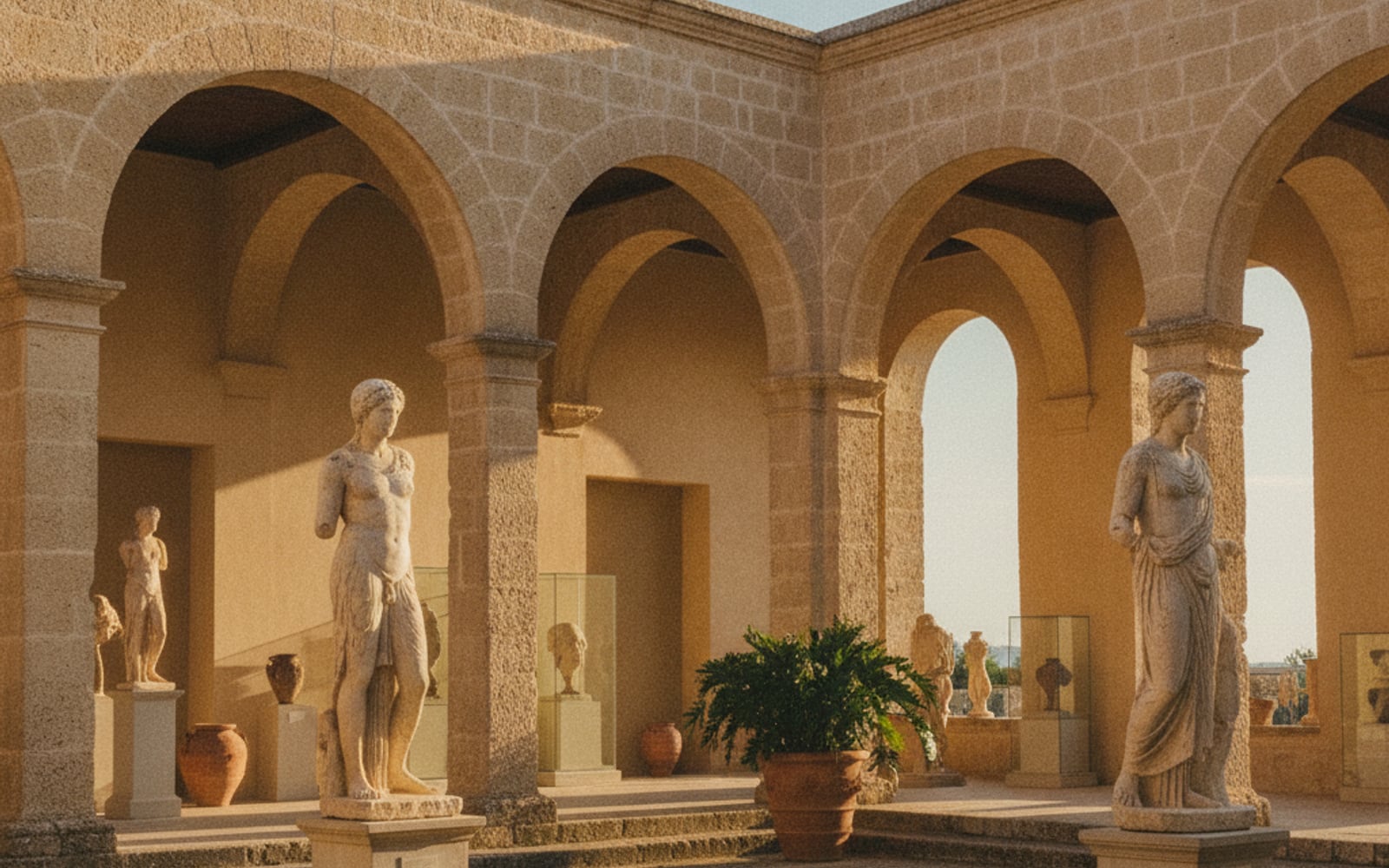
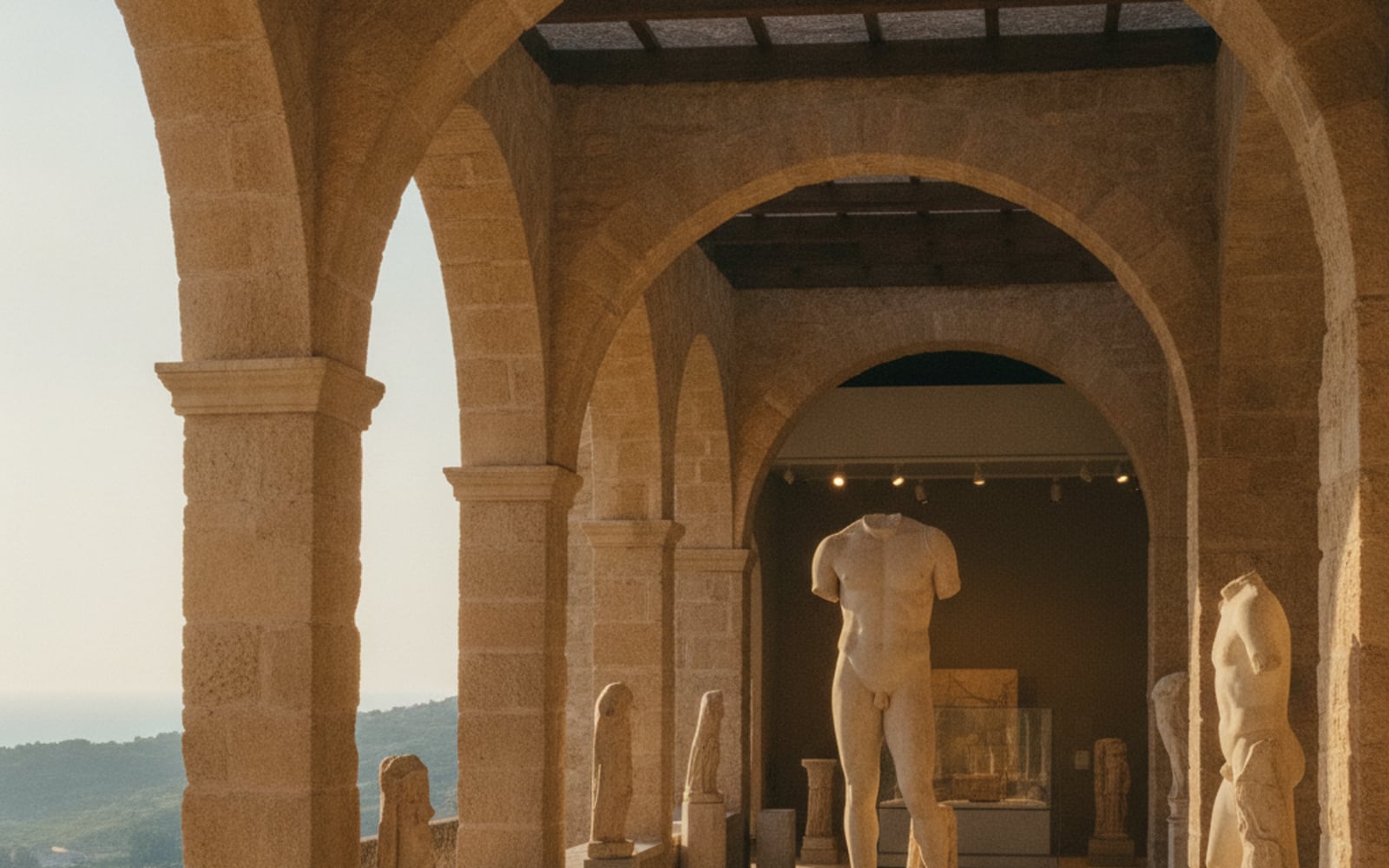
Calabria, Keeper of History: A Journey Through Magna Graecia, Castles, and Millennial Traditions
Calabria is establishing itself as a crossroads of civilisations, where the glorious past of Magna Graecia merges with the resilience of historic villages and the vibrancy of contemporary festivals. A constant commitment to enhancing its invaluable heritage is redefining the region's cultural identity, attracting visitors from all over.

Calabria, a land of myths and legends, is experiencing an era of rebirth and profound enhancement of its invaluable historical and archaeological heritage. From Reggio Calabria to Cosenza, passing through perched villages and coasts bathed by two seas, the region reveals itself as an open-air museum, a stage where millennial history and identity traditions are the absolute protagonists. The joint commitment of institutions and local communities is leading to extraordinary results, positioning Calabria as an essential destination for quality cultural tourism.
The Treasure of Magna Graecia and Renovated Museums
The pulsating heart of Calabrian archaeology beats to the rhythm of Magna Graecia, a civilisation that left an indelible mark on the territory. The Archaeological Parks of Crotone and Sibari, for example, were protagonists at the XXVIII Mediterranean Exchange of Archaeological Tourism, held in Paestum from 29 October to 1 November 2026, where innovative projects and strategies for their enhancement were presented. On this same occasion, the Calabria Regional Directorate of National Museums promoted the 'Calabria
CulturaPass', an initiative offering a 20% discount on cumulative tickets to access various museum sites, including the iconic National Archaeological Museum of Reggio Calabria (MArRC).
The MArRC, custodian of the Riace Bronzes, recorded 228,600 visitors and revenues of 1.08 million euros in 2024, confirming itself as a cultural beacon of the region. But the commitment does not stop there: a total investment of 1.25 million euros has been allocated to 10 interventions in 2025, as part of the Ministry of Culture's 2025-2027 Triennial Public Works Programme for Cultural Heritage. Twelve cultural sites belonging to the Calabria Regional Directorate of National Museums have been renovated thanks to PNRR funds, improving accessibility and energy efficiency. Some of these, such as the Lametino Archaeological Museum, reopened between 24 and 27 October 2026, demonstrating a dynamic reactivation of the cultural fabric. A highly resonant event was the return of the sarcophagus of Eremburga of Mortain (2nd century AD) to the National Museum of Mileto on 23 October 2026, in view of the anticipated 'Year of the Normans 2027'.
Strategies for the Archaeological Future
Collaboration is key: a memorandum of understanding for the enhancement of Magna Graecia artefacts was signed on 29 July 2022 between the Calabria Regional Directorate of Museums and the territorial Superintendencies, a fundamental step for coordinated and effective heritage management. The Fortress of Le Castella in Crotone, with its 113,700 visitors in 2024, is another example of how the past can be a driving force for the present and the future.
Millennial Fortresses and Enchanted Villages
Calabria is dotted with over 100 castles, coastal towers, and inland fortifications, silent witnesses to past eras. These imposing structures are not just historical relics, but true centres of cultural life. The Castle of Santa Severina, for example, received the prestigious 'Commendation Plaque' from the Italian Institute of Castles, the first in Calabria to receive such recognition for authenticity, conservation, and usability, the result of a restoration effort that began over 30 years ago. A model of excellence that demonstrates how care and vision can transform a monument into a major attraction.
The Aragonese Castle of Reggio Calabria, as of 31 October 2025, recorded 21,279 visits and 50,750 euros in revenue, almost doubling the 11,500 visits of 2022 and hosting over 200 cultural events. City councillor Giovanni Latella highlighted the fortress's success, emphasising its crucial role in the city's cultural life.
The Rebirth of Historic Villages
Calabrian historic villages, gems nestled between mountains and sea, are at the heart of important recovery projects. Funding of 3,414,833 euros, announced on 22 November 2021 by the Ministries of Culture and Tourism, has been allocated to four of these gems: Fiumefreddo Bruzio (595,000 euros), Oriolo (1 million euros), Badolato (950,000 euros for a diffused museum), and Savelli (870,000 euros). The Magna Graecia Foundation is also involved in PNRR projects for the regeneration of iconic villages such as Scilla, Riace, Stilo, and Pazzano, aiming to preserve their authenticity and relaunch their tourist and residential appeal.
Festivals, Traditions, and the Soul of Identity
Calabria is a land that celebrates its culture with a myriad of festivals and events that animate the entire year. The Calabria Region has launched 'Calabria Teatri in Città' (Calabria Theatres in the City), a new festival that unites the programmes of the theatres in the five provincial capitals from 27 November to 19 December 2026, with special tickets at 10 euros for under 30s, an initiative aimed at making culture accessible to all. The 'Kleos Music Fest – Radici Sonore' (Sound Roots) will be held from 23 to 30 November 2026 in Montalto Uffugo and Castrolibero, offering eight days of live music to promote emerging talents and national artists, co-financed by the Tourism Department of the Calabria Region.
Other notable events include the 'Festival delle Narrazioni 'Variazioni'' (Narrative Festival 'Variations') in Roccella (7-29 November 2026), the 'Festa del Cioccolato' (Chocolate Festival) in Acri (7-8 November 2026), and the XX National New Wine Exhibition in Aiello Calabro (14 November 2026). The calendar is further enriched with future appointments such as the Color Fest (11 August 2027), the Astrea National Award (5 December 2026), the Tarsia Theatre season (from 28 November 2026 to 10 April 2027), 'Assaporagionando - Il Salone Mediterraneo dei Prodotti Tipici' (Savouring - The Mediterranean Exhibition of Typical Products) in Acri (18-20 December 2026), 'A.M.A. Calabria | La Notte del Gospel' (The Gospel Night) in Lamezia Terme (27 December 2026), and the evocative Living Nativity Scene of Panettieri (25 December 2026).
Safeguarding the Roots
A regional bill, presented on 12 November 2026, aims to safeguard and promote 'Calabrian identity cultural events', defining them as manifestations with temporal continuity and a link to the region's history and traditions, including those of the Arbëreshë, Greek, and Occitan linguistic minorities. This commitment extends to promoting roots through participation in events such as Roots-IN 2026 (10-11 November in Matera), the International Tourism Exchange of Origins, to promote itineraries linked to the rediscovery of Calabrian cultural heritage. On 16 November 2026, in Reggio Calabria, the 'Corrado Alvaro: People in Aspromonte' Literary Park was established, a significant step for the enhancement of the literary memory and identity roots of Aspromonte. Among the most celebrated traditions, the Varia di Palmi is recognised as UNESCO Intangible Heritage, a symbol of a culture that renews and transmits itself.
Key Initiatives for Cultural Enhancement:
CalabriaCulturaPass
PNRR Investments
Return of Eremburga's Sarcophagus
Commendation Plaque for Santa Severina Castle
Funding for Historic Villages
'Calabria Teatri in Città' (Calabria Theatres in the City)
'Identity Cultural Events' Bill Proposal
'Corrado Alvaro' Literary Park
Calabria, with its millennial history and vibrant culture, is demonstrating an extraordinary ability to look to the future without forgetting its roots. The commitment to enhancing historical and archaeological heritage is not just an act of conservation, but a strategic investment for the sustainable development of the territory, capable of attracting conscious tourism and strengthening the identity of a region that still has much to tell and offer to the world. 'Calabria Dreamin'' continues to dream and inspire dreams, through the rediscovery and celebration of its most authentic soul.