Palmi-Calabria: Scrisi, The Fountain of Two Saints and Lost History
Explore Monte Sant'Elia in Palmi, where history and legend intertwine. Discover the Fountain of Two Saints and the mystery of the Byzantine monastery in Calabria.
Monte Sant'Elia: Between History and Legend on the Costa Viola
Immerse yourself in the timeless beauty of the Costa Viola, following the State Road that winds from Palmi towards the Piani della Corona. Amidst ancient olive groves, maritime pines, and chestnut forests, you reach the enchanting Monte Sant'Elia, southwest of Palmi. Here, lush nature frames breathtaking views of the Strait of Messina and the Aeolian Islands.
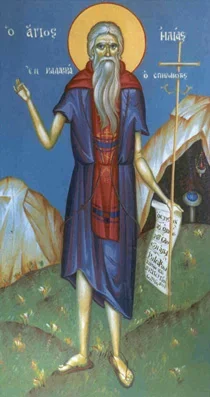
At the top of the mountain, nestled among the trees, stands a small church, rebuilt in 1804, dedicated to Saint Elias the Younger. This Sicilian saint, in the 9th century, founded a monastery in this area, then known as the 'Turma delle Saline'. But Monte Sant'Elia is not just history: it is also the stage for an ancient legend. It is said that the monk Elias, annoyed by the devil, kicked him so powerfully that it gave birth to the Aeolian Islands and the Stromboli volcano, leaving an indelible mark in the so-called 'Devil's Stone'. A tale that blends the sacred and the profane, making this place even more fascinating.
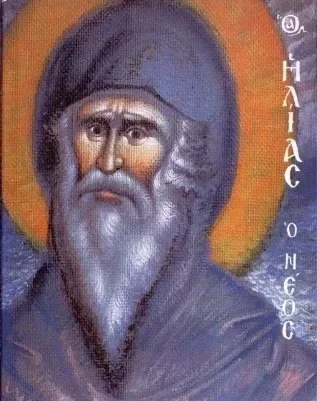
Monte Sant'Elia, guardian of ancient legends and breathtaking views of the Costa Viola.
Scrisi, The Fountain of Two Saints and the Monks' Path
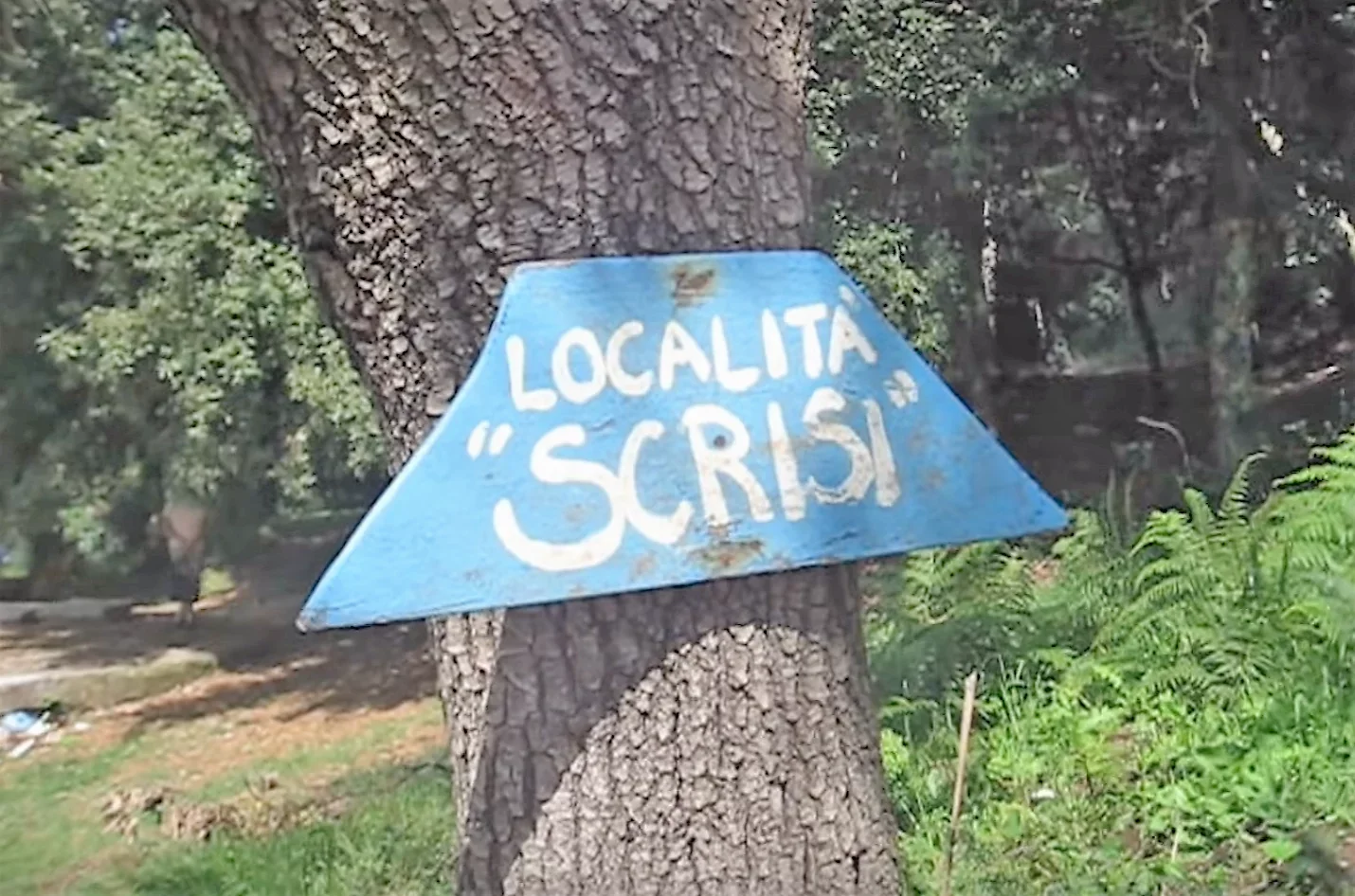
Continuing from the small church of Sant'Elia, a dirt pedestrian path leads into the woods, taking you to the locality of Scrisi. This place, perhaps already trodden by Saint Elias and the monks of his monastery, is an enchanting basin, open towards the sea and surrounded by forests, where a stream once flowed. The panorama that unfolds is of disarming beauty: the Strait of Messina, Sicily, the Aeolian Islands, and three active volcanoes are offered to the gaze.
Scrisi has been renowned since antiquity for its spring water sources. Today, a recently built fountain can be admired, but traces of the past are everywhere: a basin perhaps used as a watering trough, a large disused cistern, and the remains of a much older fountain. On the left side, brick and stone seats tell stories of rudimentary restorations, while a rare photo from 1945 reveals an ancient arch, perhaps part of a house or a monumental fountain. From the spring, a path overlooking the sea, known as the 'Monks' Path', connects Monte Sant'Elia with Madonna delle Nevi, where the ruins of the Imperial Monastery of Saint Elias the Younger on the Piani della Corona of Seminara have been identified.
The evocative monks' path winding through the vegetation, offering unique glimpses of the Costa Viola.
In the Footsteps of the Byzantine Past: An Archaeological Journey
The area of Palmi and the Piani della Corona is a true treasure trove of history, a territory that invites an exciting 'investigation of lost history'. Through an exploratory approach and the study of medieval Byzantine literary sources, particularly the lives of Italo-Greek saints, unprecedented discoveries emerge that rewrite the knowledge of the territory.
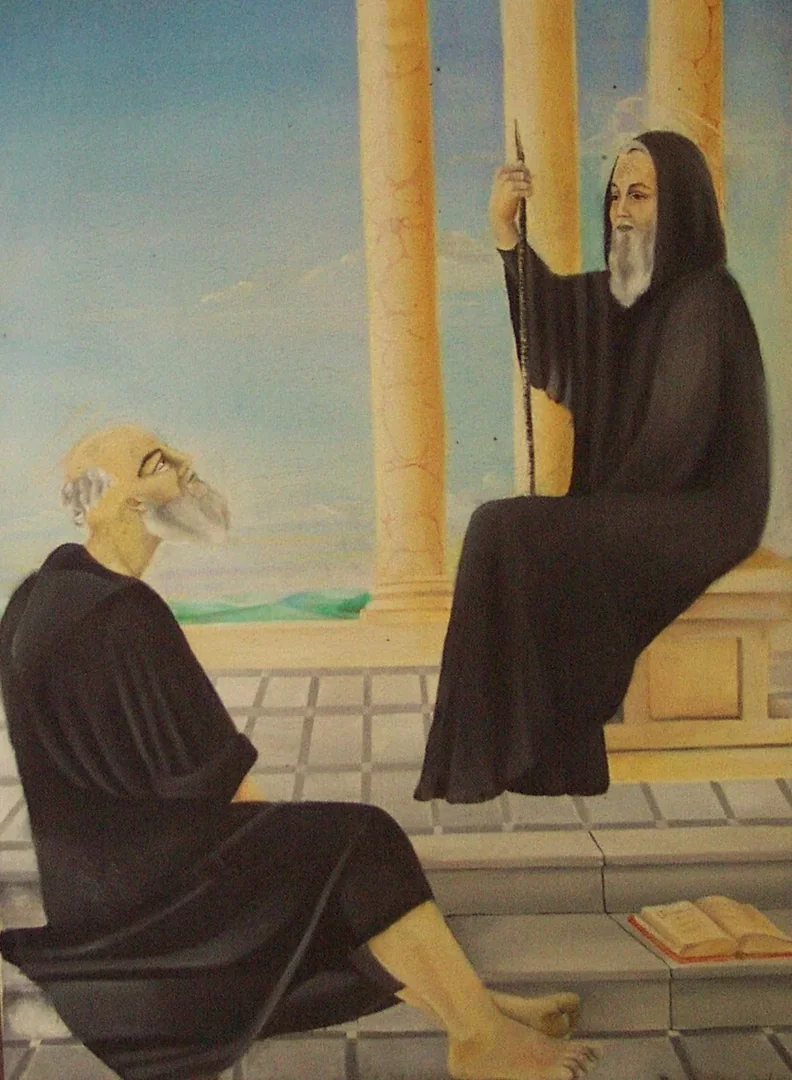
Among the most significant revelations are: the identification of the Imperial Monastery of Saint Elias on the Piani della Corona, the meeting place of the two saints Elias in 'Caforchie', and the etymology of names such as 'Piani della Corona' (linked to the Byzantine Emperor Leo VI) and 'spiaggetta Leone'. Research has also made it possible to identify the village of Sicros on Monte Sant'Elia, an ancient center of the Valle delle Saline, and to intertwine history with other Byzantine saints such as Saint Nicodemus of Mammola and Saint Elias Speleotes. These studies demonstrate how Calabria is a crossroads of millennia-old cultures and stories, ready to be rediscovered by those who can look beyond the obvious, just like a modern Sherlock Holmes of history.