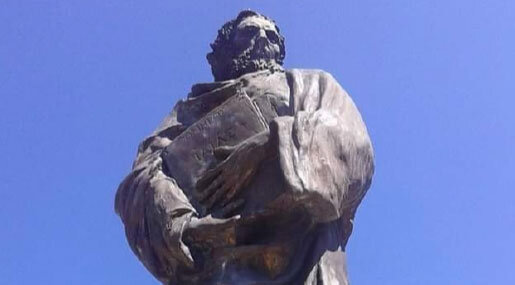
Forgotten Calabria: Barlaam and Leonzio Pilato, the Obscure Giants of the Renaissance
Discover Barlaam of Seminara and Leonzio Pilato, the forgotten Calabrian geniuses who brought Greek culture to the Renaissance.
Barlaam of Seminara (1290-1348): The Calabrian Who Brought Greece to the West
Born in Seminara, Calabria, within a Greek-speaking community, Barlaam was a theologian, philosopher, mathematician, and cultural mediator between East and West. Educated in Calabrian Basilian monasteries, he absorbed classical Greek philosophy (Plato and Aristotle) alongside Byzantine theology.
Moving to Constantinople in 1326, he became an esteemed abbot and teacher, but his criticism of hesychasm brought him into conflict with Gregory Palamas, forcing his return to the West, where he became Petrarch's Greek tutor.
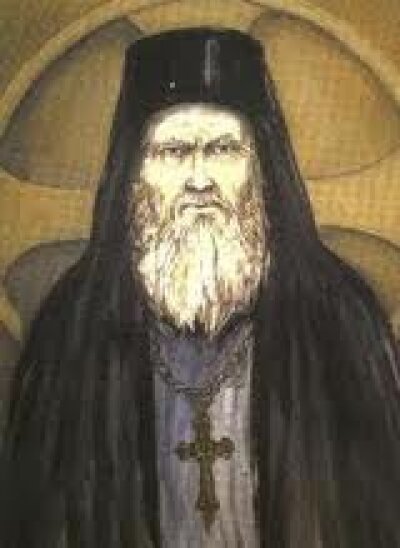
Barlaam of Seminara (1290-1348): the Calabrian philosopher and theologian who brought the Greek language to the West.
History's Betrayal: When the South Disappears from Textbooks
Barlaam of Seminara and his Calabrian disciple Leonzio Pilato were revolutionary figures. Without them, Petrarch would never have dreamed of reading Plato in Greek, and Boccaccio would not have written the Genealogia deorum gentilium, cornerstone of Renaissance mythology. Yet while Petrarch and Boccaccio resound in classrooms, Barlaam and Leonzio remain ghosts.
A cultural bias has long treated the South as a periphery, failing to acknowledge that the seeds of the Renaissance grew in those very lands. Barlaam taught in Constantinople and Avignon and brought Greek to the West; Leonzio Pilato gifted Europe the Iliad and the Odyssey.
Byzantine Calabria as a crossroads between East and West at the dawn of European Humanism.
Cultural Justice for Calabria's Forgotten Glory
The story of Barlaam and Leonzio is that of a Calabria where Greek was spoken in the streets and Basilian monasteries preserved ancient manuscripts. Seminara was then a beacon of learning. In his letters, Petrarch thanks Barlaam as his master, while Boccaccio wrote that without Leonzio Europe would have remained blind.
Ignoring them is not just a historical oversight: Byzantine Calabria, Naples, and Palermo were centers of knowledge rivaling Florence or Venice. Reclaiming their legacy dismantles centuries-old prejudices against Southern Italy.
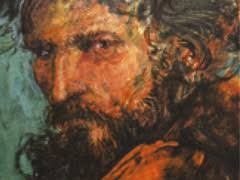
Leonzio Pilato (†1365/66): the Calabrian monk who translated the Iliad and the Odyssey for Europe.
Leonzio Pilato (†1365/66) and the Pride of Hybrid Roots
Born in Calabria, likely in Seminara, to a Greek family, Basilian monk and pupil of Barlaam, Leonzio Pilato was the first translator of Homer into Latin. Brought to Florence by Boccaccio in 1360, he inaugurated the teaching of Greek in Europe at the Studium Florentinum and translated the Iliad and the Odyssey before dying in a shipwreck in 1365/66.
Barlaam and Leonzio embody a proud, Mediterranean identity capable of speaking to Constantinople, Avignon, and Florence. Remembering them restores Calabria to its rightful place as a beating heart of European history.