What to See along Costa Viola in Calabria: A Journey through Wild Cliffs, Villages, and Legendary Flavors
A complete guide on what to see along Costa Viola in Calabria: 13 unmissable stops between secret beaches, fairy-tale fishing villages like Scilla, heroic vineyards, and authentic coastal flavors.
Tonnara di Palmi Seen from the Tauriani Archaeological Park Tower
When asking what to see in Calabria for an authentic and breathtaking journey, the Costa Viola reveals itself from the first moment as a natural theater without equal. Looking out through the ancient stone watchtower openings at the Tauriani Archaeological Park in Palmi, the view captures a stunning chromatic contrast: the white pebbles and sand of the Tonnara lapped by waters shifting from emerald turquoise to deep sapphire.
This high promontory preserves the ancient heritage of Taureana, where Brettian and Roman civilizations once thrived above the sea defending the coast against maritime raids. Admiring the coast from this angle reveals the age-old spirit of coastal Calabria: a land sculpted by nature and steeped in proud, unforgettable beauty.
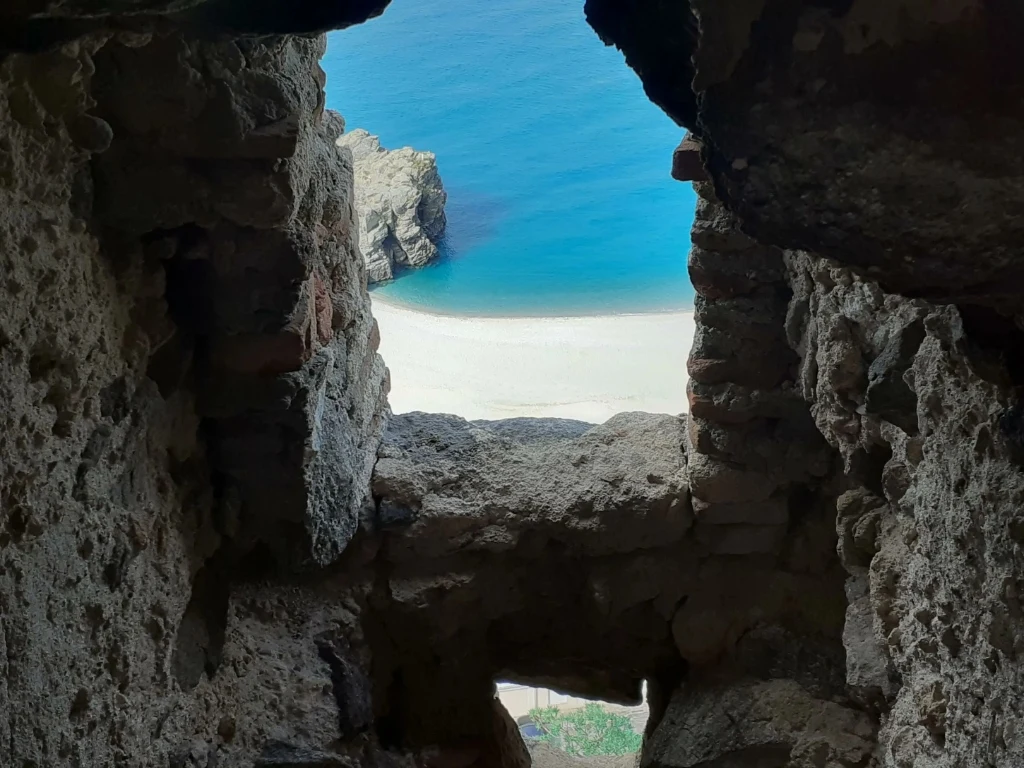
View of Tonnara di Palmi framed through the stone watchtower at Tauriani Archaeological Park.
Tour among the Terraced Vineyards of Costa Viola: Heroic Viticulture
Exploring Costa Viola means discovering one of the boldest agricultural landscapes in the Mediterranean: terraced vineyards hanging dramatically over the Tyrrhenian Sea. Here, winemaking is not merely agricultural work, but an heroic feat against dizzying cliffs supported by miles of centuries-old dry stone walls known as 'armacie'.
Walking among these vines overlooking the Strait of Messina reveals the tireless dedication of Calabrian winemakers who still harvest grapes entirely by hand along steep paths. From these sun-drenched vineyards come vibrant wines rich in minerality, such as Zibibbo di Bagnara, Greco Nero, and Prunesta: rare bottles encapsulating the sea and rock.
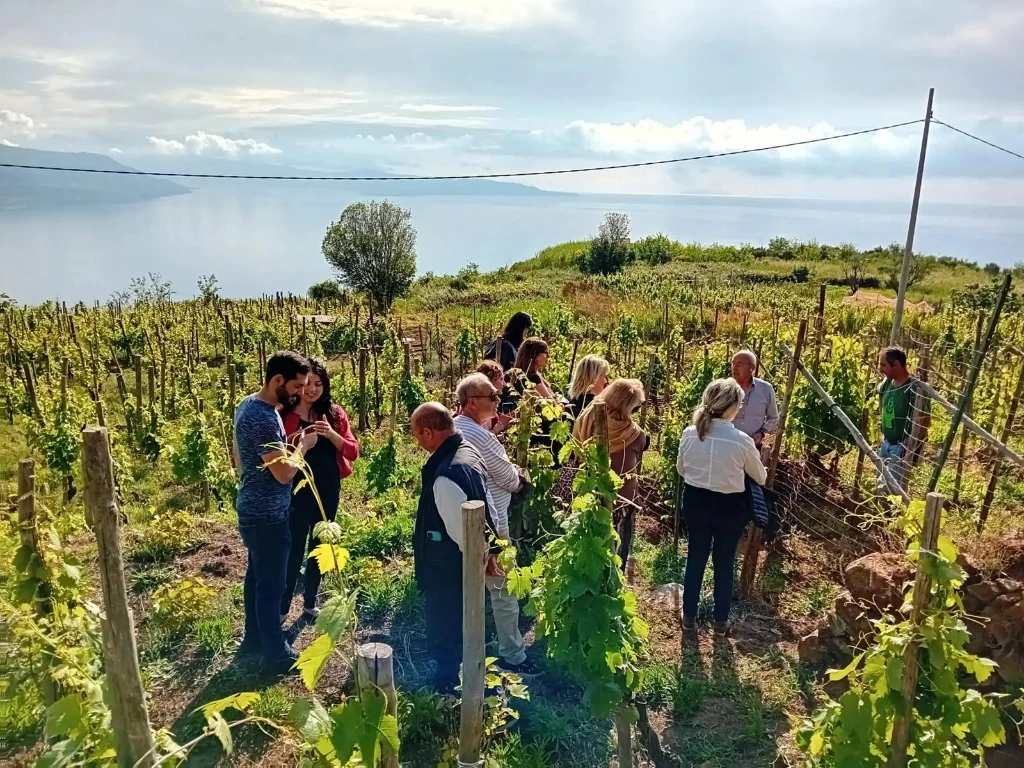
Guided tour through the terraced vineyards of Costa Viola, a prime example of heroic viticulture.
The Feluca and Ancient Swordfish Hunting in Scilla
In the mythical waters caressing Scilla, an ancient seafaring tradition has survived for millennia: swordfish hunting aboard the feluca. This unique vessel is celebrated for its towering central metal mast from which the lookout scans the sea surface, and its long bow footbridge where the harpooner stands ready.
First documented by Greek historian Polybius over two thousand years ago, this hunt is a fair and ritualized duel between man and the monarch of the Strait. Watching the felucas navigate the waters off Scilla at dawn or dusk remains one of the most mesmerizing sights in Calabria.
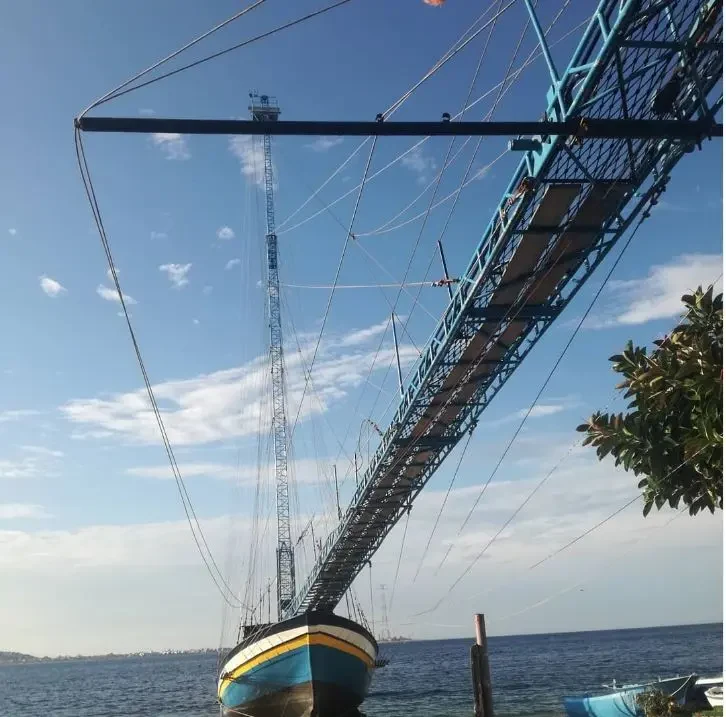
The iconic feluca boat moored in Scilla with its tall lookout tower for swordfish hunting.
The Olive Rock (Scoglio dell'Ulivo) in Palmi and the Purple Sunset
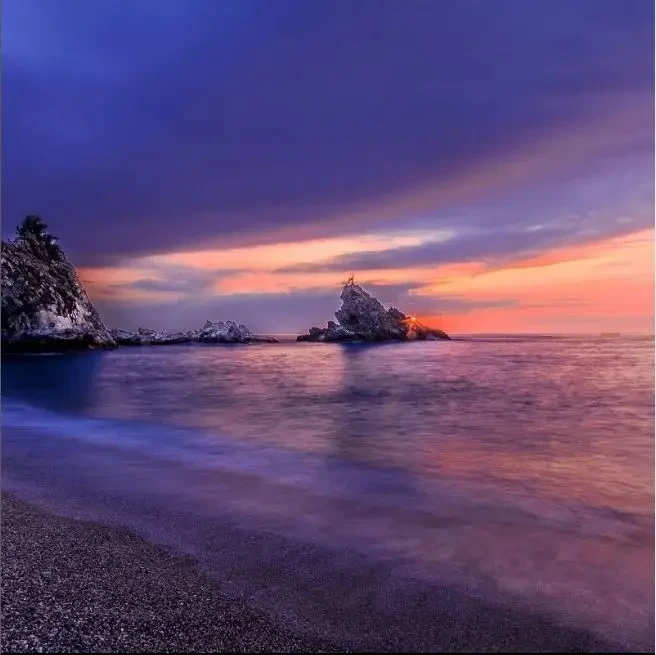
Standing before the Scoglio dell'Ulivo in Palmi's Tonnara bay reveals why this stretch is named Costa Viola (the Purple Coast). It was the philosopher Plato who described the twilight hour when the setting sun paints the Tyrrhenian waters in vibrant hues of violet, purple, and gold. In the center of this bay rises this limestone sea stack, where a solitary wild olive tree has stubbornly grown out of bare rock for over four centuries.
This natural landmark is the defining icon of the coast. As dusk falls and the silhouettes of Stromboli and the Aeolian Islands emerge against a glowing crimson sky, pausing by the Olive Rock offers timeless peace and wonder.
Scoglio dell'Ulivo in Palmi bathed in purple and golden sunset reflections.
Palazzo Ruffo and the Storied Cliffs of Bagnara Calabra
Nestled between sheer cliffs and cobalt blue depths, Bagnara Calabra is crowned by the historic Palazzo Ruffo (also known as Ruffo Castle). Once the stronghold of one of southern Italy's most influential noble families, it overlooks the sea and the entrance to the Strait of Messina with grand arched windows and stone terraces.
Bagnara is also famous for the 'Bagnarote': fearless, hardworking women who for centuries walked miles with heavy baskets of swordfish and salt on their heads to trade across the Aspromonte mountains. Wandering through the alleys beneath Palazzo Ruffo honors this proud coastal legacy.
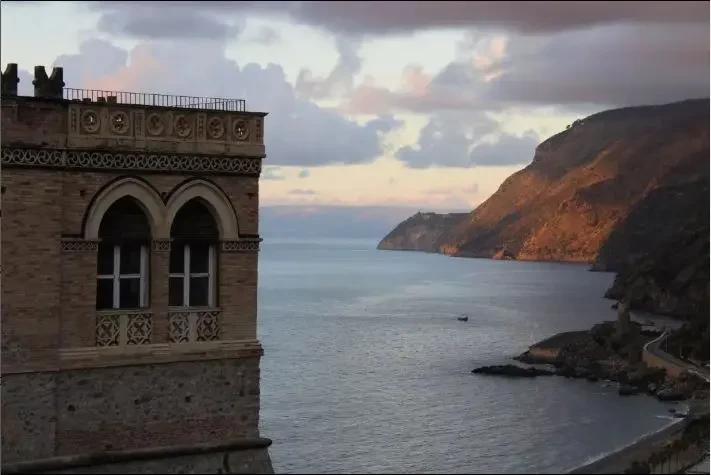
Palazzo Ruffo in Bagnara Calabra, a historic fortress overlooking the Tyrrhenian cliffs.
Mount Sant'Elia in Palmi: The Three Crosses Balcony over the Sea
To take in the entire mythological coastline of southwestern Calabria, ascending Mount Sant'Elia above Palmi to nearly 600 meters is an absolute must. Reaching the monumental Three Crosses viewpoint feels like standing on a balcony in the sky: below lie the Gioia Tauro plain, the coves of Costa Viola, the Sicilian coast from Messina to Capo Peloro, and Mt. Etna's smoking peak.
Legend tells that Saint Elias the Younger lived here as a hermit in the 9th century, resisting demonic temptations whose fall left the famed devil's footprint in the rock. It is one of Italy's grandest panoramic viewpoints.
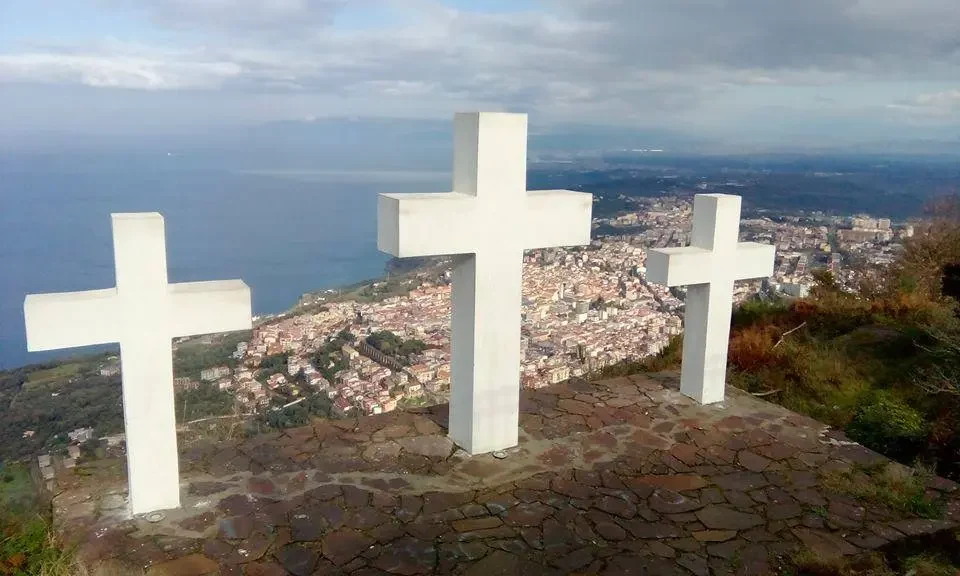
The Three Crosses panoramic terrace on Mount Sant'Elia in Palmi overlooking the coastline.
The Aragonese Tower at Taureana Archaeological Park
Standing as an austere guardian against pirate raids, the 16th-century Aragonese Tower of Capo Rocchi rises proudly within the Tauriani archaeological area in Palmi. Built as part of a coastal defensive chain ordered by the Spanish viceroyalty, it communicated along the shoreline via smoke signals by day and beacon fires by night.
Today, accessed via a charming wooden footbridge, the tower welcomes visitors amidst fragrant Mediterranean scrub. Nearby, excavations reveal Roman streets, ancient sanctuaries, and the historic crypt of San Fantino, Calabria's earliest recorded saint.
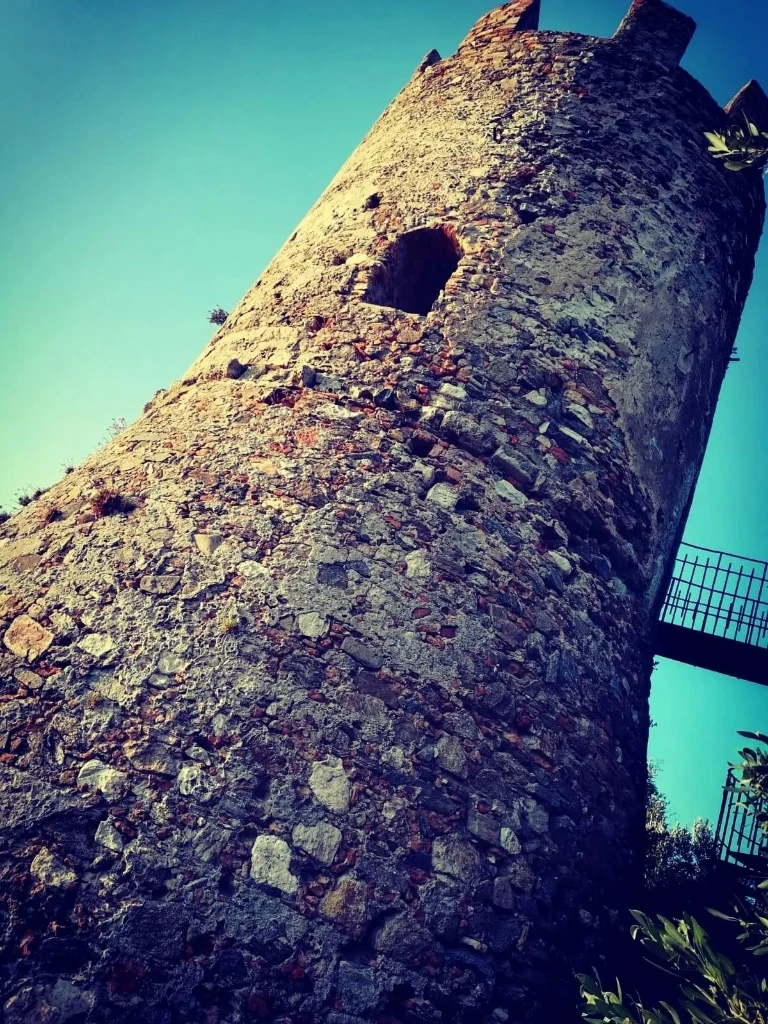
The historic 16th-century Aragonese tower at Tauriani Archaeological Park in Palmi.
Cala Janculla: Wild Paradise of Cliffs and Secret Caves
Ranked by Legambiente among Italy's ten most breathtaking beaches, Cala Janculla (located in the coastal wilderness of Seminara) is an untouched Mediterranean sanctuary. Primarily accessible by boat or kayak, this secluded bay is framed by soaring cliffs exceeding two hundred meters that plunge directly onto pristine white pebbles.
The waters display shades of turquoise and jade with striking clarity. Minutes from the shore lie the Grotta delle Rondini (Swallows Cave) and Grotta delle Sirene, where underwater sunlight creates an ethereal glow. Photo: @fabio__agostino.
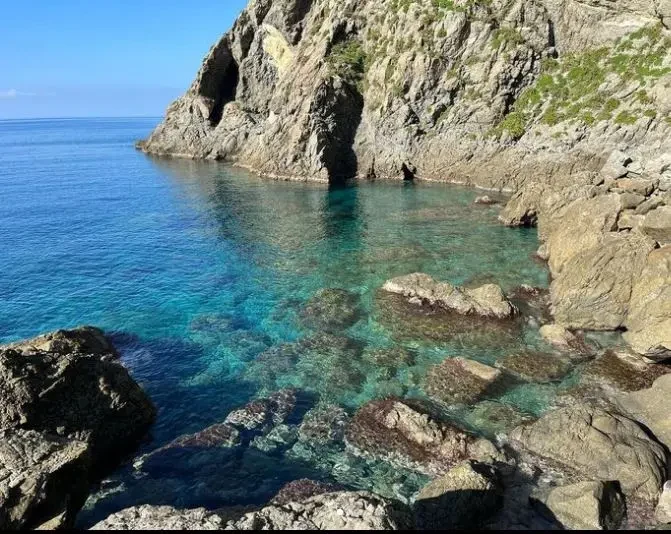
Crystal clear waters and towering cliffs at Cala Janculla (ph. @fabio__agostino).
Marinella Beach in Palmi: A Sheltered Bay of Colors
Winding down scenic curves embracing Palmi's cliffs leads to the picturesque Marinella Beach. This sheltered cove celebrates Mediterranean flora: prickly pears, blooming agaves, and fragrant myrtle bushes frame a beach of white pebbles and clear, tranquil waters.
Marinella is beloved by those seeking peaceful immersion in nature away from crowded resorts. Its rocky sea floor provides wonderful snorkeling opportunities with bright underwater light and varied marine life right off the shore.
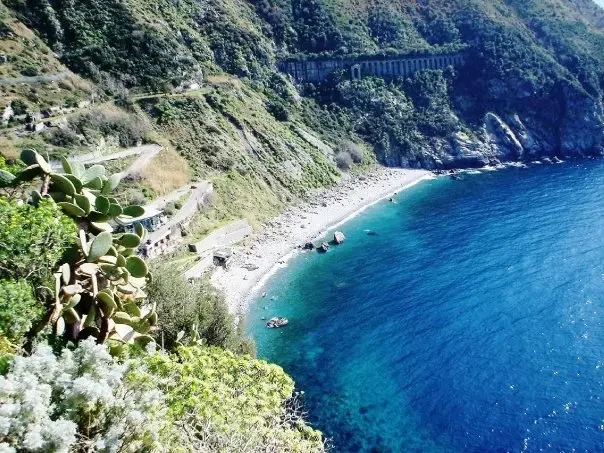
The natural cove of Marinella Beach in Palmi framed by coastal vegetation.
Chianalea di Scilla: The Venice of the South
No trip to Calabria is complete without visiting Chianalea di Scilla, recognized among the Most Beautiful Villages of Italy. Known as the 'Venice of the South', this historic fishing hamlet features stone houses built right into the water, where gentle waves lap against foundations and boats rest beneath house arches.
Strolling down the main cobblestone street beneath the gaze of the cliffside Ruffo Castle is an enchanting experience: the scent of fresh seafood from stilt-supported restaurants and vibrant bougainvillea flowers make every corner magical.
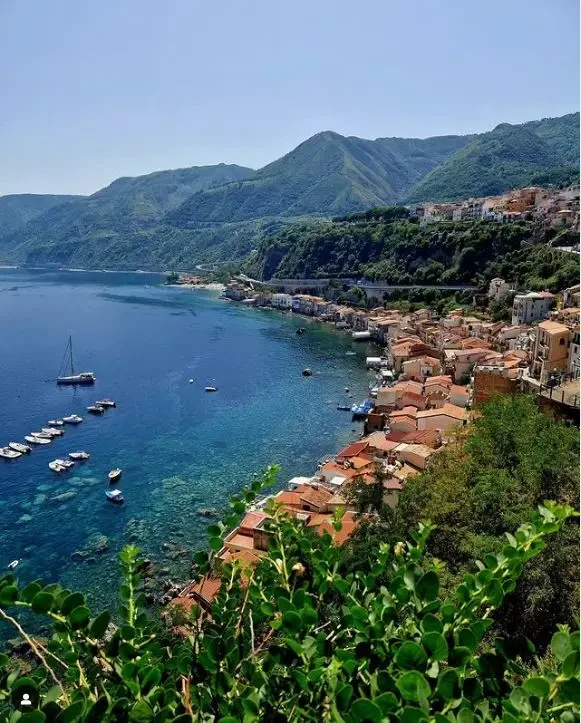
The timeless charm of Chianalea di Scilla, with fisherman houses built right on the sea.
Struncatura from Piana di Gioia Tauro: Pasta of Heritage and Flavor
The history of a territory is tasted in its most iconic dishes, and Struncatura is the culinary emblem of the Gioia Tauro plain and Costa Viola. Originally a humble dish prepared with dark cereal bran residues, once outlawed in the 19th century for its rustic nature, it is now celebrated as an authentic culinary masterpiece.
Extruded through bronze dies, Struncatura is cooked with salted anchovies melted in olive oil, garlic, Calabrian chili pepper, black olives, and a generous coating of 'pane atturrato' (crisp toasted breadcrumbs). An explosion of savory taste honoring generations of peasant culinary wisdom. Photo: @jessicamccannonmicheli.
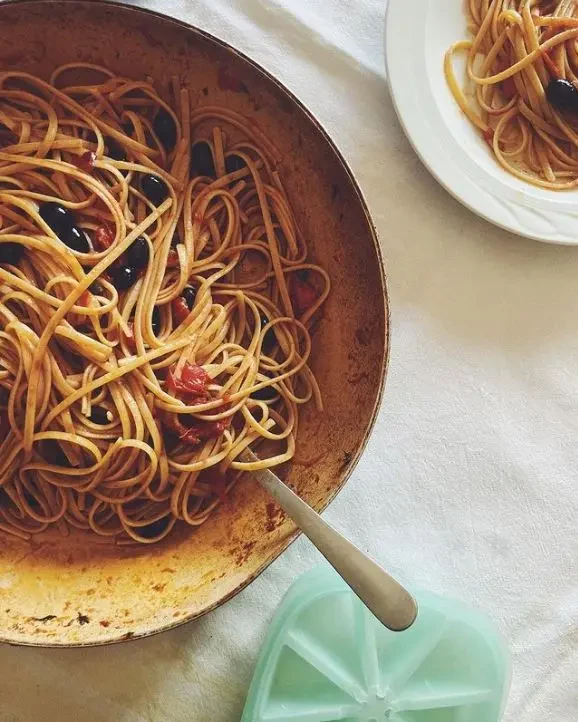
Traditional Struncatura pasta with anchovies, olives, and toasted breadcrumbs (ph. @jessicamccannonmicheli).
Sospiri di Monaca and Dito d'Apostolo: Bagnara's Fine Pastry
When in search of sweetness, Costa Viola responds with sublime pastry craftsmanship developed in Bagnara Calabra: Sospiri di Monaca and the royal Dito d'Apostolo. Sospiri di Monaca are delicate sponge cakes filled with lemon-scented pastry cream or fresh sweetened ricotta, enveloped in pure white royal icing and crowned with a bright red candied cherry.
Alongside the Dito d'Apostolo (a soft biscuit roll filled with cream) and Bagnara's PGI Torrone nougat, these historic confections represent the pinnacle of Southern Italian confectionary tradition.
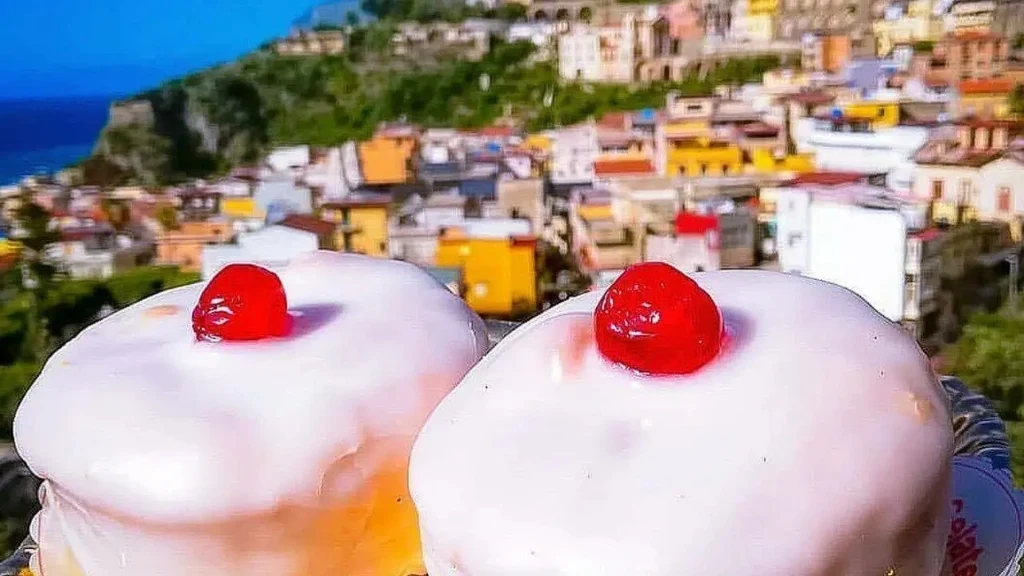
Delicious Sospiri di Monaca pastries glazed in white with candied cherries in Bagnara Calabra.
Swordfish Panino in Scilla: The Coastal Street Food Icon
There is no more satisfying finale to exploring Costa Viola than enjoying a warm swordfish panino right along the Scilla seafront. A celebrated staple of high-quality Calabrian street food, it brings the absolute freshness of the morning catch directly to your hands.
A generous swordfish steak freshly landed by local felucas is quickly seared on the grill to preserve tenderness, seasoned with authentic Calabrian salmoriglio: extra virgin olive oil, fresh lemon juice, garlic, and wild mountain oregano. Enjoyed with ripe tomatoes in crusty bread as waves roll onto Scilla beach, it is pure culinary delight.
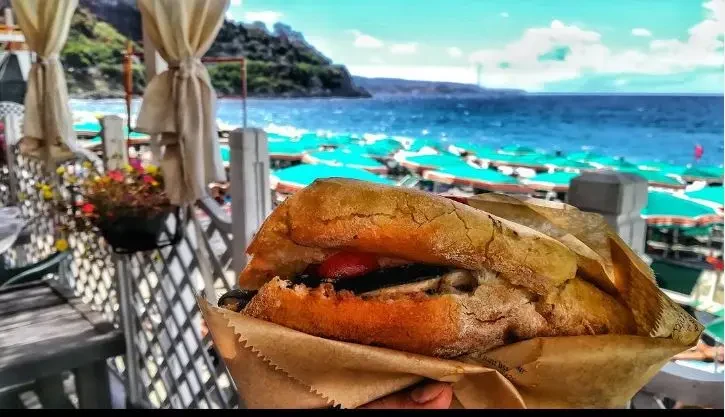
Savory grilled swordfish panino enjoyed right along the sea in Scilla.