Aspromonte Pappaluni: A Rediscovered Treasure Becomes a Slow Food Presidium, Amidst Mysteries and Rural Traditions
An ancient variety of giant beans, the 'Pappaluni d'Aspromonte', is reborn thanks to its recognition as a Slow Food Presidium. Cultivated in six municipalities in the province of Reggio Calabria, these unique legumes, also shrouded in a curious chromatic mystery, represent a bulwark of Calabrian biodiversity and food and wine traditions, the result of the commitment of seven producers and an entire community.
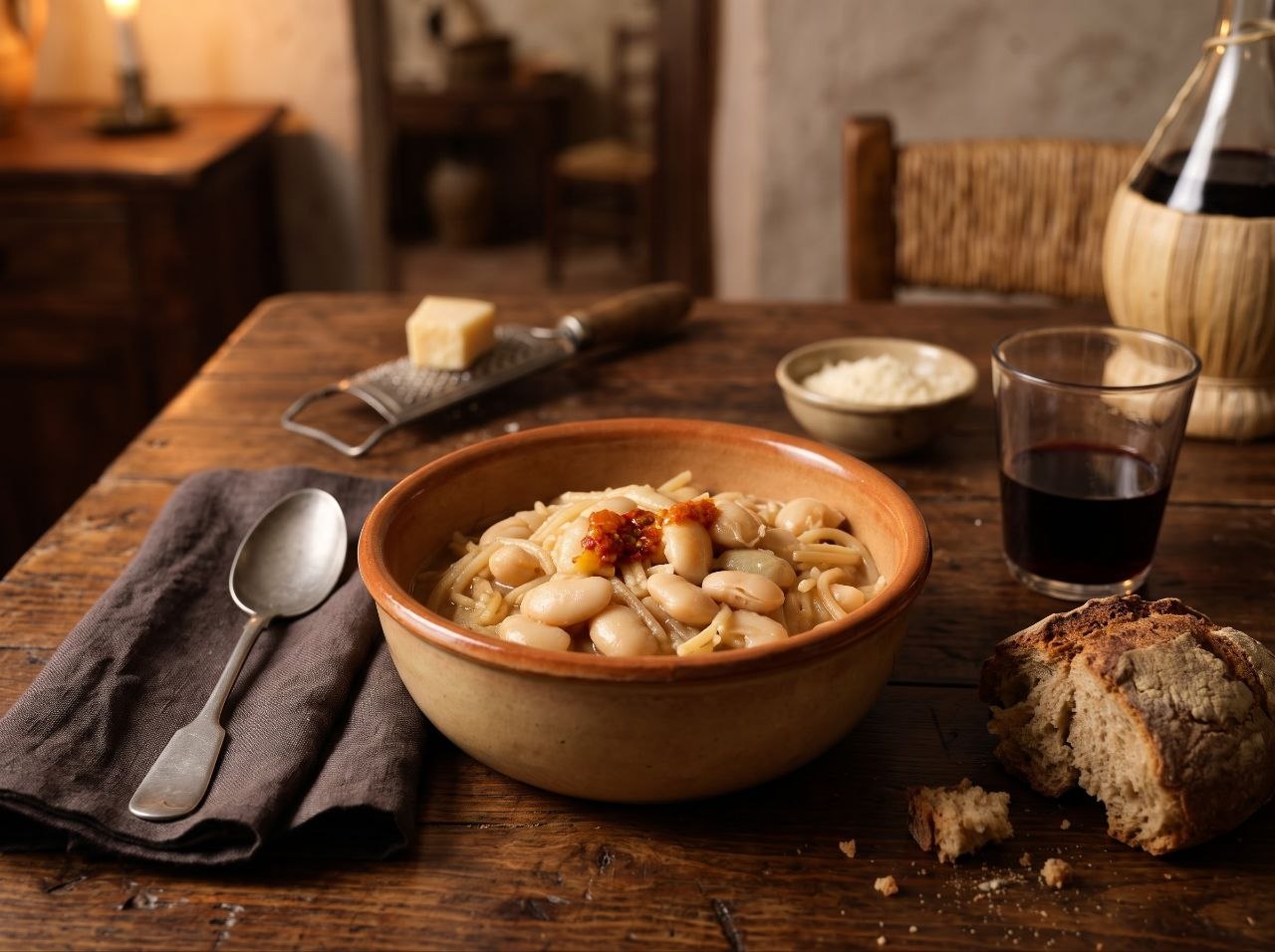
Un piatto fumante di pasta e fagioli, con i preziosi Pappaluni d'Aspromonte protagonisti, simbolo di una tradizione culinaria ritrovata e valorizzata.
Aspromonte, a land of breathtaking landscapes and ancient traditions, celebrates a new, significant milestone in gastronomy and biodiversity protection. The 'Pappaluni d'Aspromonte', giant climbing beans that for decades risked oblivion, were officially recognised as a Slow Food Presidium on 16 November 2026. This prestigious recognition is not just a seal of quality, but the culmination of a journey of rediscovery and enhancement that has involved producers, institutions, and enthusiasts, restoring dignity and a future to a product symbolic of this Calabrian mountain. The official presentation of the new Presidium, which took place with great resonance on 29 October 2026 in Delianuova, in the province of Reggio Calabria, marked a historic moment, confirming a recognition already anticipated at Terra Madre Salone del Gusto in Turin. It is proof that Calabria, with its hidden excellences, still has much to tell and offer to the world, overcoming the challenges of modernity to preserve an invaluable heritage.
A Rediscovered Treasure of Aspromonte: The Pappaluni
The 'Pappaluni d'Aspromonte' are much more than simple beans; they are a cultural and agricultural heritage. These are large white beans, whose plant is characterised by vigorous growth that can reach four metres in height. This peculiarity requires a traditional and laborious cultivation method, which involves the use of chestnut poles as support, an iconic image of the Aspromonte terraces. Their cultivation, once widespread but then progressively abandoned due to the effort involved and low profitability, seriously risked disappearing. However, in the last three or four years, thanks to the joint commitment of farmers and associations, there has been a rebirth, a true revival that has brought the pappaluni back to tables and into the local economy.
These beans are not only a pleasure for the palate but also a fundamental element of the Mediterranean diet and traditional Calabrian cuisine, capable of enriching soups, stews, and single dishes with their delicate flavour and floury texture. Their resilience and adaptability to the Aspromonte territory make them a perfect example of biodiversity to be protected and promoted.
Where Excellence is Born
The cultivation area of the Pappaluni d'Aspromonte is limited to six municipalities on the Tyrrhenian side of Aspromonte, all located in the province of Reggio Calabria. These include Cosoleto, Delianuova, Sant'Eufemia d'Aspromonte, Santa Cristina d'Aspromonte, Scido, and Sinopoli. It is in this hilly and mountainous strip, extending from 600 to 1300 metres above sea level, that the pappaluni find their ideal habitat, benefiting from a microclimate and soils that enhance their organoleptic qualities. The choice of these territories is not random but the result of natural selection and rural wisdom handed down from generation to generation, which has allowed this variety to thrive in specific conditions.
The Path Towards Slow Food Presidium Status: A Network of Collaboration
Recognition as a Slow Food Presidium is not an isolated event but the result of complex and passionate teamwork. It is a virtuous example of how collaboration between different entities can lead to concrete results for the enhancement of the territory and its products.
The Protagonists of a Collective Success
Several actors have played a crucial role in this journey:
Slow Food
Producers
Institutions
Research and Science
Between Tradition and Mystery: The Peculiarities of the Pappaluni
The Pappaluni d'Aspromonte are not only a product of excellence but also an element of fascination and curiosity, encompassing unresolved stories and mysteries, testifying to nature's richness and complexity.
Cultivation Details and Unexpected Curiosities
The cultivation of pappaluni is an art that requires patience and knowledge. Each plant, with its imposing structure, is capable of producing approximately 500-600 grams of beans, a yield that, although not extremely high, is compensated by the superior quality of the product. Sowing, traditionally in May, has in recent years seen a slight postponement to mid-June. This change was introduced to avoid problems with fruit set – the phase of fruit formation – during the hottest period of summer, thus ensuring a more stable and abundant production. It is an example of how rural wisdom adapts to climate change, while preserving traditional techniques.
But the true peculiarity, which adds a touch of mystery to these beans, is an inexplicable chromatic phenomenon. Despite sowing exclusively white seeds, about one plant in two hundred occasionally produces red flowers and dark-coloured beans, varying between purple and black. This 'curious mystery' has not yet found a certain scientific explanation, fueling legends and discussions among local farmers. It is a reminder of nature's complexity and its ability to surprise, even in an apparently simple agricultural context.
A Future of Recognition and Promotion
The journey of the Pappaluni d'Aspromonte is only just beginning. Slow Food recognition opens up new opportunities for promotion and commercialisation, not only at a regional level but also nationally and internationally. An important opportunity to learn more about these beans will be the annual itinerant Slow Beans event, which will take place in Brescia on 21-22 November. It will be a stage to present the pappaluni to a wider audience, sharing their history, their flavour, and their mystery.
Name
Type
Predominant colour
Plant height
Support
Cultivation area
Altitude
Yield per plant
Sowing period
Chromatic mystery
Recognition
Official presentation
Role of ARSAC/Calabria Region
The Slow Food Presidium of Pappaluni d'Aspromonte is much more than a simple brand; it is a commitment to the future, a pact between the land and humanity to preserve a precious heritage. It is proof that Calabria, with its rich biodiversity and the tenacity of its inhabitants, can continue to amaze and offer the world unique products, full of history, flavour, and, why not, even a touch of mystery. The Editorial Staff of Calabria Dreamin' will continue to closely follow the evolution of this and other projects that enhance our extraordinary region, convinced that true wealth lies in protecting one's roots and in the ability to innovate while respecting tradition.