Traditional Calabrian Delicacies: Torrone di Bagnara PGI
Torrone di Bagnara is Italy's first and only PGI-certified nougat. Discover its centuries-old history, the secrets of the production code, direct flame cooking with its 'vitreous fracture', and the two iconic specialties Martiniana and Torrefatto Glassato.
TORRONE DI BAGNARA: THE ONLY PGI-CERTIFIED NOUGAT
Torrone di Bagnara is the first and only nougat in Italy to be awarded the prestigious European PGI (Protected Geographical Indication) certification. Produced exclusively within the territory of Bagnara Calabra, an enchanting coastal gem along the breathtaking Costa Viola in the province of Reggio Calabria, this confectionery masterpiece comes from a noble and strictly codified recipe.
The dough base consists of unpeeled toasted almonds, citrus/wildflower honey, granulated sugar, and egg white, enriched with ground spices (cinnamon and cloves), citrus essential oils, and bitter cocoa.
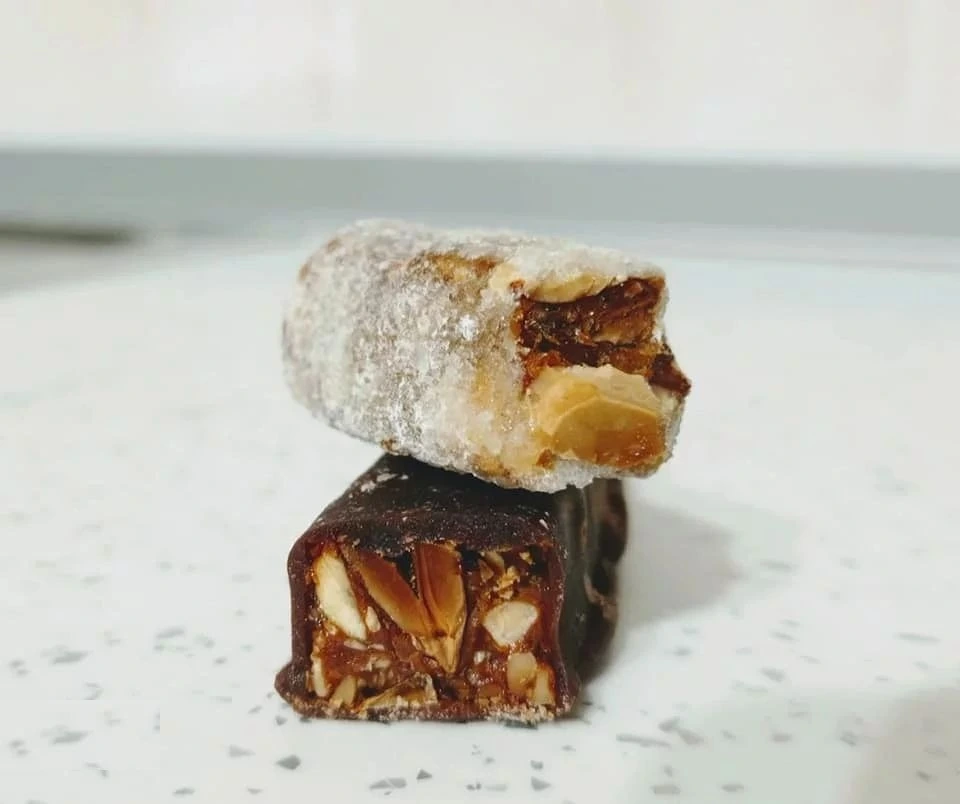
The PGI code protects two historic specialties: * "Martiniana": featuring unpeeled toasted almonds and caramelized sugar, crowned on the outside with an unmistakable layer of granulated sugar crystals. * "Torrefatto Glassato": a celebration of toasted almonds and honey encased in a delicate, hand-brushed bitter cocoa glaze through the traditional local technique called "naspatura".
At the first bite, the texture is remarkably crumbly and crunchy, thanks to the masterful roasting of the almonds and the high temperature applied to the sugar mass. On the palate, the sweetness of the dough is balanced by the toasted almonds and a distinctive brûlée sensation from direct-flame honey caramelization, culminating in a spicy aftertaste with hints of cinnamon and cocoa in the glazed version.
The two historic specialties of Torrone di Bagnara PGI: Martiniana (top, sugar-coated) and Torrefatto Glassato (bottom, with dark cocoa naspatura).
European PGI Certification and the Production Code
Official European recognition for Torrone di Bagnara was a historic milestone: in the Official Journal of the European Union L 242/1 on August 14, 2014, the PGI was registered as Italy's 103rd PGI and the 265th protected designation nationwide.
The Production Specification (Disciplinare di Produzione) is the legal standard establishing all parameters necessary for certification. It is binding law: any violation represents a legal offense. Authentic Torrone di Bagnara PGI must fulfill unambiguous sensory rules:
- External appearance: a crinkled surface with a warm brown hue known locally as "monk's cloak" (manto di monaco), dusted with granulated sugar in the "Martiniana" version; or smooth, glossy, and polished dark brown with a balanced blend of sugar and cocoa in the "Torrefatto Glassato".
- Internal appearance: rich golden-brown dough with abundant, evenly distributed unpeeled toasted almonds.
- Consistency: distinctly crunchy and crumbly, never rubbery or soft.
The specification categorically excludes artificial colorings and chemical preservatives, preserving absolute authenticity.

The European Protected Geographical Indication (PGI) seal, the official guarantee of quality and origin for Torrone di Bagnara.
Strict Ingredient Ratios, Open-Flame Cooking, and the 'Vitreous Fracture'
The unique characteristic of Torrone di Bagnara lies in its production method, vastly different from other confections: while conventional Italian nougats are gently cooked in a bain-marie at low temperatures, Torrone di Bagnara is cooked over direct flame at high temperatures, between 160°C and 200°C, inside the traditional mechanical cauldron known as a "torroniera".
The mandatory ratios per kilogram of finished product include: * Sugar mass (min. 40%): granulated sugar and citrus, wildflower, or sulla honey. Martiniana contains 350g sugar and 50g honey; Torrefatto Glassato contains 100g sugar and 300g honey. * Sweet unpeeled toasted almonds (min. 48%): thoroughly roasted before mixing. * Spices and aromas: ground cinnamon and cloves, citrus essential oils, egg albumen (0.3%), and natural vanillin. * Coatings: granulated sugar (6% + 6%) for Martiniana; syrup with fondant sugar (11%) and bitter cocoa powder with 22-24% cocoa butter (1%) for Torrefatto Glassato.
Cooking caramelizes the honey until it reaches the famous "monk's cloak" hue. The master confectionery artisan checks for the "vitreous fracture" (rottura vitrea): when cooled to room temperature, the candy mass exhibits a glass-like structure that shatters cleanly under pressure. The batch ("la cotta") is then shaped, cut warm, and glazed in 110-118°C syrup with hand-brushed "naspatura" on the base.
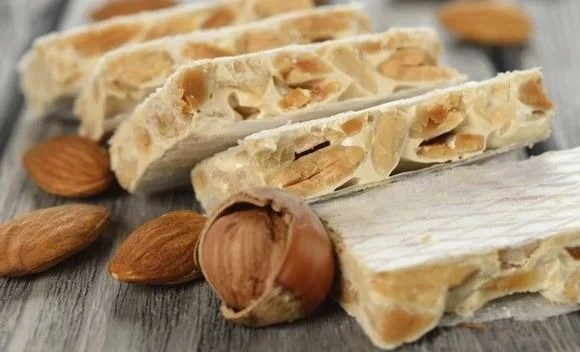
Unlike traditional white nougat cooked in a double boiler at low heat, Torrone di Bagnara requires high-temperature direct flame cooking to achieve the vitreous fracture.
Historical Roots, the Royal Savoy House, and the Protection Consortium
Torrone di Bagnara dates back to the 18th century, boosted by maritime trade that allowed local confectioners to blend regional almonds and honey with imported sugar and exotic spices. Starting in 1846, historical archives highlight the celebrated Cardone pastry family, who became official purveyors to the Royal House of Savoy. In January 1889, Queen Margherita of Savoy presented master pastry maker Francesco Antonio Cardone with a jewel brooch bearing the Royal Cypher.
In 1885, writer N. Marcone noted in A Journey to Calabria: "The nougats of Bagnara travel around the world, and they truly deserve such honor". In 1983, Canon A. Giuffrè reaffirmed in his History of Bagnara: "The specialty of this confectionery product has made the name of Bagnara famous".
After WWII, a dedicated "Bagnara Nougat District" grew, sustaining artisanal packaging and regional machinery production, celebrated every November during the Festa del Torrone.
On April 18, 2018, the Italian Ministry of Agriculture officially recognized the Consortium for the Protection of Torrone di Bagnara Calabra PGI, Italy's first protection consortium in the confectionery field. The Consortium verifies ingredients, enforces the specification, and showcases the sweet masterpiece at major expos including Milan's Artigiano in Fiera, Turin's Salone del Gusto, and Bologna's F.I.C.O.
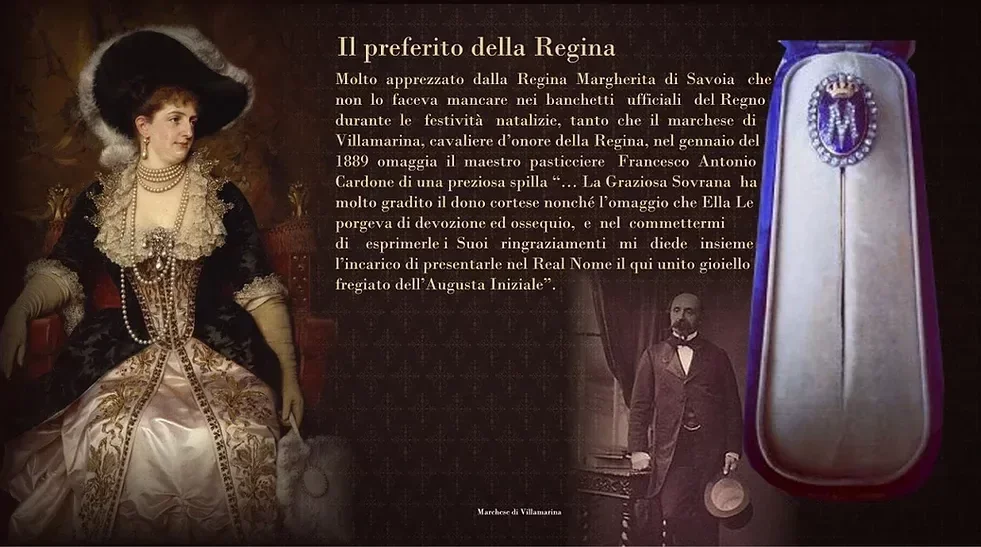
The Savoy royal brooch and document presented by Queen Margherita of Savoy in 1889 to the Cardone pastry masters of Bagnara Calabra.