Calabrian Struncatura: History, Secrets, and Recipe of the Queen Pasta of Piana di Gioia Tauro
A culinary journey through Calabrian gastronomic heritage with Struncatura: from flour milling traditions and nineteenth-century contraband to historic pasta makers and the authentic recipe between Palmi and Costa Viola.
The Soul of Struncatura: Food Sanctity and Piana di Gioia Tauro's Identity
Food expresses deep culture and memories passed down across generations. In Struncatura lies the true soul of Southern Italian gastronomy, grounded in the sacred principle that no earthly gift should ever be wasted. This traditional pasta, a hallmark of Calabrian typical products and fine dining in Piana di Gioia Tauro, has ancient roots tied to Magna Graecia centers: Taureana (modern Palmi on Costa Viola) and Metaurea (Gioia Tauro).
Born as humble food for farm laborers, Struncatura has completed a remarkable journey: once an emergency subsistence dish, it is now a celebrated gourmet pasta sought after by Michelin-starred restaurants for its coarse texture and unparalleled sauce-holding ability.
Calabrian typical products: Struncatura from Piana di Gioia Tauro uniting rural heritage and gastronomy.
Campanian Roots: The Secret of the 'Pharmacists of the Tower'
The history of Struncatura dates back to the 18th century, boosted by Gioia Tauro's role as a major maritime trading hub for grain and olive oil, welcoming merchants from Campania and the Amalfi Coast. Historical records like the 1895 Annuario d'Italia document numerous pasta merchants from Amalfi in Gioia Tauro. Yet its technical origins trace directly to Torre Annunziata, the historic 'City of White Art'.
In the 16th century Count Muzio Tuttavilla constructed the Sarno water canal to power mills, establishing Torre Annunziata as the pasta capital. At the time primitive machines could not extrude pasta at equal lengths: excess pasta cut off on workbenches fell to the floor, naturally acidifying due to humidity.
That was when master pasta makers known as 'Farmacisti della Torre' emerged: like alchemists, they skillfully swept, gathered, and re-kneaded those acidified scraps with bran and durum wheat endosperm. The result was a dark, fibrous, robust pasta created for the working classes.
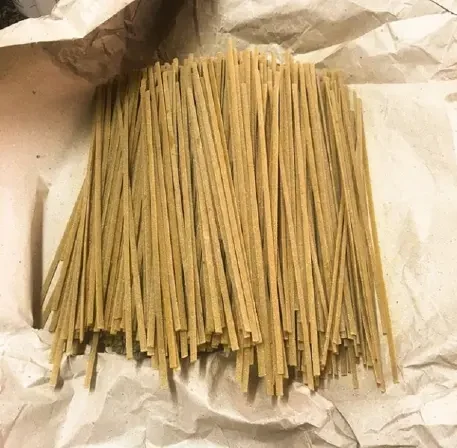
Raw Struncatura on butcher paper: long linguine-style bronze-drawn pasta packed with wholesome bran.
19th-Century Prohibition: The 'Contraband' Pasta
Due to its rustic origin swept from mill floors and its high bran acidity, Bourbon health authorities in the 19th century officially banned Struncatura for human consumption.
Yet laws could not extinguish people's fondness for this deeply flavorful pasta. Struncatura continued to be sold under the counter in small grocery shops across Gioia Tauro, Palmi, and Aspromonte foothills, becoming famous as 'contraband pasta'. Until the mid-20th century, trusted patrons purchased it wrapped in classic half-kilo straw paper packages.
It was in Calabria that Struncatura found its crowning glory: local cooks recognized that its acidity called for bold Mediterranean partners. Pairing it with extra virgin olive oil from local ancient groves, salted anchovies from the Strait of Messina, red chili flakes, and pan-toasted breadcrumbs created an immortal culinary balance.
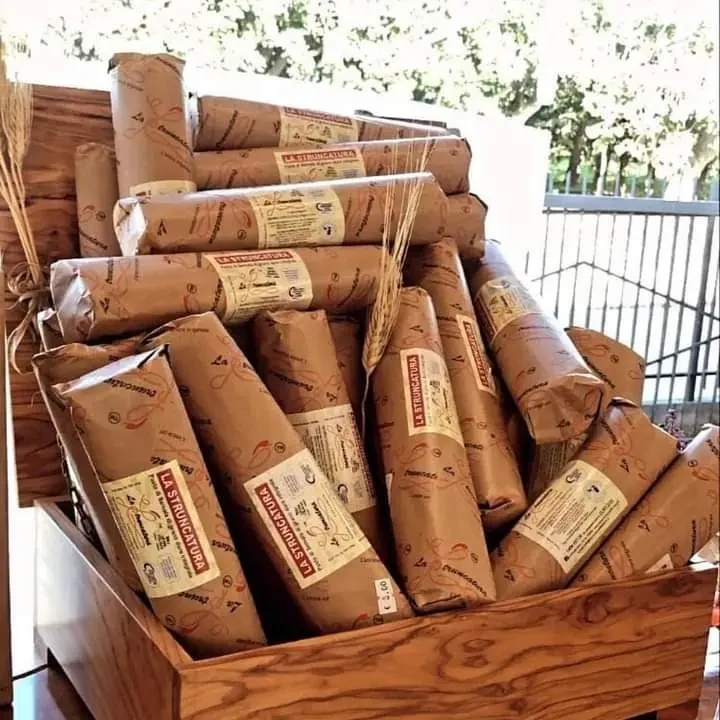
Historic cylindrical paper rolls of Struncatura by Ditta Torre displayed in a wooden crate.
Keepers of the Craft: Ditta Torre since 1919 and Pastificio Gioia
Guiding Struncatura into modern culinary acclaim was made possible by dedicated families. In 1919 Ferdinando Torre, an enterprising trader from Atrani on the Amalfi Coast, foundedDitta Torre, establishing Struncatura as the culinary crest of Piana di Gioia Tauro. Today Stefania and Giovanna Torre preserve this century-old legacy, proudly featured on World Pasta Day.
Alongside them, esteemed workshops likePastificio Gioiacraft bronze-drawn Struncatura slowly dried at low temperatures using 100% Italian whole durum wheat and Aspromonte rye flour ('jiermanu'). Today's Struncatura meets the highest modern food safety standards while keeping the beloved coarse, chewy texture that enchants pasta lovers worldwide.
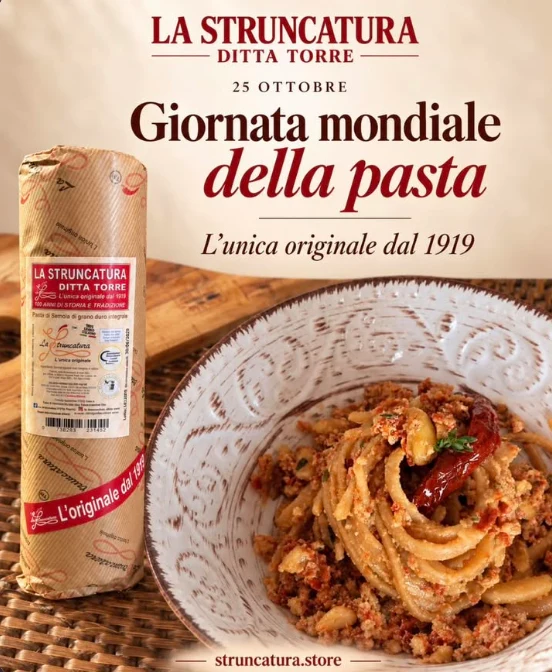
Official poster for Ditta Torre: the original Struncatura from Piana di Gioia Tauro since 1919.
The Traditional Recipe: Step-by-Step Cooking Guide for 4 People
Cooking authentic Calabrian Struncatura requires balancing sapidity, heat, and crunch. You can savor it at typical restaurants between Palmi, Gioia Tauro, and Scilla, or prepare it at home with this authentic recipe.
Ingredients for 4 people: * 320g artisan Calabrian Struncatura pasta * 100g stale rustic breadcrumbs (finely crumbled) * 40g salted anchovy fillets from the Strait of Messina * 2 garlic cloves * 2 tablespoons grated Calabrian Pecorino cheese (Silano or Aspromonte) * Calabrian chili pepper flakes to taste * Fresh parsley, finely chopped * Extra virgin olive oil from Piana di Gioia Tauro * Coarse sea salt
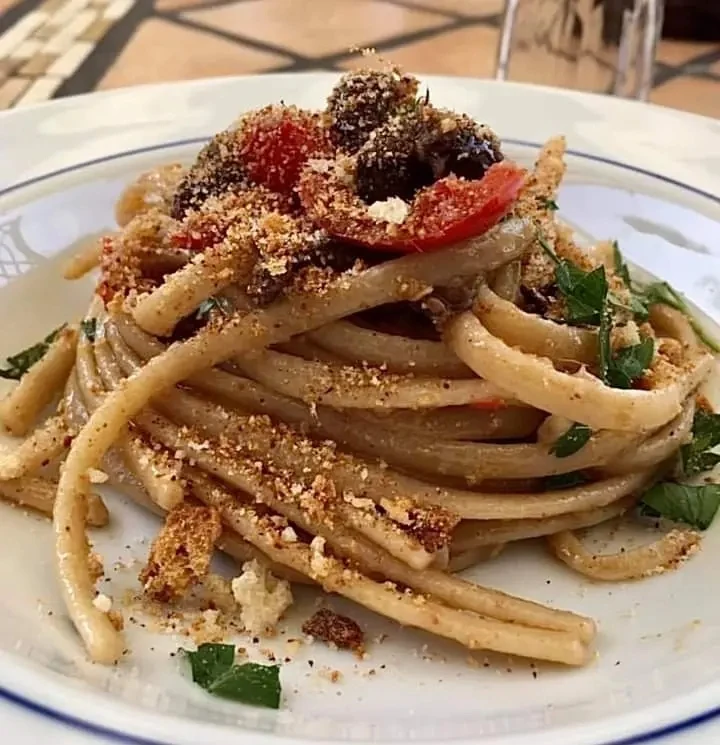
Preparation: 1. Toast the 'pane atturrato': In a pan with a drizzle of EVO oil, toast the crumbled breadcrumbs over medium heat until golden and crispy. Set aside. 2. Scent the oil: In a skillet, gently warm plenty of olive oil with crushed garlic and chili flakes. Add the anchovy fillets, melting them gently on low heat into a savory cream. 3. Boil the pasta: Cook Struncatura in boiling water with light salt. Drain firmly al dente, reserving a ladle of starchy pasta water. 4. Toss and bind: Transfer pasta into the anchovy sauce, add reserved water, and toss vigorously over heat. Remove from heat and stir in grated Pecorino and parsley. 5. Serve: Plate immediately and generously crown with crispy toasted breadcrumbs for a magical play of textures.
The finished dish: steaming Struncatura tossed with anchovies and coated with golden pane atturrato.