Calabrian Easter Sweets: A Journey Through Authentic Traditional Flavors
Discover 8 Calabrian Easter sweets that tell ancient stories. From Cuzzupe to Petrali, an explosion of flavors and traditions reborn every Easter.
Introduction: The Symbolism of Calabrian Easter Sweets
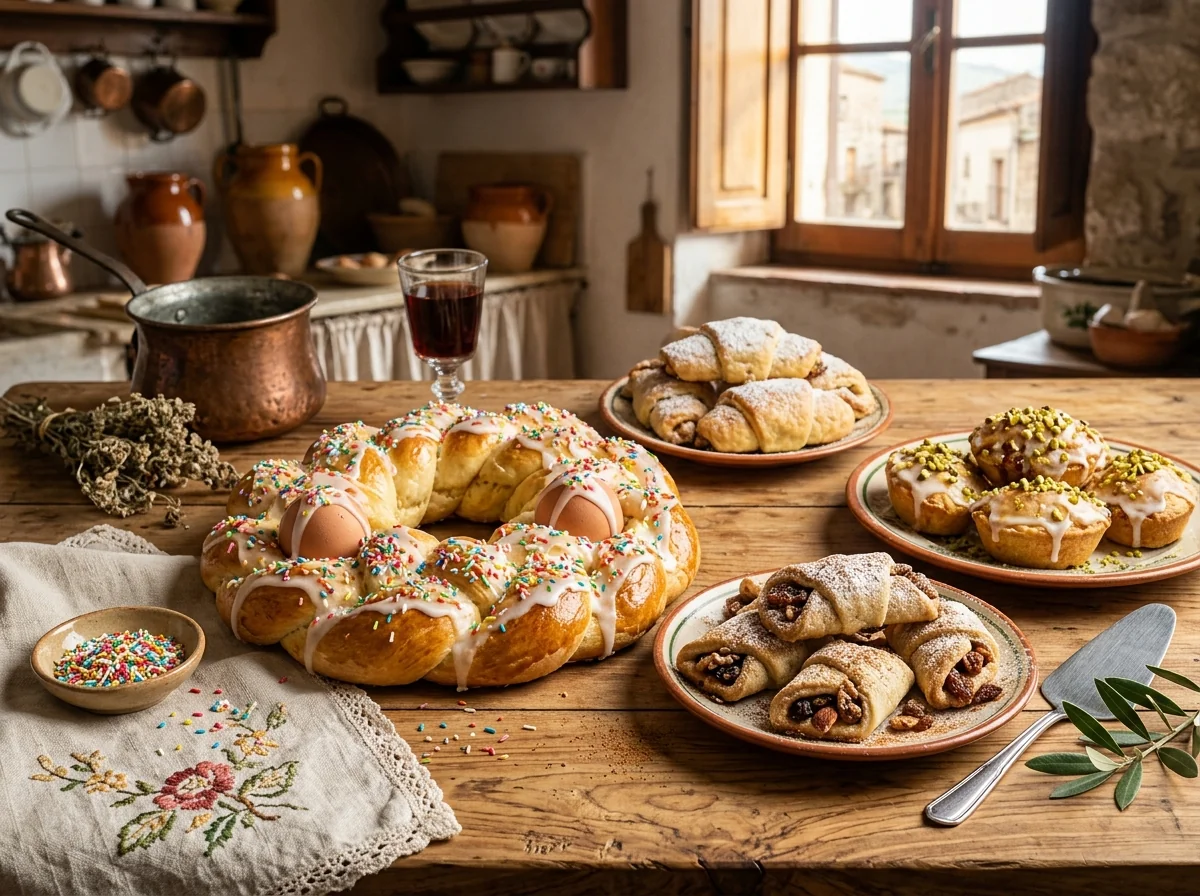
As Easter approaches, Calabrian kitchens transform into fragrant workshops of flavors, where flour dances in the air and eggs, universal symbols of rebirth and life, become undisputed protagonists. Every Easter sweet in Calabria is not just a delight for the palate, but a living narrative of millennia-old stories and intertwined cultures, a ritual repeated with devotion. Once, these delicacies were consumed at the stroke of midnight, when church bells announced the Resurrection, a moment of joy and sharing that still resonates in every family today. Beyond the famous Cuzzupe, the Calabrian Easter table is enriched with an incredible variety: from the Arbëreshë Riganelle to the Nepitelle of the Vibo Valentia area, from the Reggio Calabria Cudduraci to Fraguni and Bocconotti, and even Ginetti and Jaluni. Each province, each village, guards its secret recipe, a treasure of taste handed down from generation to generation, which we invite you to discover with us.
The Queens of Easter: Cuzzupe, Cudduraci and their Variants
The Cuzzupe, also known as Cucùli, Cannilijri, or Sgute depending on the area, are the undisputed queens of Calabrian Easter. These sweet and aromatic pastries are a true ode to spring, enriched with eggs, lemon zest, and a touch of lard. Their often elaborate, almost baroque shape, holds a hard-boiled egg at its center, symbolizing fertility and abundance. Their origins lie in Magna Graecia, where they were decorated with laurel leaves, and today we still find similarities with the Greek Tsoureki. In Reggio Calabria, Cudduràci appear as soft brioches, while in the Locride area, Sgute offer a versatile dough, perfect even for savory preparations. Receiving a Cuzzupa with seven eggs from your mother-in-law? In Calabria, it's a clear sign of an impending marriage! Each variant is a masterpiece of tradition and affection, carefully prepared in every family.
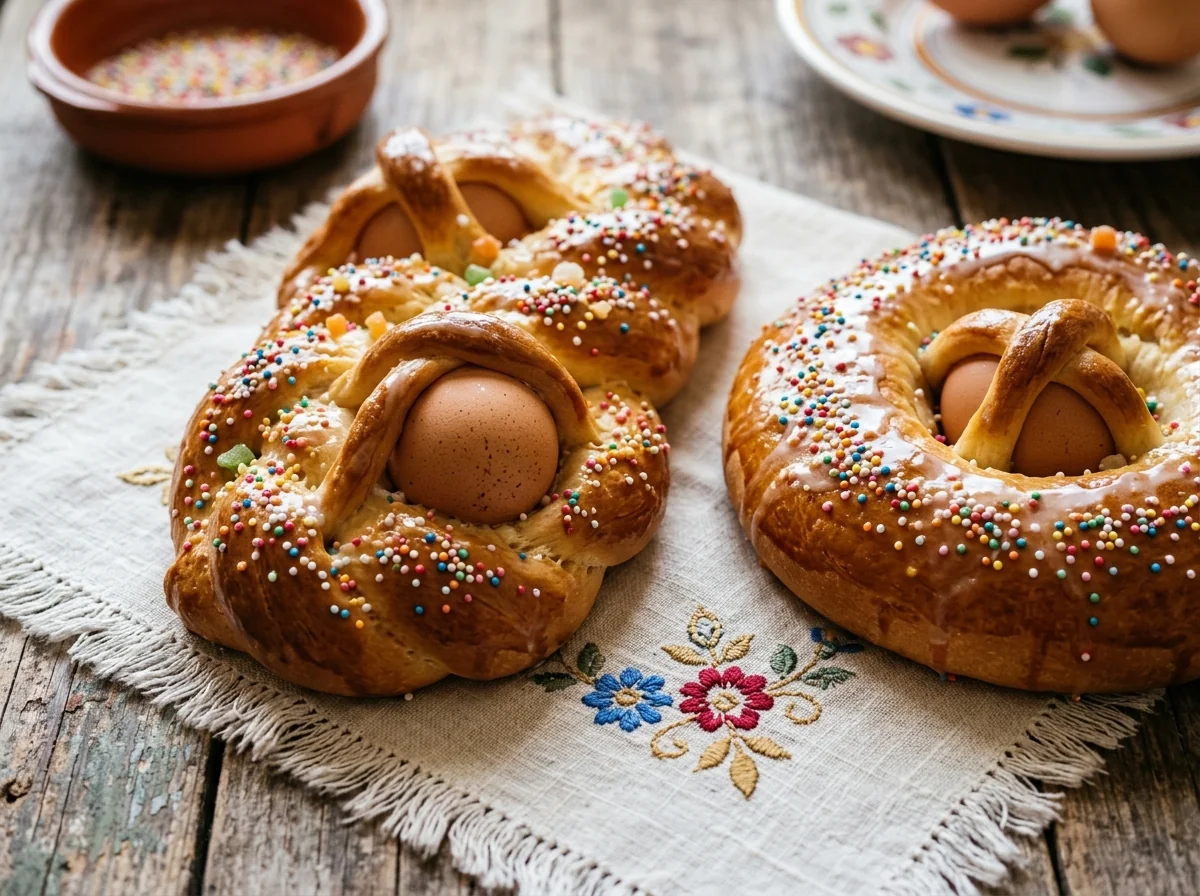
An explosion of shapes and flavors: Calabrian Cuzzupe, Easter sweets rich in history and symbolism, often decorated with hard-boiled eggs.
Hidden Treasures: Petrali, Nepitelle and Riganelle
Continuing our delicious journey, we encounter the Calabrian Petrali, typical sweets of the Reggio Calabria tradition, with their characteristic crescent shape. Their filling is a hymn to the richness of the territory: dried fruit, cooked wine, honey, and spices, a blend of flavors that evokes ancient legends. It is said that a priest and his housekeeper prepared them as gifts for the faithful, hence the name recalling the 'presbyter'. Similar but with their own peculiarities are the Nepitelle (or Pitte Pie), widespread in the Catanzaro, Vibo Valentia, and Crotone areas, shortcrust pastries with jam and dried fruit fillings. And then there are the Riganelle, a true surprise for the palate! This Easter sweet, with origins in the late Middle Ages and deeply linked to the Arbëreshë tradition, stands out for an unusual but fascinating ingredient: oregano. A symbol of rebirth and a deep connection to Calabrian history and culture, to be enjoyed after noon on Holy Saturday.
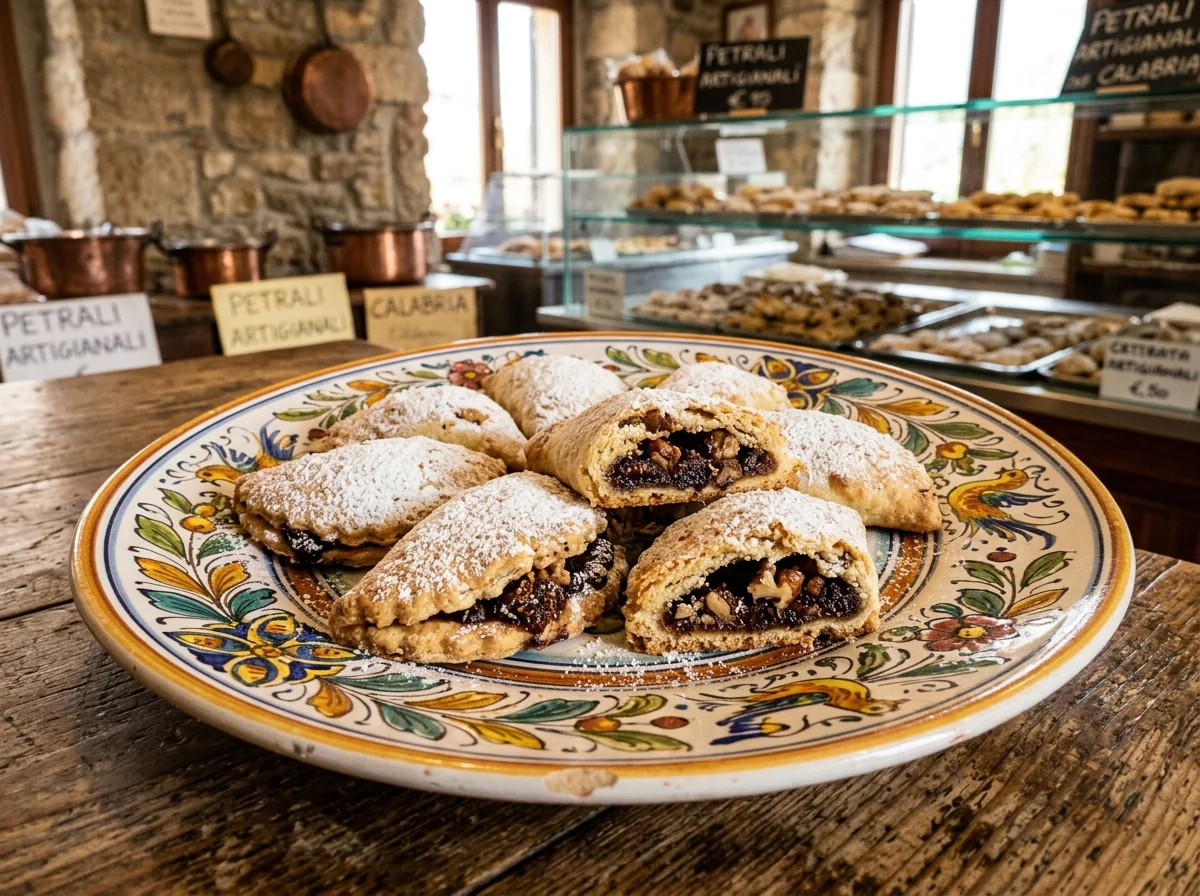
A taste of history and flavor: Petrali and Nepitelle, Calabrian Easter sweets that encapsulate the richness of the land and traditions.
Sweet Traditions to Discover: Bocconotti, Ginetti, Fraguni and Jaluni
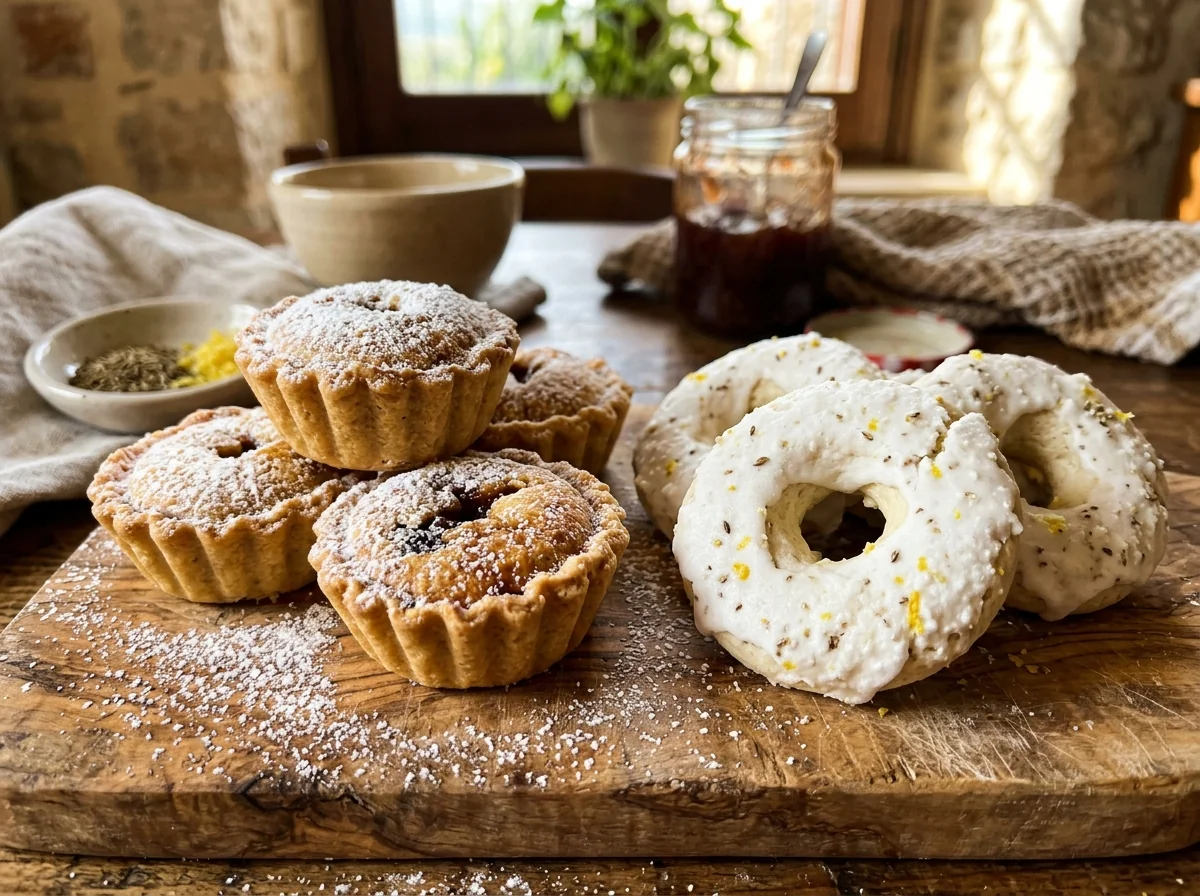
The kaleidoscope of Calabrian Easter sweets concludes with other invaluable gems. The Bocconotti, typical of the province of Cosenza, are delicious shortcrust pastry treasures filled with jam, traditionally grape jam, a true concentrate of sweetness. The Ginetti, originating from Roggiano Gravina, are hard-dough circular biscuits, covered with a candid anise or lemon glaze. Their history is ancient, dating back to pagan festivals in honor of the goddess Ceres, later assimilated by Christian tradition as an Easter symbol. We cannot forget the Fraguni, rustic pizza dough tarts, which can be sweet or savory, often filled with ricotta and parsley, an explosion of taste and versatility. Finally, the Jaluni, Easter sweets from the Grecanica tradition of Reggio Calabria, similar to fried ravioli filled with ricotta. Their name, "Jaluni," draws from Hebrew roots, deriving from "Shalom," meaning peace and prosperity, and their 4-spout lamp shape recalls ancient symbols. A journey through these flavors is a deep immersion into the most authentic soul of Calabria, where every bite is a piece of history and a hymn to the joy of Easter.