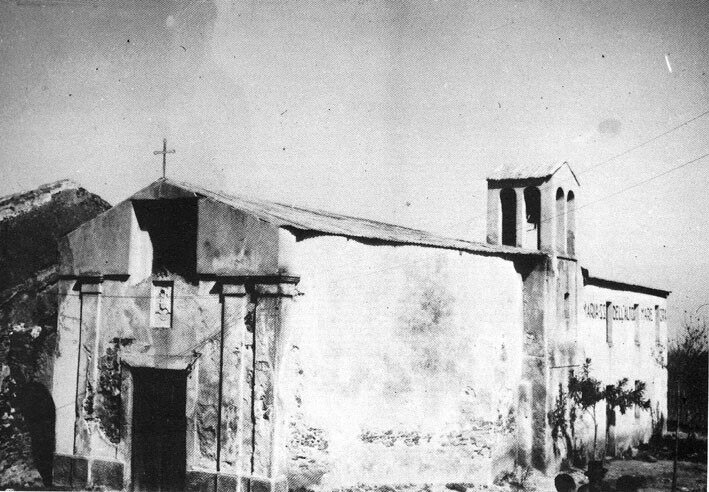
Palmi: The Mystery of the Faceless Saints in the Complex of San Fantino
Study by Dr. Domenico Bagalà on the aniconic frescoes of San Fantino's crypt in Taureana di Palmi, between Byzantine iconoclasm, the 1952 discovery, and parallels with Santa Marina di Delianuova.
Sapienza University Excavations at San Fantino
Repeatedly rebuilt over 1,700 years, the church and monastery of San Fantino in Taureana di Palmi were excavated by La Sapienza University of Rome, uncovering a Roman-Byzantine necropolis, early medieval basilica walls, an ancient Roman cistern reused as a Christian crypt, gilded glass fragments, and burials including two bishops and female remains attributed to Saint Gregoria.
The monumental complex and church of San Fantino in Taureana di Palmi.
The Norman Trifollaro and Historic Reconstructions
Excavations yielded a rare Norman trifollaro coin of Roger I (1085-1101) minted in Mileto. Historical records document reconstructions by Count Pietro Antonio Spinelli in 1552, a 1645 notarial survey describing a Greek-cross church oriented toward Pietrenere Tower, and Abbot Pietro Militano's 1857 rebuilding.
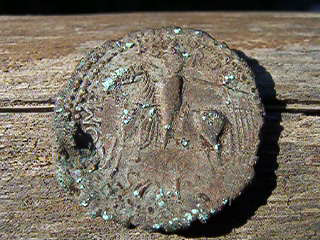
Rare Norman trifollaro coin of Roger I (1085-1101) minted in Mileto.
The Greek Parchment Map and the 1952 Discovery
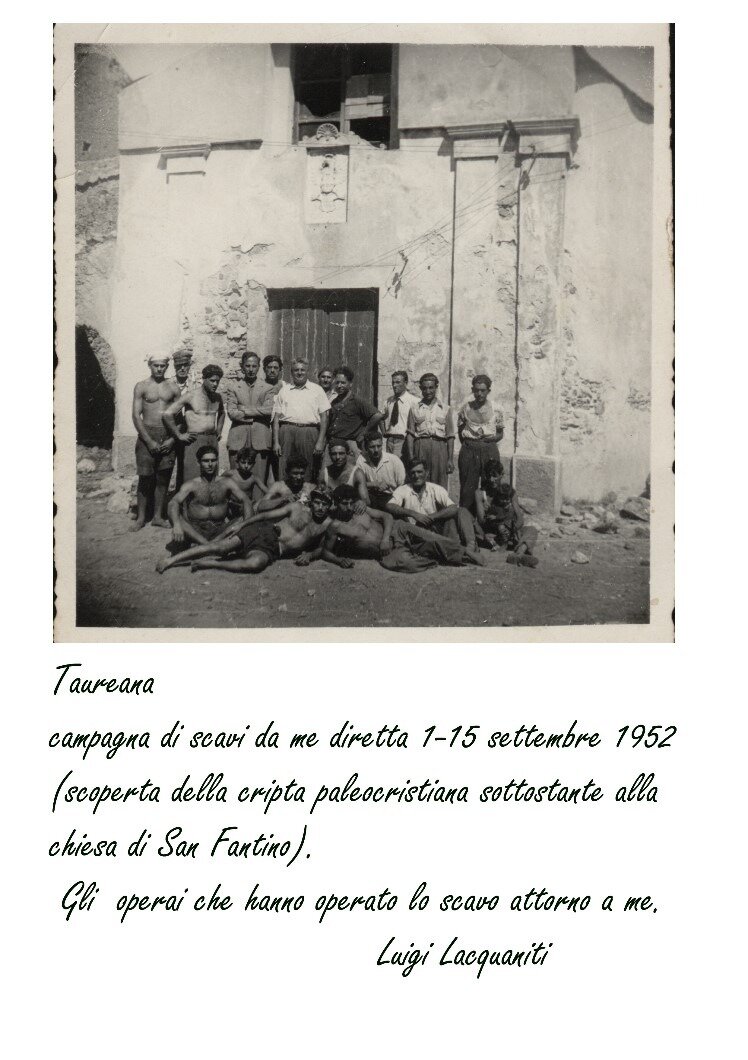
In 1952, Palmi citizens including Vincenzo Palamara and Pietro Bagalà (Pietro Vigna) located the 4th-century hypogeum crypt using an ancient Greek parchment map found in a Greek monastery during WWII, which accurately marked the underground sepulchre, a tunnel toward Pietrenere Tower, and a sea cave.
Volunteers of Movimento Culturale San Fantino, stewards of the monument since 1998.
1952 Photographic Evidence and Site Stewardship
Official excavations led by Inspector Prof. Lacquaniti confirmed the crypt and the tunnel toward ancient Taurianum, documented in 1952 photographs. Since 1994-1998, Movimento Culturale San Fantino has safeguarded the monument.
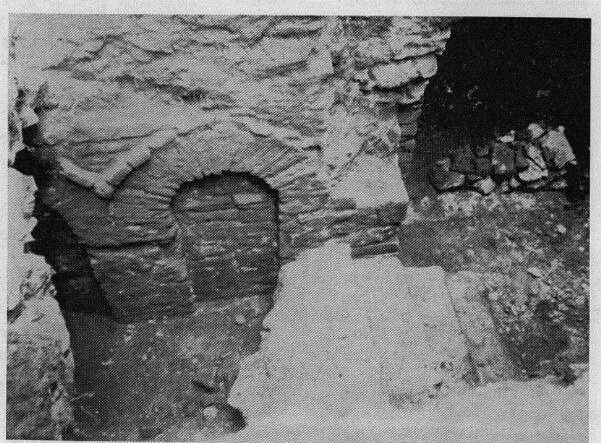
Historic 1952 photograph documenting the discovery of San Fantino's Crypt.
The Jeweled Cross on the East Wall (2003 Excavations)
In 2003, excavations beneath the east wall's window uncovered a hidden fresco layer showing blue lines, circles, and red floral motifs on yellow ground—identified by a Coptic monk as the Jeweled Cross typical of 8th-century iconoclastic sites.
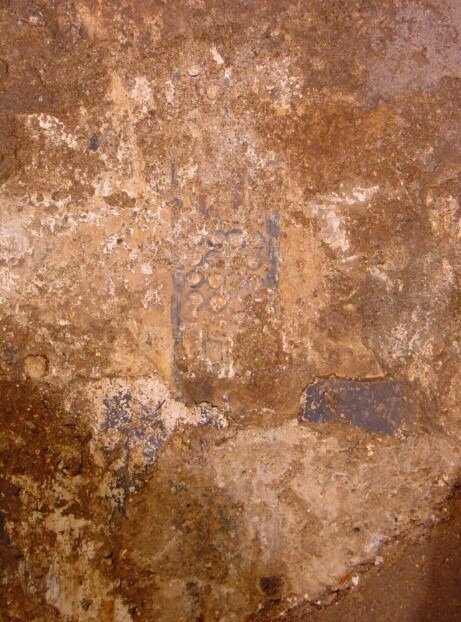
Byzantine fresco fragment on the east wall depicting the Jeweled Cross motif.
The Faceless Saints on the South Wall
In the second arch of the south wall, two hieratic saints appear deliberately painted without faces, retaining halos and Greek initials (Saint John Chrysostom on the east side). This rare aniconic cycle may date to the 8th-9th century iconoclastic periods or preserve older models.
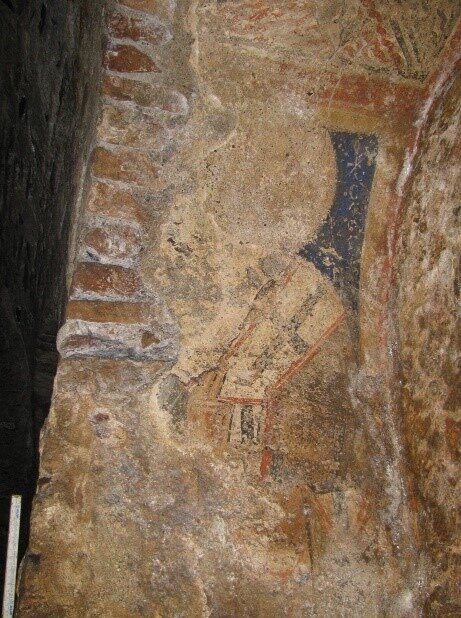
South wall fresco showing saints painted without faces, with halos and Greek initials.
Iconoclasts, Iconodules, and the Theology of the Face
Leaving the faces blank while keeping halos and garments appears as a synthesis between iconoclasts and iconodules (cf. Pavel Evdokimov), predating or echoing the debates resolved at Nicaea II (787, signed by Bishop Theodore of Tauriana) and 843.
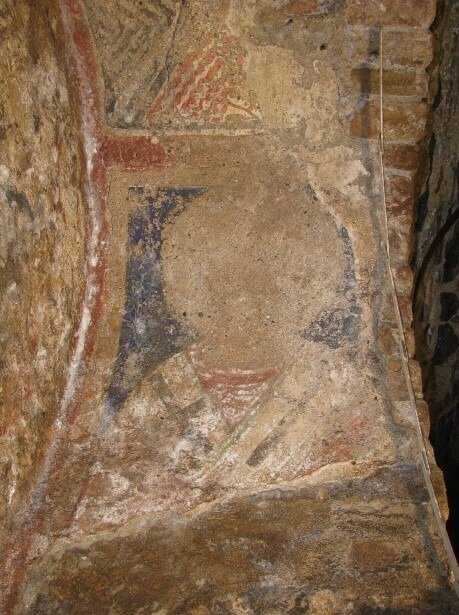
Detail of the aniconic painted layers in San Fantino's Crypt.
Parallels with Santa Marina di Delianuova
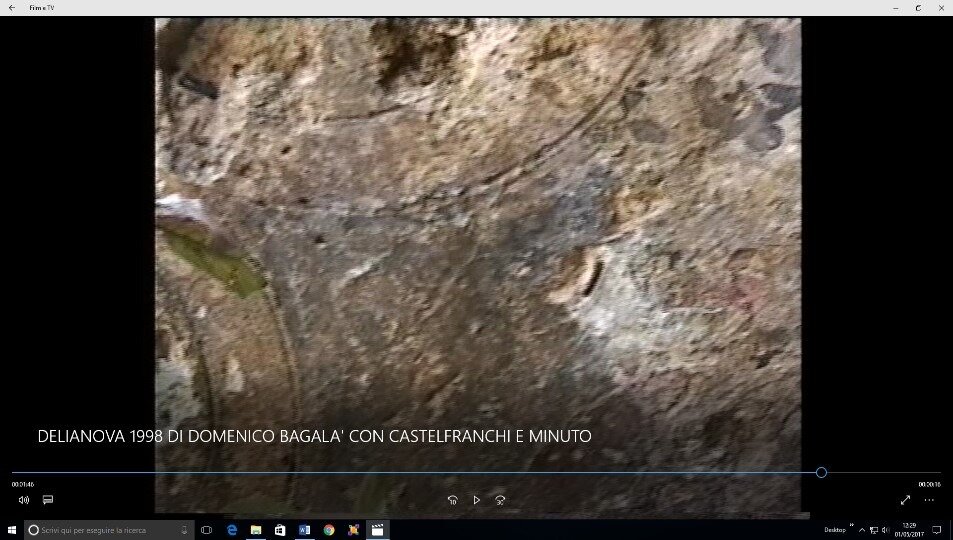
A direct parallel exists at Santa Marina di Delianuova—formerly within the diocese of Tauriana—where geometric motifs and faceless saints also appear.
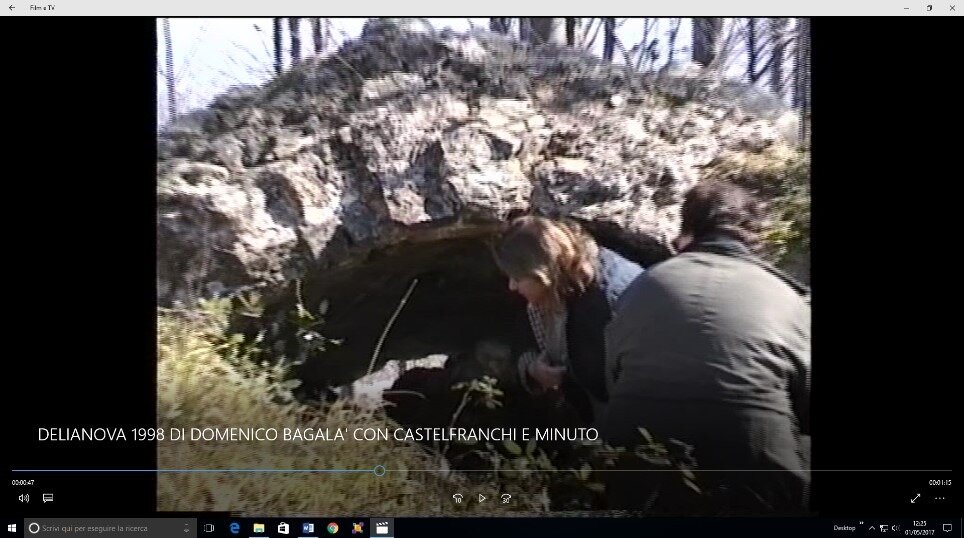
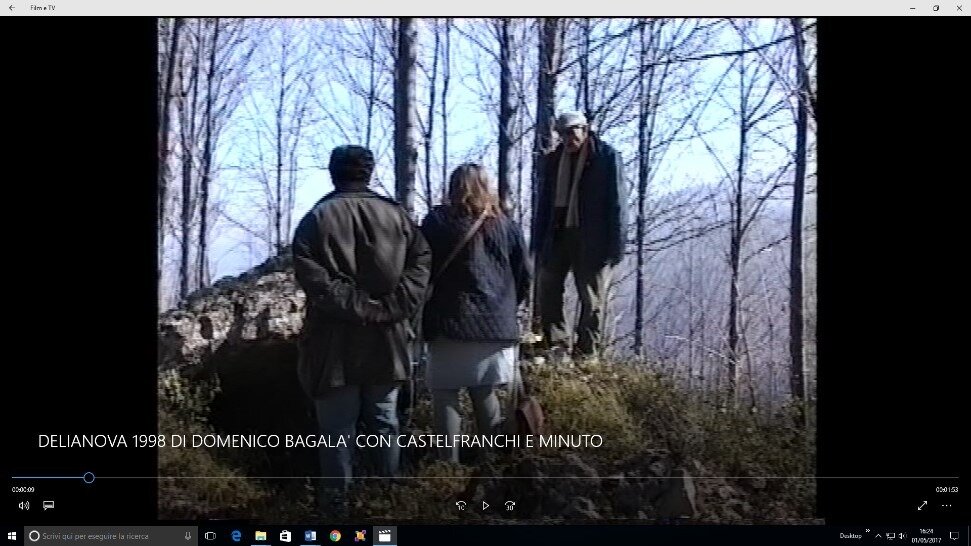
Field survey at Santa Marina di Delianuova comparing frescoes with Taureana.
Prof. Marina Falla Castelfranchi's Assessment
Prof. Marina Falla Castelfranchi (University of Salento) highlighted the exceptional historical value of these frescoes, noting that Greek dioceses in Calabria and Sicily fell under Constantinople's ecclesiastical jurisdiction during the iconoclastic era.
Prof. Marina Falla Castelfranchi examining the Byzantine decorations.
Scholarly Dialogue and Bibliography
In dialogue with Prof. Domenico Minuto (interview by Domenico Bagalà, 1998), Falla Castelfranchi confirmed the plausibility of iconoclastic testimonies in Byzantine Calabria, citing studies by Follieri, Costabile, Acconcia Longo, Otranto, Minuto, Angiò, Agostino, and Zagari.
Scholarly research linking the Byzantine dioceses of Taureana, Syracuse, and Constantinople.