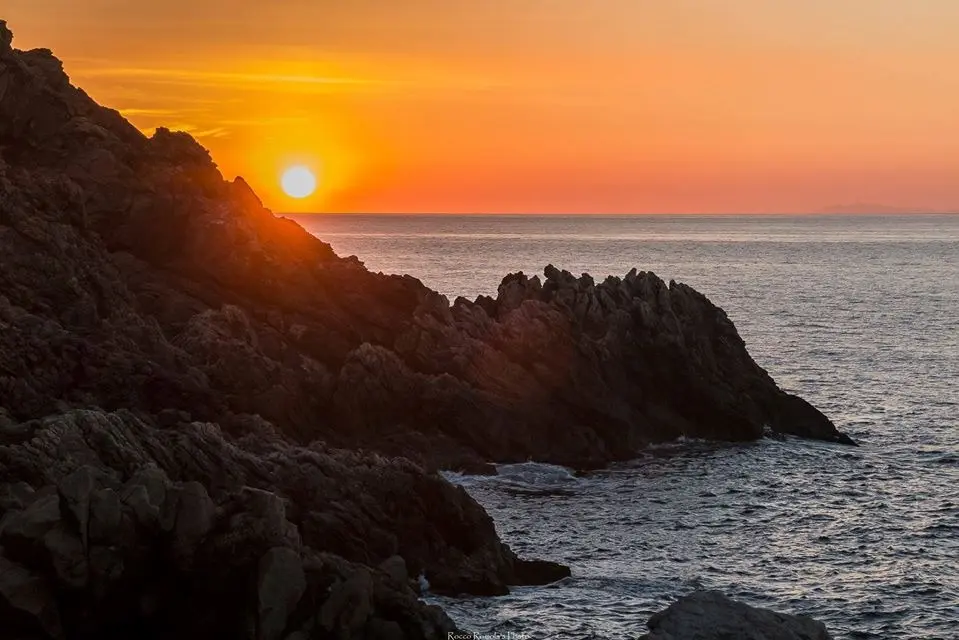
Palmi-Calabria: Rovaglioso and the Legend of Orestes
Rovaglioso Cove (Portus Orestis) in Palmi between Greek myth and historical cartography: Orestes at the seven springs of the Metaurus, the 119 steps, Legambiente award, and Janssonius' 1652 map.
Rovaglioso or Portus Orestis: Historical Traditions and Contrada La Scala
Portus Orestis (Porto Oreste) is the ancient southern Calabrian landing place traditionally attributed to the mythical Orestes on Palmi's coast. In the 16th century Tommaso Aceti wrote in De antiquitate et situ Calabriae that near the Metaurus lies Portus Orestis, called Roccaglioso (Rovaglioso) by locals.
While some sources record a bishop Longinus at the 504 Council, Calabria's Archaeological Superintendency suggests the main harbor of ancient Tauriana stood slightly further north near La Scala (between Pietrenere and Scinà), where 1950s aerial surveys reveal a sheltered sandy spit.
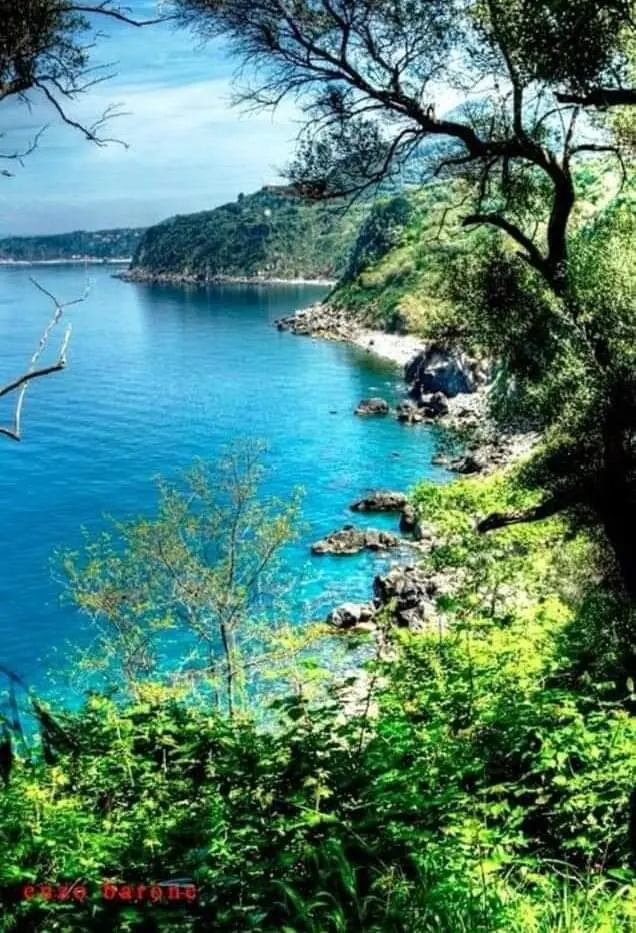
Elevated view of turquoise Rovaglioso Cove framed by Mediterranean greenery on Palmi's Costa Viola.
The Myth of Orestes, Iphigenia, and Pylades in Tauris
Son of Agamemnon and Clytemnestra, Orestes survived infancy in secret and grew up under King Strophius in Phocis. Guided by the Delphic oracle, he returned to Argos with Pylades to avenge his father's murder by killing Aegisthus and Clytemnestra.
Pursued by the Furies and acquitted in Athens through Athena, Apollo ordered him to retrieve Artemis' wooden statue from Tauric Chersonese and wash in a river fed by seven springs. Captured by King Thoas, Orestes was recognized by his sister Iphigenia, who engineered their escape by sea.
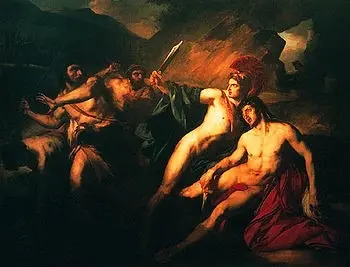
'Orestes and Pylades Fighting Enemies in Tauris', painting by François Bouchot.
Purification at the Seven Springs of the Metaurus
Reaching ancient Ausonia, Orestes landed at the mouth of the seven-spring Metaurus river (today's Petrace), where bathing restored his sanity. Local memory links this landing both to Rovaglioso and to the place-name Furia near San Filippo.
He completed his purification at Hipponium (Vibo Valentia) in Proserpina's temple and founded a sanctuary of Diana Fascelis at Reggio before reclaiming the thrones of Mycenae, Argos, and Sparta.
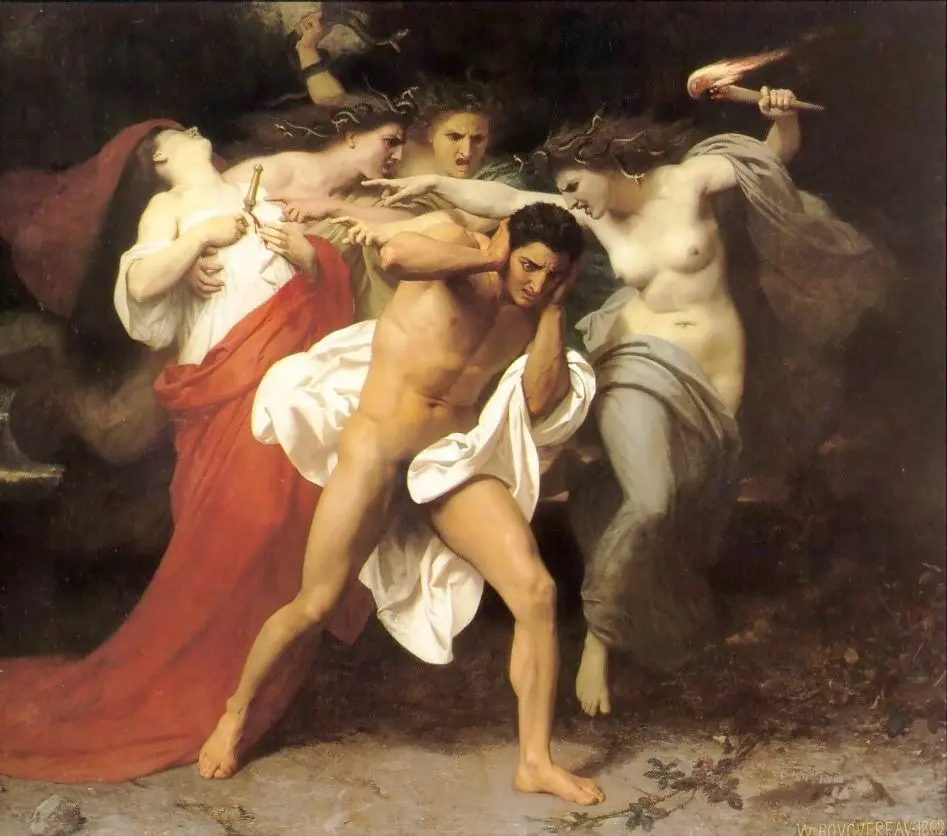
William-Adolphe Bouguereau, 'Orestes Pursued by the Furies' (1862), Chrysler Museum of Art, Norfolk.
The Cove Today, Freshwater Spring, and 2013 Legambiente Award
Opening beneath a 100-meter coastal cliff scented with orange blossom and prickly pear, Rovaglioso hides a freshwater spring forming a crystal-clear natural pool beloved by snorkelers and divers.
Restored in 2013 by the Province of Reggio Calabria, in August 2013 the cove won Legambiente's 'La più bella sei tu' prize among Italy's 17 finest beaches.
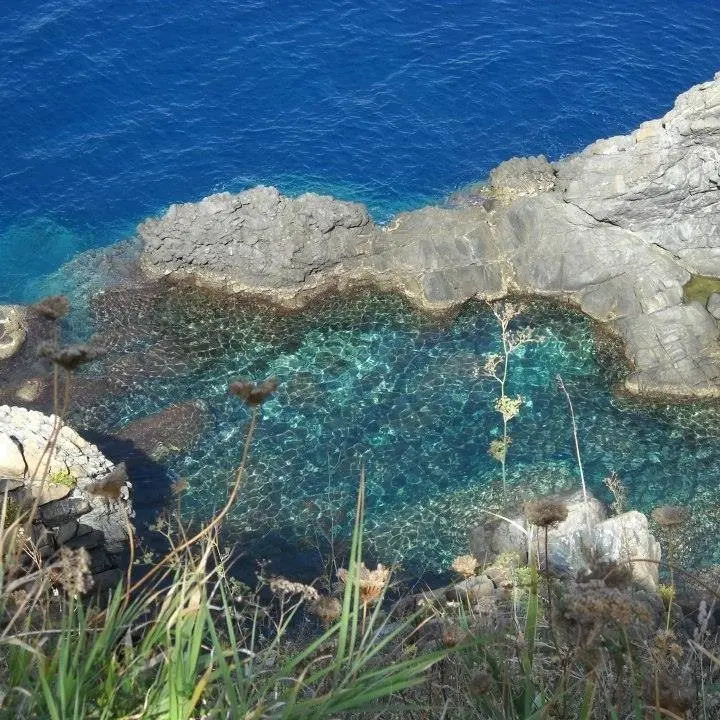
The crystal-clear natural rock pool at Rovaglioso Cove fed by coastal waters.
The 119 Steps and Written Sources from Pliny to De Salvo
From the olive-shaded overlook, a restored 119-step stone trail winds safely down to the shoreline.
Classical and Renaissance references run from Varro, Cato, and Pliny the Elder (Naturalis Historia III, 73: '...the Metaurus river, Tauroentum, Portus Orestis, and Medma') to Barrio, Marafioti, Cluverius, an 18th-century Chapel of SS. Vergine di Porto Oreste, and a 1764 Venice lexicon equating Portus Orestis with Porto Rovaglioso in Calabria—until silting shifted trade toward Gioia Tauro, as recorded by Antonio De Salvo.
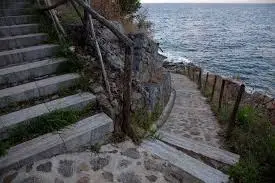
The restored 119-step stone footpath descending with wooden railings to Rovaglioso's cliffs.
Calabria in Joannes Janssonius's Atlas Novus (1652)
In early modern European cartography, the mythical port endured: a hand-colored copperplate map printed in Amsterdam in 1652 by Joannes Janssonius—drawn from Hornius's Accurata Orbis antiqui Delineatio in Atlas Novus vol. VI after Ortelius—depicts ancient southern Italy beneath the cartouche 'Itala nam tellus Graecia major erat'.
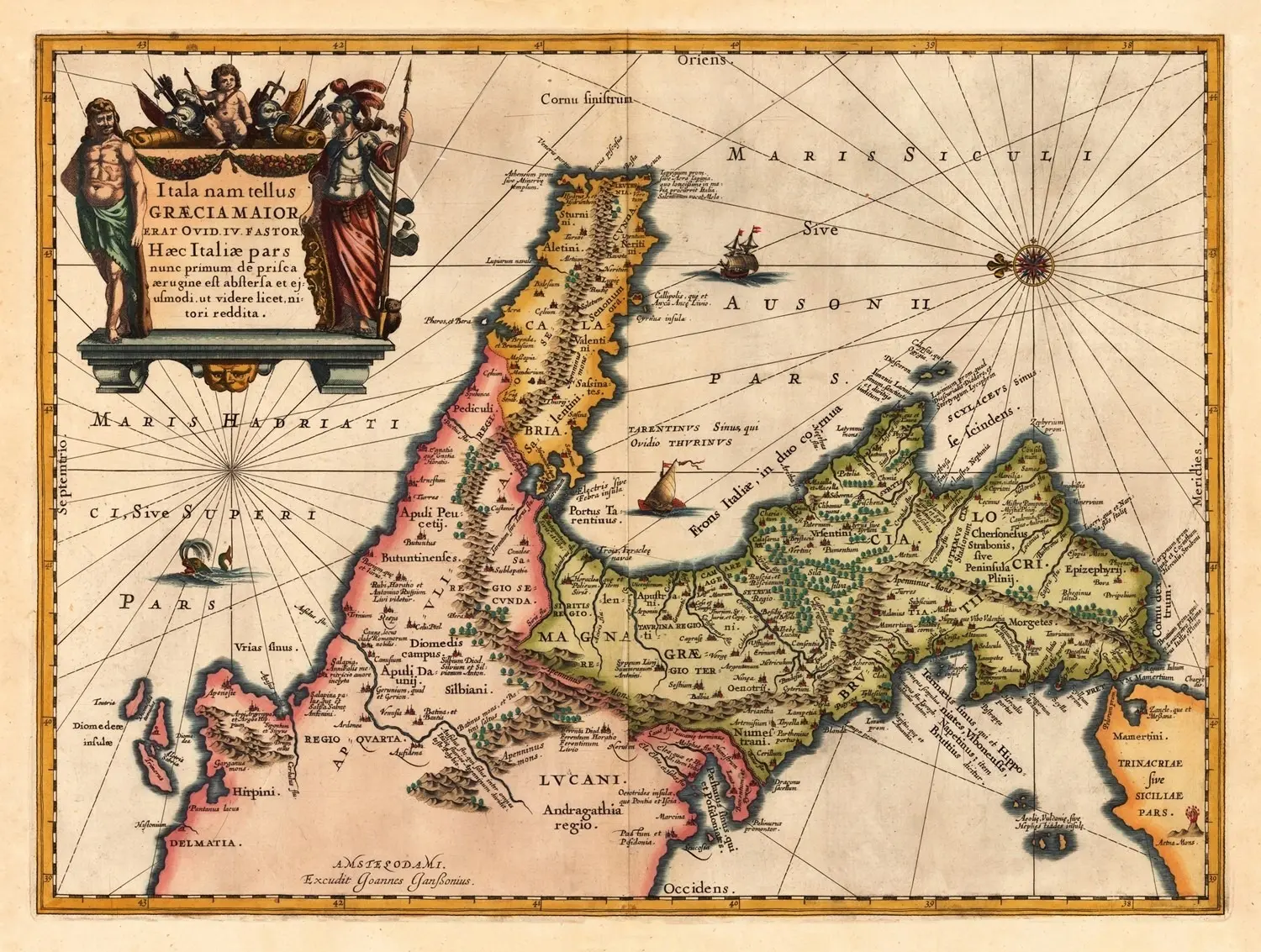
1652 hand-colored map of ancient Magna Graecia and Calabria by Joannes Janssonius (Atlas Novus, Amsterdam).
'Orestis portus' on Early Maps Between Taureana and Metaurus
Zooming in on Calabria's Tyrrhenian coast on Janssonius's 1652 map, between Metaurus and the Strait facing Sicily's Pelorum prom., the label 'Orestis portus' stands out clearly—confirming its entrenched place in European antiquarian geography.
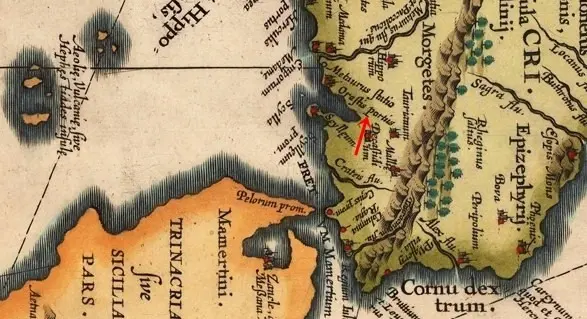
Detail of Janssonius's 1652 map highlighting 'Orestis portus' along the Calabrian Tyrrhenian shore.