Palmi Calabria: On the Route of Ulysses Like Pumice Stone...
The Homeric thesis linking Lipari, Palmi, and the Ionian coast: why Scheria (Land of the Phaeacians) aligns with Calabria and Ulysses' shipwreck between Rovaglioso and Trachina Caves.
From Ogygia to the Land of the Phaeacians: The Strait Riddle
Around the 8th century BCE Homer recounted Ulysses' journey from Troy to Ithaca. Over twenty-five centuries more than seventy conflicting routes have been proposed, yet Homer specifies roughly sixty active sailing days alongside eight years spread over twelve stops.
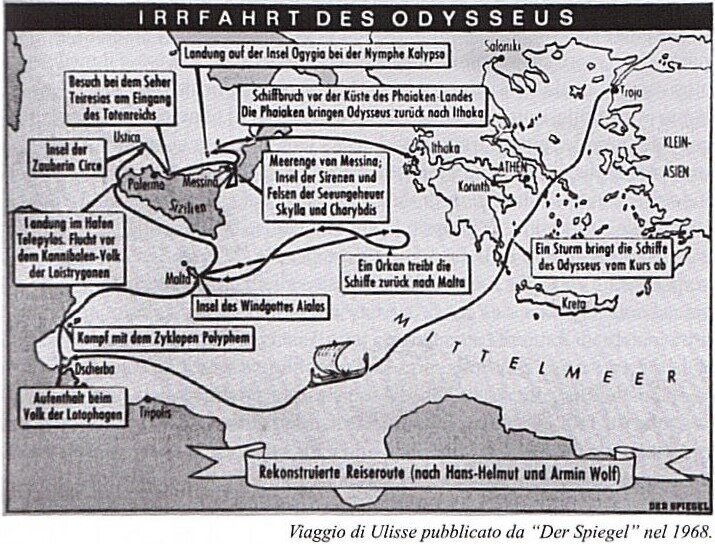
Earlier theories failed to explain how Ulysses could pass Scylla and Charybdis, be driven back beyond the Strait, and then return home from the Phaeacians without crossing the Strait a third time—since, seen from Greece, their land lies both before and behind Scylla and Charybdis.
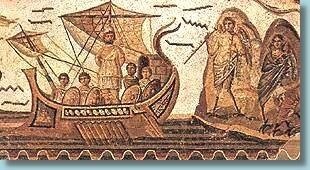
Roman mosaic showing Ulysses bound to the ship's mast facing the Sirens (Bardo Museum).
Scheria as the Calabrian Mainland: The Tyrrhenian–Ionian Pass
Calabria uniquely satisfies both Homeric clues: its western Tyrrhenian shore is reached sailing east from Lipari, while its eastern Ionian shore opens straight east toward Ithaca. Homer never calls this land an island; he names it Scheria (mainland), and traces a multi-day inland crossing on foot and mule carts matching the Tauriana–Oppido–Mella mountain corridor later followed by a branch of the Roman Via Annia Popilia.
Reconstruction map of Odysseus' route published by Der Spiegel in 1968 (Hans-Helmut & Armin Wolf), showing Scheria on Calabria's coast.
From Rovaglioso to Trachina: Like Aeolian Pumice
Buffeted on his raft, Ulysses first hit steep cliffs matching the stretch between Rovaglioso and Trachina directly opposite Lipari—where marine currents still wash Aeolian pumice stone onto Palmi's shore. He then reached gentler strands near Trachina or Pietrosa and spent the night inside the Cave of Trachina, frequented in protohistory by the Sea Peoples.
At King Alcinous' court, Ulysses listed his twelve stages from Troy, Cape Malea, Malta, Marsala, Mount Erice, Ustica, Himera, the Strait of Messina, and Lipari to Calabria—Homeric Scheria in the territory of Palmi.
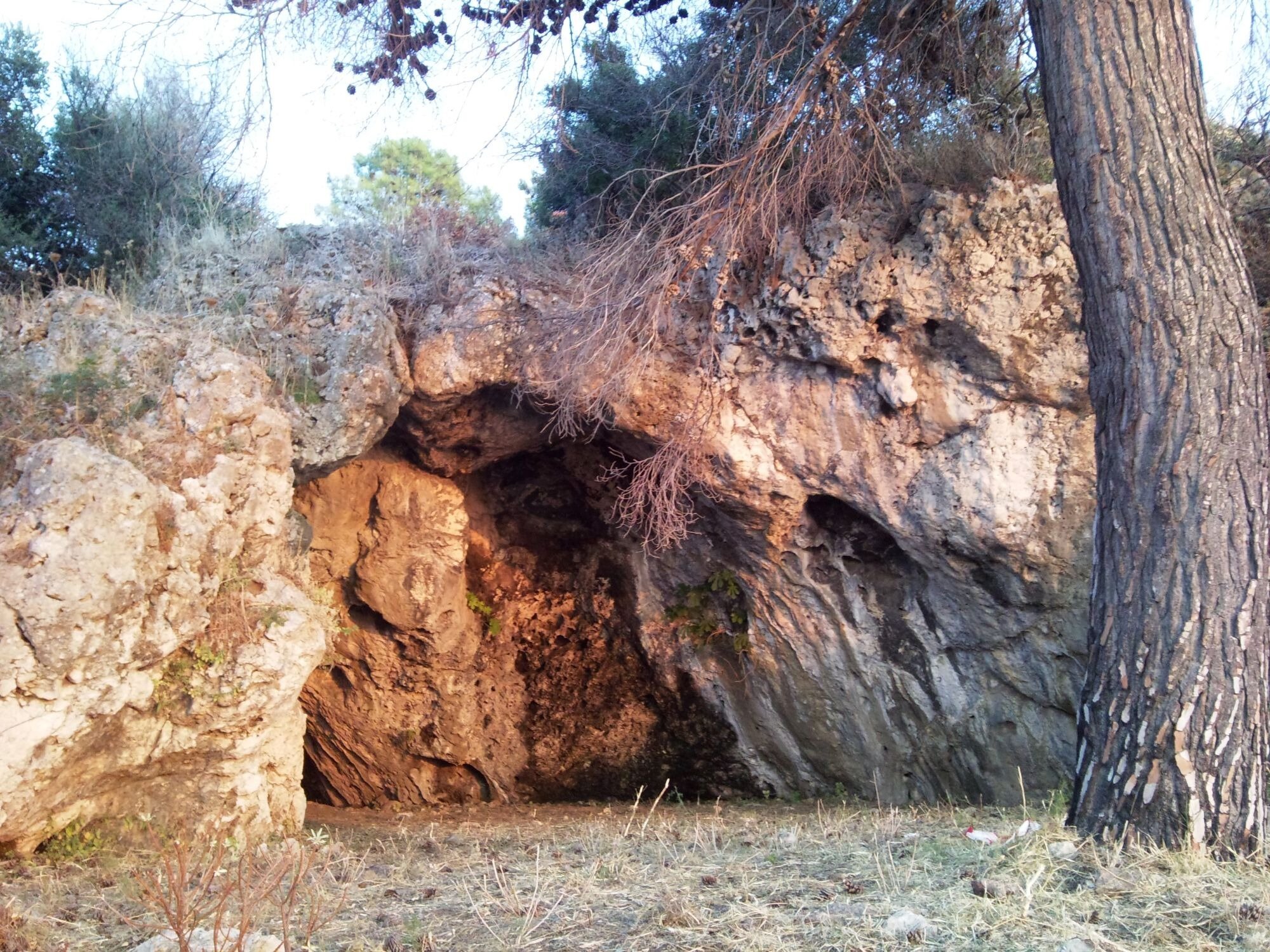
Coastal cliff and entrance to the Cave of Trachina in Palmi facing the Aeolian Sea.