Leonida Repaci: The Anti-Fascist Writer Who Told Calabria's Story
Born in Palmi in 1898, Leonida Repaci was a writer, painter, and anti-fascist leader: from Italia Libera to the Roman Resistance, the Viareggio Prize, and the Casa della Cultura.
Childhood in Palmi and Law Studies in Turin
Leonida Repaci was one of the leading Italian writers and intellectuals of the 20th century. Born in Palmi in 1898 into a well-off family on Calabria's Tyrrhenian coast, his comfortable childhood changed abruptly when his father lost his fortune gambling. Experiencing poverty and social inequality firsthand forged his political and literary conscience.
After classical high school, he moved to Turin to study Law, joined socialist circles and the Italian Socialist Party (PSI), and began writing biting critiques against worker exploitation that soon drew the hostility of the fascist regime.
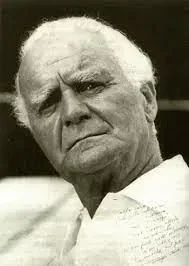
Photographic portrait of Leonida Repaci with handwritten dedication.
From Defending Ustori to Italia Libera, Exile, and the Resistance
Uncompromising in ideology and combative in spirit, Repaci openly defended Federico Ustori in the Teatro Diana trial, challenged Galeazzo Ciano to a duel, and acted as second against Roberto Farinacci between 1922 and 1924. After Giacomo Matteotti's murder in 1925, he left the PSI and co-founded the underground anti-fascist movement Italia Libera.
Forced into a twenty-year exile across Europe in 1926, he fought and was wounded in the International Brigades during the Spanish Civil War. On September 9, 1943, together with Pacini, Tosi, Bernini and local citizens, he stormed an arms depot at Palazzo Pallavicini Rospigliosi—sparking the Roman Resistance. He stood for the PCI in 1948 and passed away in Marina di Pietrasanta on July 19, 1985.
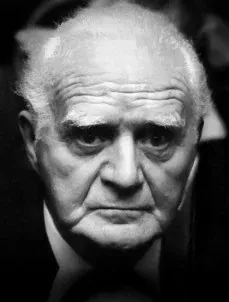
Black-and-white portrait of Leonida Repaci, key figure of Italian culture and anti-fascism.
Literary Themes, the Viareggio Prize, and Storia dei Rupe
In 1923 his debut novel L'ultimo Cireneo allowed him to leave law for full-time writing. In 1925 he staged La madre incatenata, inspired by fascist persecution of his family. In 1929, from his idea with Carlo Salsa and Alberto Colantuoni, the Premio Viareggio Rèpaci was founded in Milan—inaugurated alongside Luigi Pirandello and Massimo Bontempelli—going on to honor Saba, Morante, Gadda, Calvino, Ginzburg, Pasolini, Quasimodo, Moravia, and Alda Merini. Around the same time he married Albertina Antonelli.
He won the Premio Crotone (1956), the Premio Villa San Giovanni (1958), and the Premio Sila (1970) for Tra guerra e rivoluzione within the monumental four-part saga Storia dei Rupe. In 1959 he appeared as himself in Federico Fellini's La dolce vita.
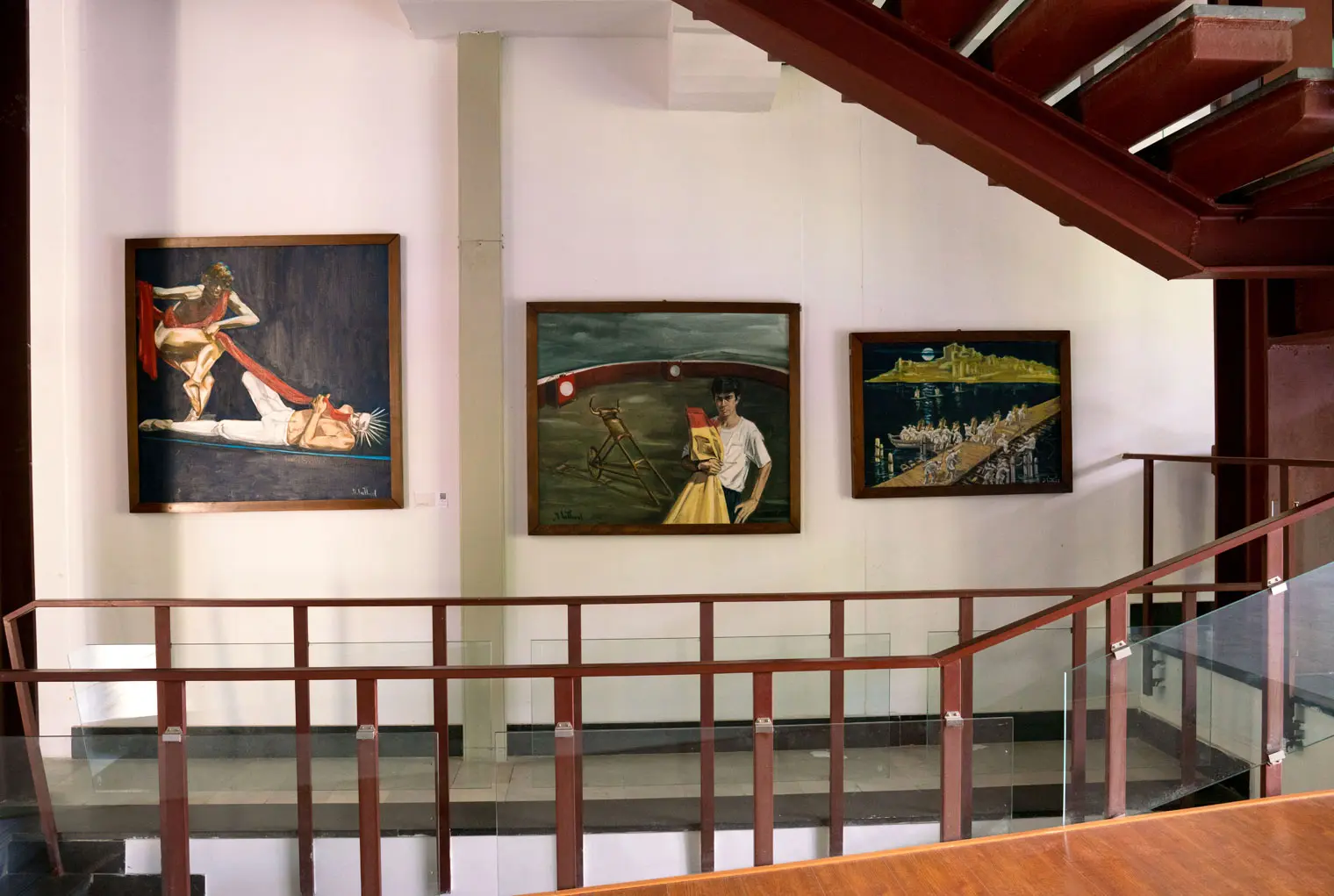
The halls of Palmi's Casa della Cultura, preserving books, letters, and artworks donated by Leonida Repaci.
Painting, International Civic Engagement, and Honors
In his youth Repaci studied in Naples under sculptor Michele Guerrisi, cultivating painting throughout his life with solo shows in Italy and France—including Milan and Rome in 1971. His works include Donna con ventaglio (1969), a spare, near-geometric female nude.
He founded the Premio Fila delle Tre Arti (1947) and the Premio Sila (1948), co-organized the 1950 conference La Resistenza e la Cultura italiana, joined the World Peace Council with Aragon, Brecht, Picasso, and Sartre, chaired the pacifist commission at the 1955 Helsinki Congress, and directed Realtà sovietica under Antonio Banfi. He received an honorary degree from the University of Messina and honorary citizenship of Palmi.
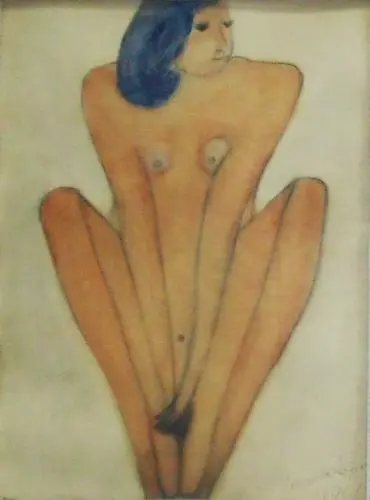
'Donna con ventaglio' (Woman with Fan, 1969), painting by Leonida Repaci.
Repaci's Legacy in Palmi: Villa Pietrosa and the Casa della Cultura
Before his death, Leonida Repaci donated his Liberty-style seaside residence Villa Pietrosa, along with his library and art collection, to his native Palmi.
Preserved today inside the Casa della Cultura Leonida Repaci alongside rare photographs and letters, his legacy commemorates an author of over forty works who ennobled Calabria's voice.
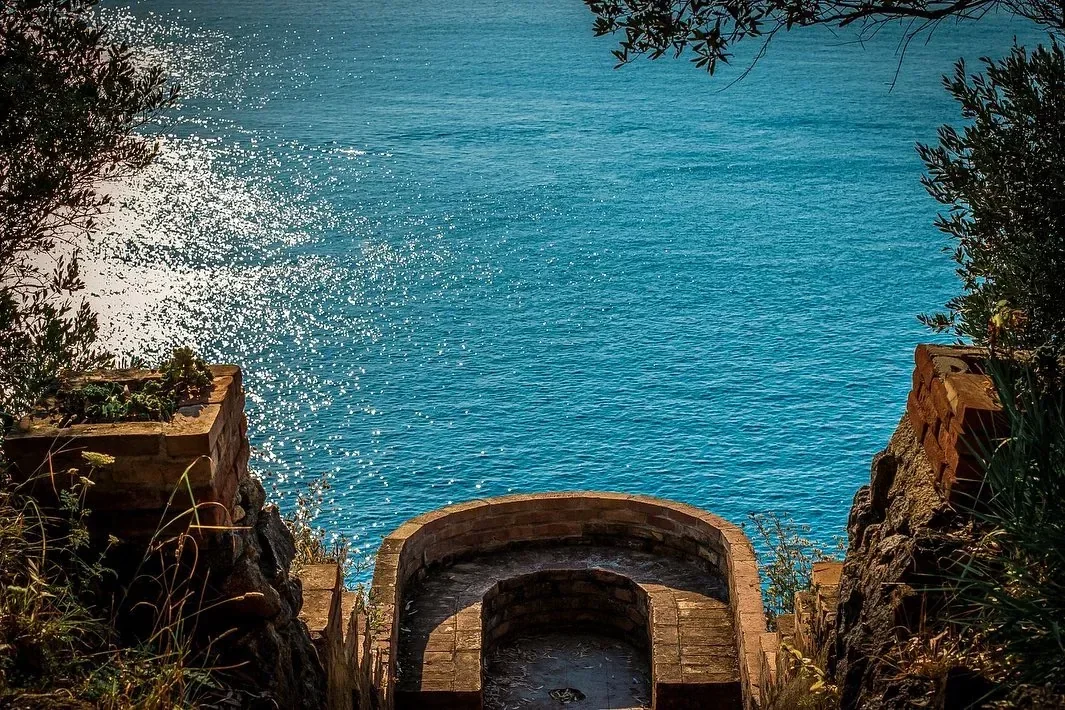
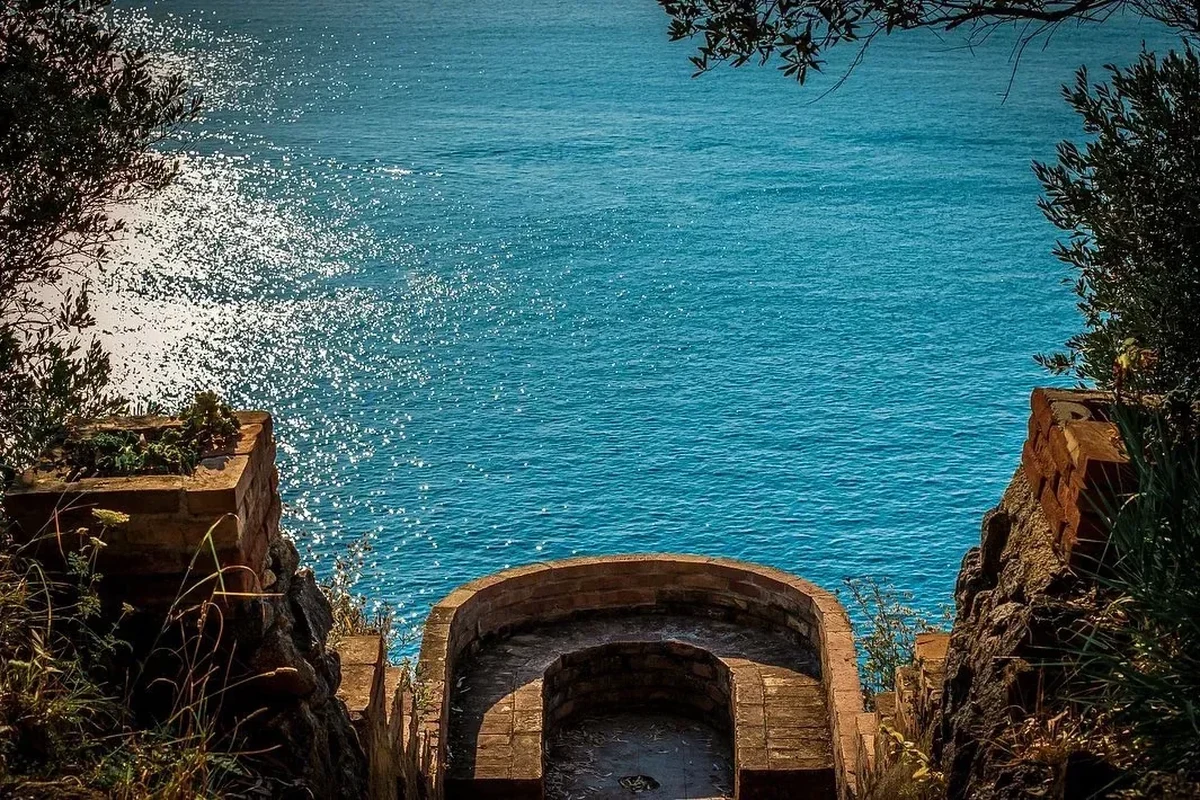
Villa Pietrosa in Palmi, Repaci's Liberty-style residence overlooking the Costa Viola sea.