What to See in Calabria: The San Fantino Complex in Taureana di Palmi, Calabria's Oldest Worship Site
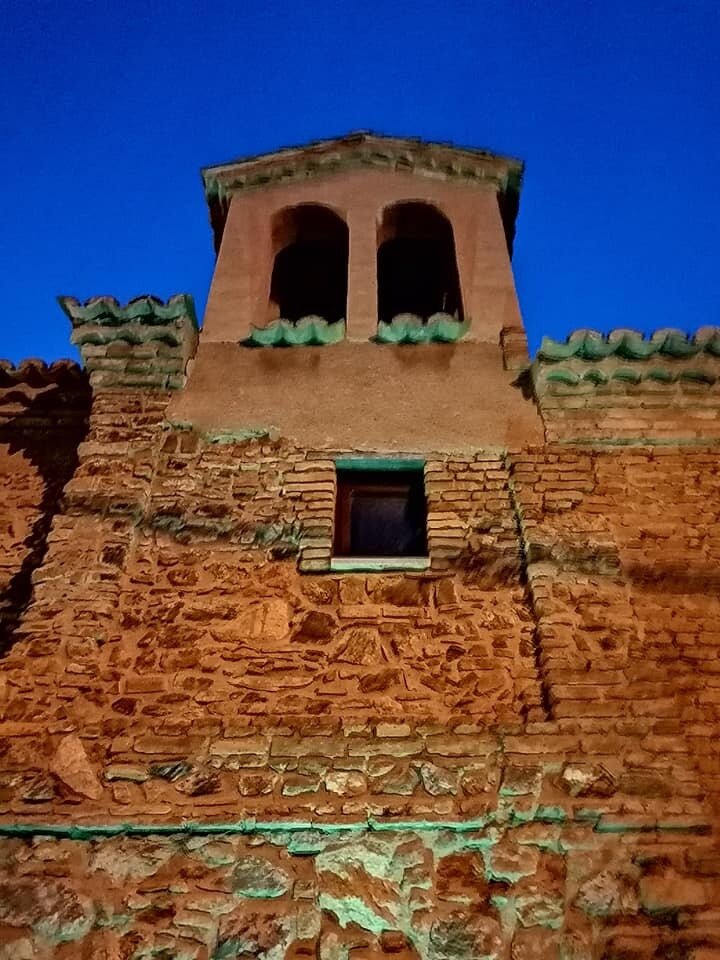
The archaeological complex of San Fantino in Taureana di Palmi comprises the 19th-century church, the remains of early Christian and medieval churches, and the Crypt of San Fantino, Calabria's oldest Christian place of worship.
The Archaeological Complex and the Temple of San Fantino
The archaeological complex of San Fantino is located in Palmi, on Via del Vescovato in Taureana, and consists of a nineteenth-century church, the remains of earlier early Christian and medieval churches, and the «Crypt of San Fantino», the oldest Christian place of worship in Calabria, which once housed the relics of the saint.
Today the parish title of San Fantino has been transferred to the new church built in 1963 on Via del Mare.
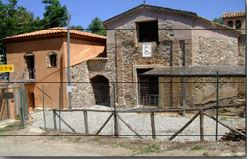
The Temple of San Fantino in Taureana di Palmi, now restored and used as a museum.
History of the Excavations: From 1952 to the San Fantino Cultural Movement
In 1952, inside the abandoned church of San Fantino, excavations accidentally brought to light the Crypt of San Fantino, where the patron saint was likely buried.
Between 1993 and 1994, further archaeological excavations uncovered the early Christian-Byzantine complex, and restoration of the former 19th-century church — now a museum — began through the «Movimento Culturale San Fantino», a cultural volunteer association that adopted the site in 1998. Restoration works were completed in the 21st century.
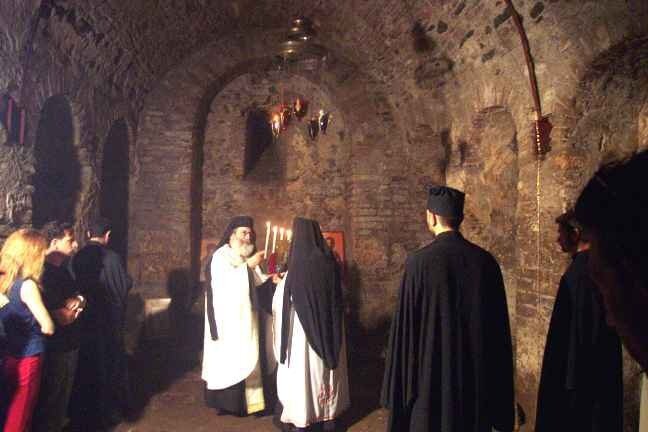
Interior of the Crypt of San Fantino, uncovered during the 1952 excavations.
The Crypt of San Fantino: Architecture, Brick Stamps, and Frescoes
The crypt originally held the urn with the remains of San Fantino. Located beneath the temple, this underground chamber was once thought to be a 2nd-century Roman nymphaeum, though recent scholarship identifies it as a Roman cistern reused as a burial site upon the saint's death. Experts agree it is the oldest Christian worship structure in Calabria.
Shaped like a basin with four blind arches along each longitudinal wall and one on the eastern wall featuring a trapezoidal water conduit, its mixed brickwork bears stamps reading «TAYPIANOIM» and «APMOAICKOY». Fourth-century inscriptions, mosaic fragments, and frescoes discovered in 1952 (depicting Saints John Chrysostom, Basil, and Gregory) match the «lower tomb» described in San Fantino's bios, fed by water still regarded as blessed and miraculous.
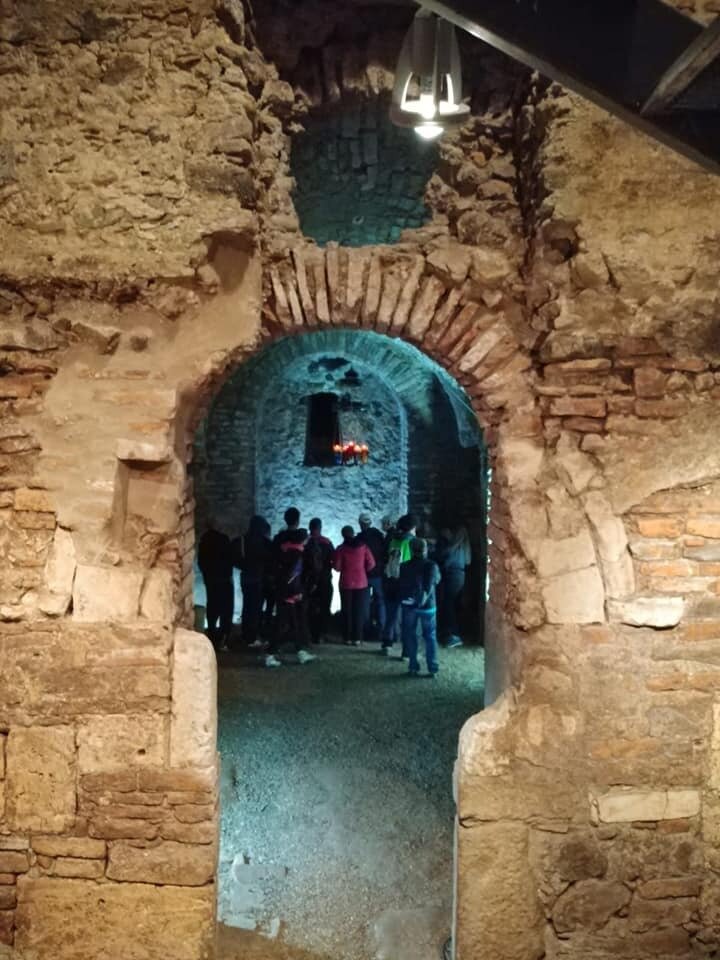
Detail of the blind arches and ancient brickwork inside the Crypt of San Fantino.
The Nineteenth-Century Church and Remains of the Byzantine Basilica
The nineteenth-century church was built in 1857 by Abbot Pietro Militano, with a south-facing entrance, replacing the earlier church destroyed by the 1783 earthquake.
The remains of the 6th–8th century Byzantine basilica sit above the crypt, oriented eastward outside the current temple's eastern wall, where the 1993 excavations revealed its pavements and two apses.
The nineteenth-century church built in 1857 by Abbot Pietro Militano and adjacent excavation areas.
The 1552 Medieval Church, Sources, and Visiting Info
The 1993 excavations also uncovered the pavements and inner walls of the church rebuilt in 1552 by Count Pietro Antonio Spinelli, feudal lord of Seminara and Palmi, aligned east-west with a north entrance and traces of painted plaster. Outside on the left, structures of both the Byzantine and medieval churches and several tombs (now covered) — likely belonging to monks of the 1552 monastery — confirmed the historical accounts in San Fantino's «bios».
Visit: Archaeological Park of the Tauriani (parcoarcheologicodeitauriani.org). Text source: it.wikipedia.org/wiki/ComplessodiSan_Fantino (CC BY-SA 3.0).
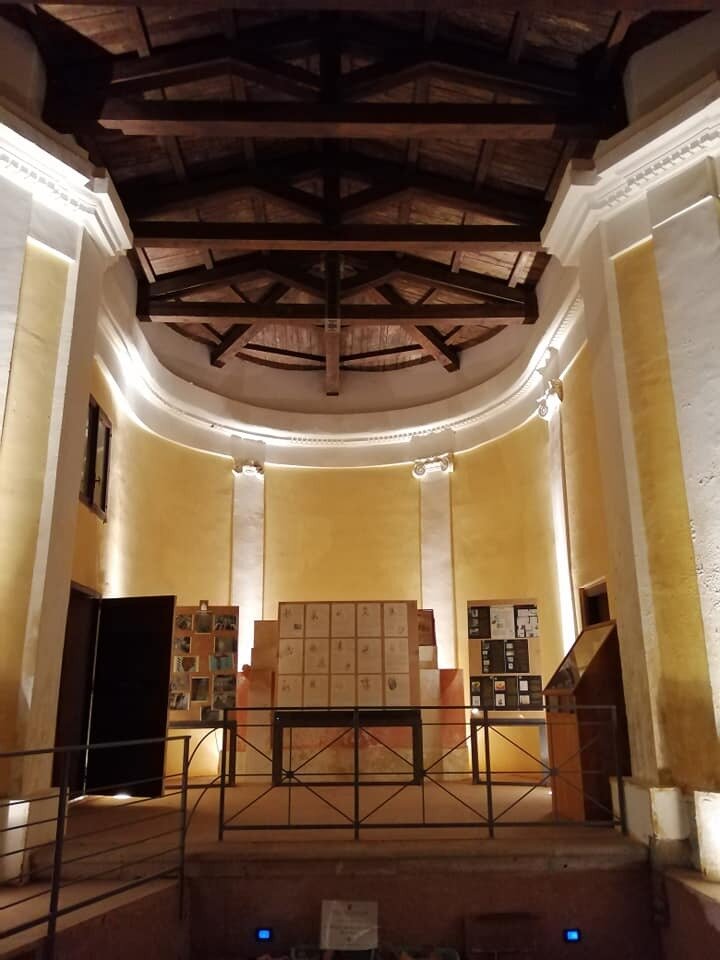
View of the San Fantino Complex in Taureana di Palmi showing its historical layers.