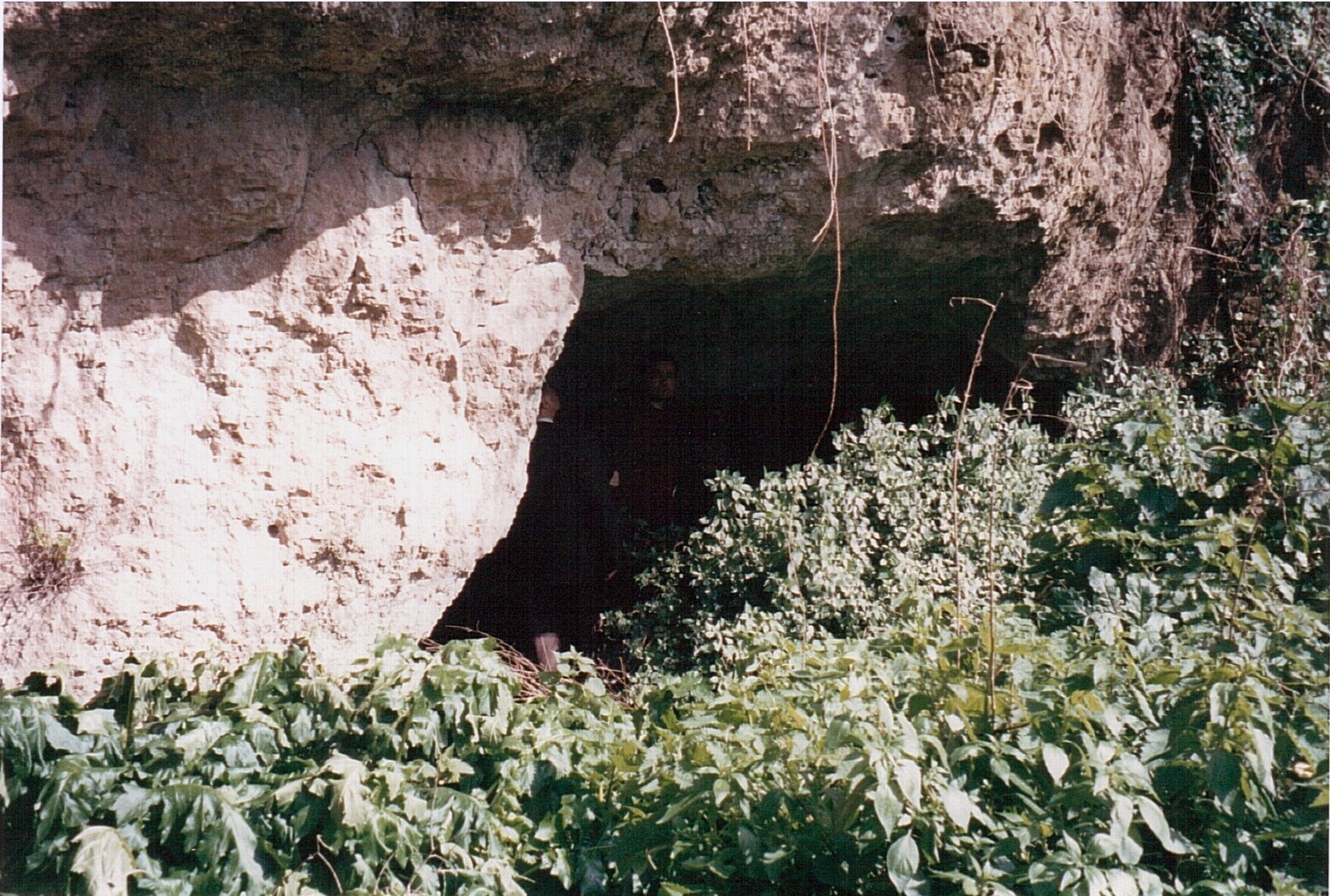
Palmi: Rock-Cut Settlements from Prehistory to the Middle Ages
Study by Dr. Domenico Bagalà from the excavations of Taureana and Trachina Cave to the Italo-Greek monastic complex of Pignarelle Caves.
From Prehistory to the Middle Ages: Taureana and Trachina
Archaeological excavations in Palmi reveal continuous human presence from 3000–2500 BC to the 12th century AD, documented by prehistoric huts on Taureana plateau and 1993 excavations at Trachina Cave uncovering Early Bronze Age structures beneath classical and medieval layers.
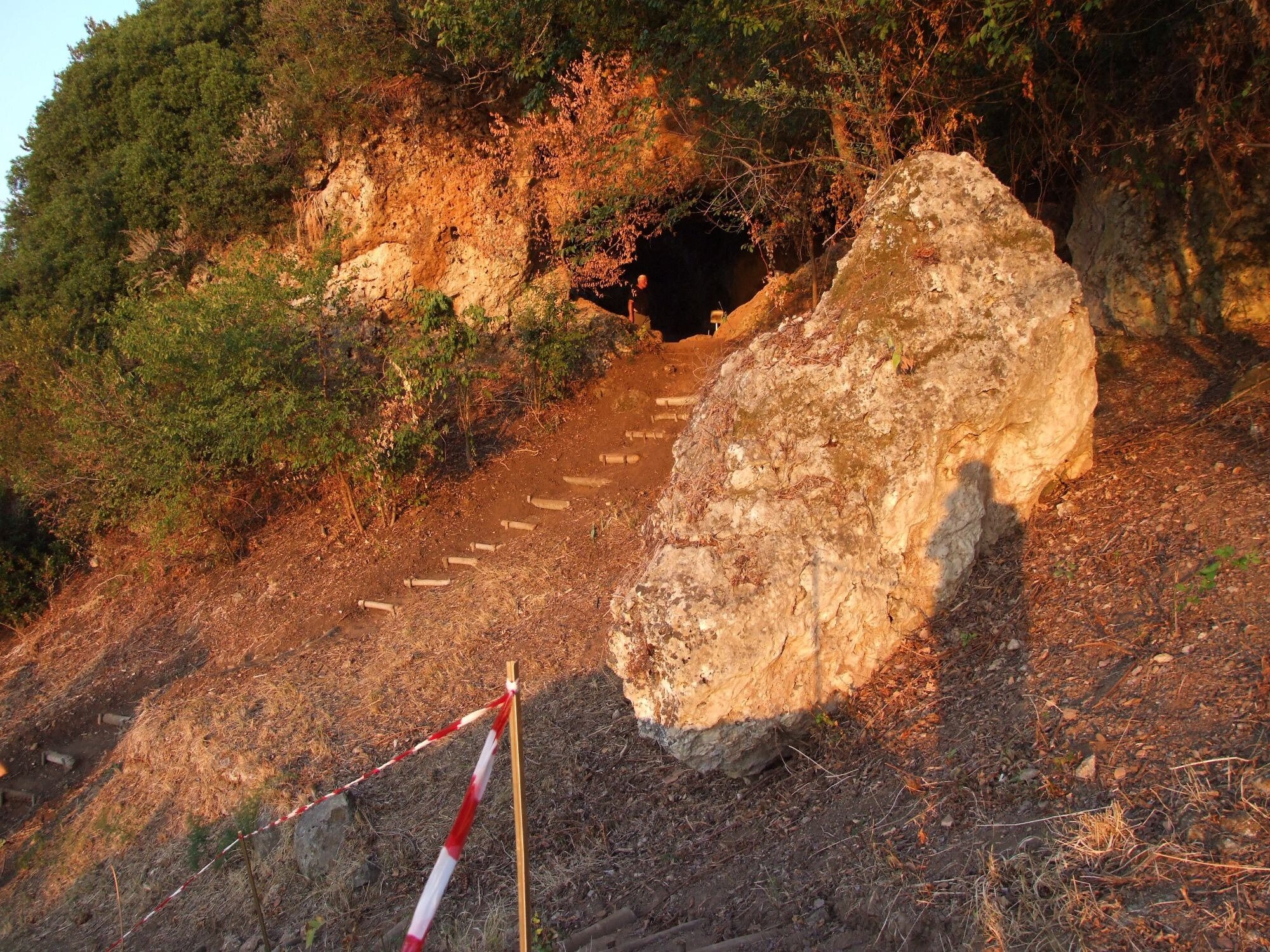
Rock-cut settlement in Palmi between Taureana and the Tyrrhenian coast.
Middle Helladic Pottery and 1991 CAST–CNRS Surveys
Trachina Cave yielded a Middle Helladic vase fragment imported from Greece (studied by Prof. Santo Tinè, now at Reggio Calabria Museum), predating Aeolian Mycenaean finds by two centuries. In 1991, Domenico Bagalà guided CAST Bari and CNRS Paris researchers across Palmi's cave complexes.
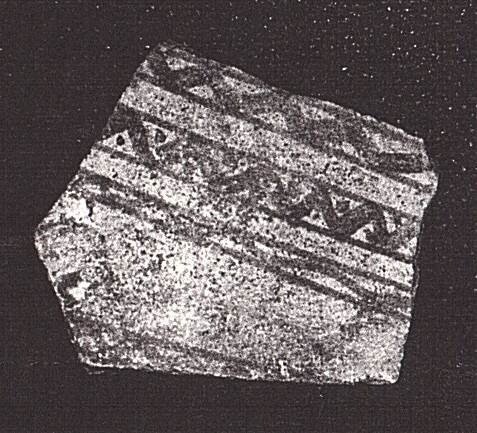
Middle Helladic pottery fragment from Greece exhibited at Reggio Calabria Museum.
Trachina Cave: Stratigraphy and Coastal Lookout
Opening in granite near the coast with a 4–5m vault, Trachina Cave preserves prehistoric ceramics (2500–1500 BC), animal bone deposits, medieval finds, and an upper lookout cavity facing Sicily and the Aeolian Islands (Carofiglio, Favia, Rinaldi report).
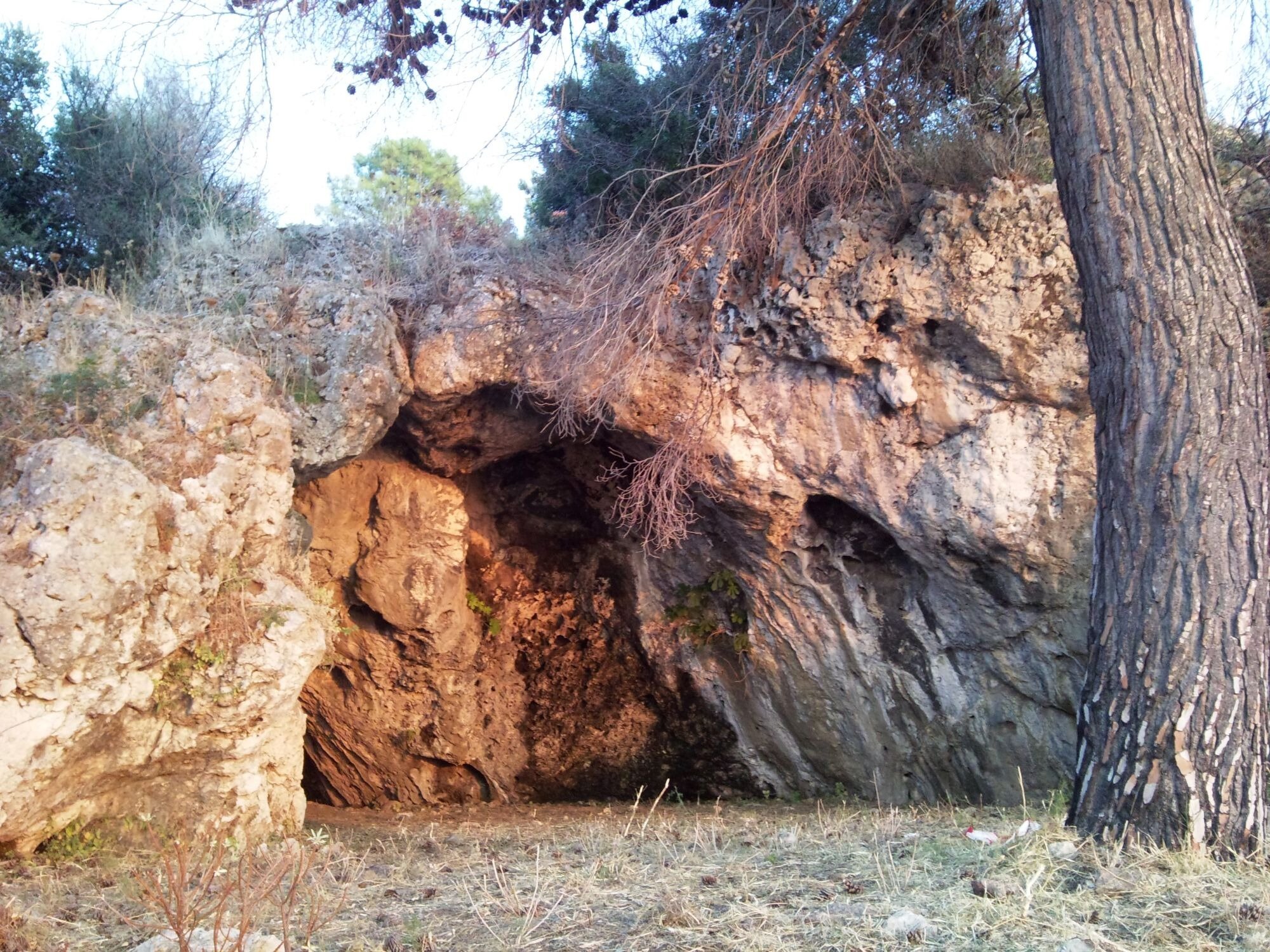
Trachina Cave in Palmi during archaeological survey.
Rovaglioso Urnfield (2006) and the Tauriani
In 2006 at Rovaglioso (Porto Oreste), large funerary amphorae with ashes and bones came to light—likely an Italic urnfield linked to the Tauriani settled between Rovaglioso, Taureana, and Aspromonte.
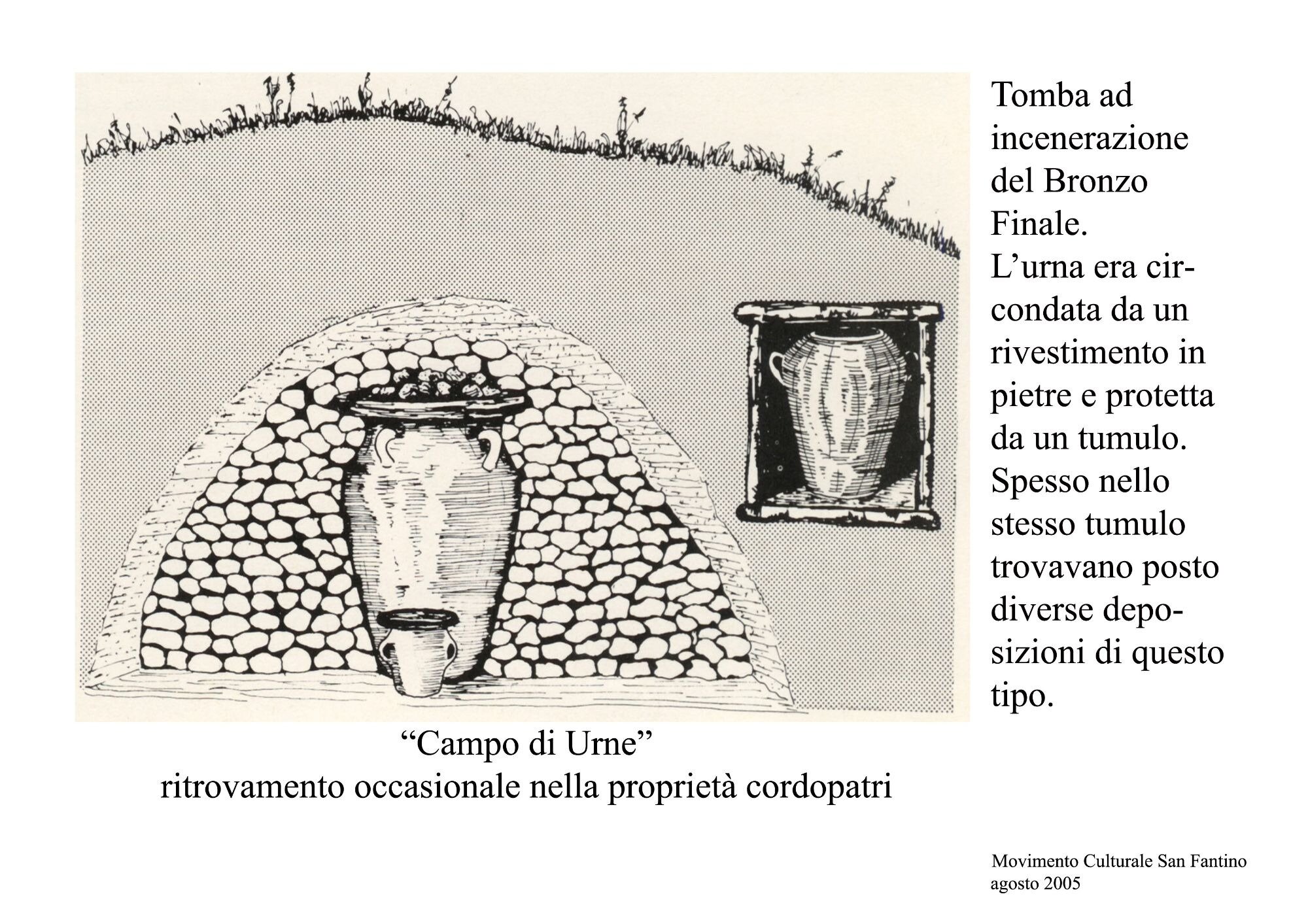
Large funerary amphorae from the Rovaglioso urnfield.
The Thesunti Tauriani in Cato's Origines
Cato's Origines records the Thesunti Tauriani, their seven rivers (ending at Pecoli on the Rhegion border), and the myth of Orestes arriving with Iphigenia and Pylades.
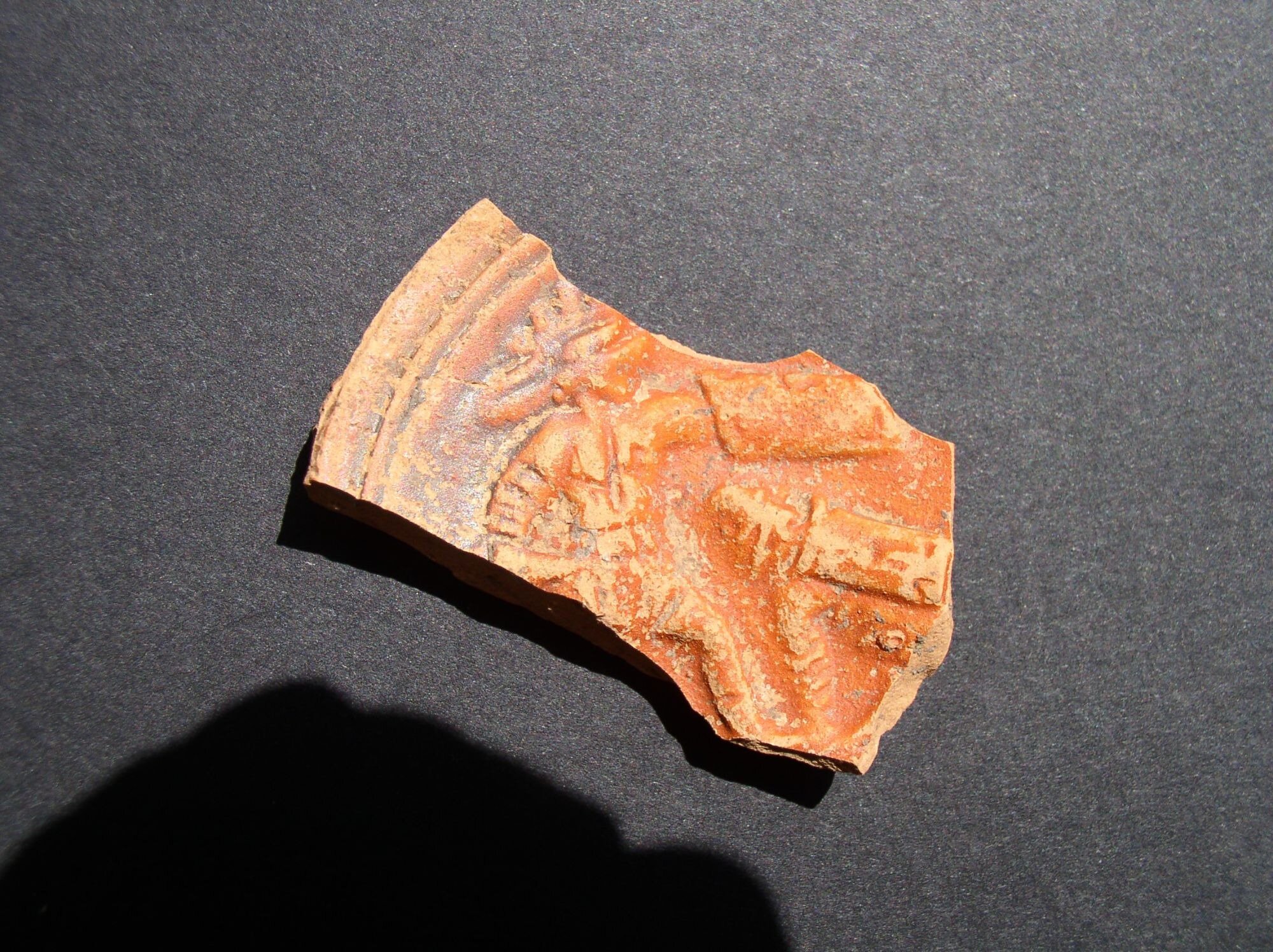
Fragment depicting a Tauriani Italic warrior (D. Bagalà find).
From Taurianum to Roman Annexation
Following Tauriana's peaceful annexation by Rome in the 1st century BC (unlike nearby Mella at Oppido, which was stormed by force as studied by Liliana Costamagna), Tauriana remained a thriving coastal city with a major Mediterranean port through Late Antiquity.
Its ruins and 4th–5th century AD funerary inscriptions confirm its vitality in early Christian times, around the tomb of Saint Fantino, Calabria's oldest documented saint.
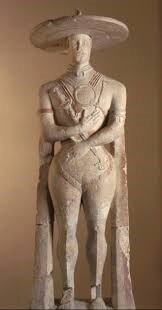
Iconography of an Italic Tauriani warrior.
The Tauriani Brick Seal and the Eparchy of Saline
Prof. Domenico Minuto noted how Tauriana inherited the civic legacy of the Tauriani—attested by bricks stamped in Greek characters inside Saint Fantino's crypt (Felice Costabile) and Byzantine lead seals (Francesca Zagari)—until Lombard raids recorded by Pope Gregory the Great in 591 forced residents into the caves.
Between the 6th and 11th centuries, Eastern and Greek monks—many of them hesychasts fleeing iconoclastic wars and Arab advances—created roughly one hundred rock-cut cavities listed in Italy's National Cave Cadastre across Pignarelle, Affaccio, Rocca Campana, Cubola, San Mercurio, San Leonardo dell'Arenario, San Michele di Vitica, Trachina, Barritteri, and Seminara.
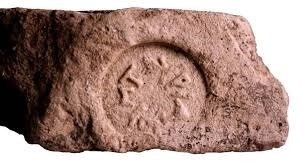
Ancient brick stamped with the Greek seal of the Tauriani from Saint Fantino's crypt in Taureana.
The Pignarelle Caves Gorge
Located 1 km from the sea in a tuff and sandstone ravine, Pignarelle comprises six main multi-level caves, three bearing carved crosses.
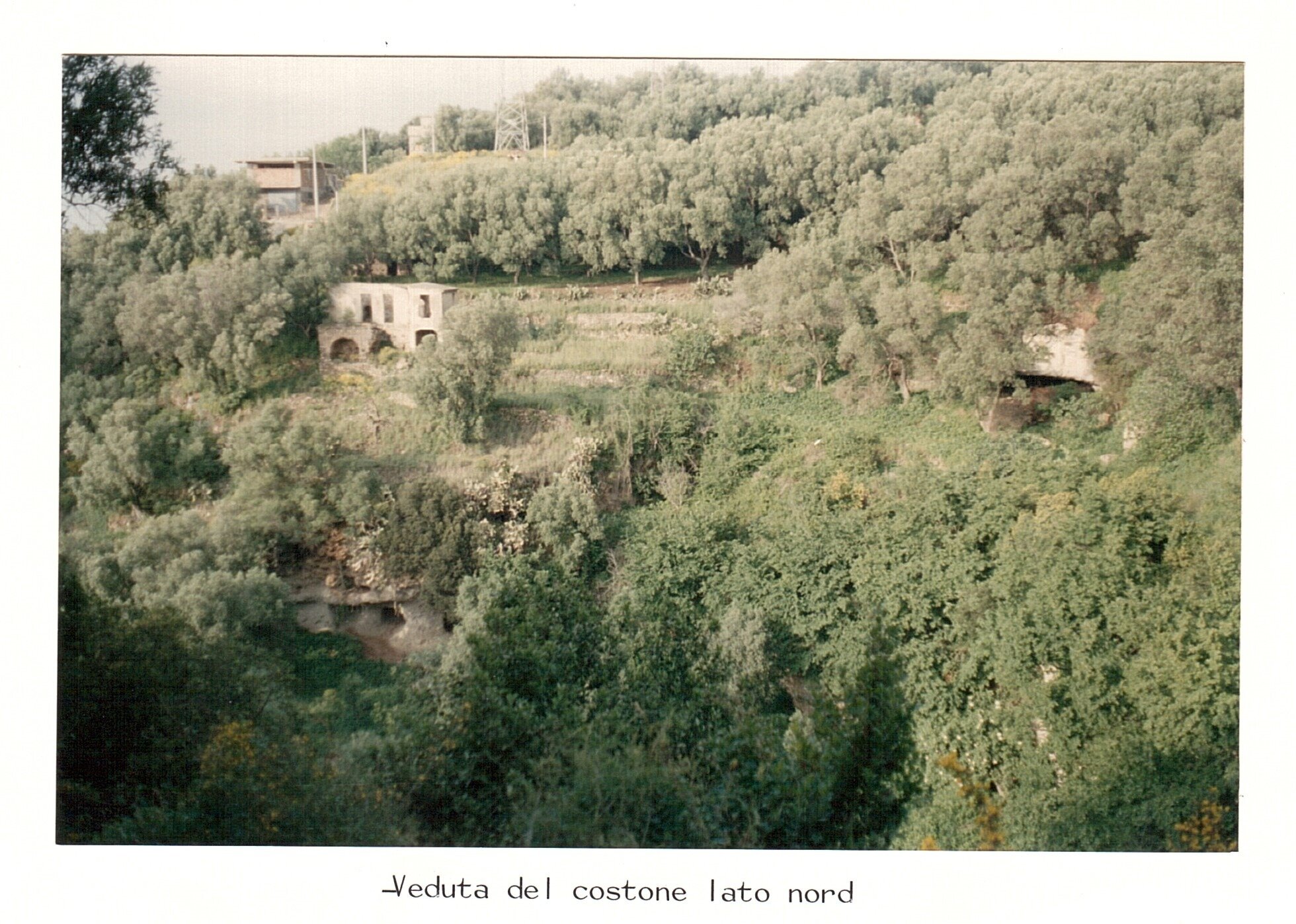
Overview of the rock-cut chambers at Pignarelle Caves.
Vallaretta Cave and Carved Crosses
Vallaretta features a fortified wall with an east-facing loophole and a Syro-Melkite equal-armed cross on the entrance vault, plus a nearby Coptic-style cross.
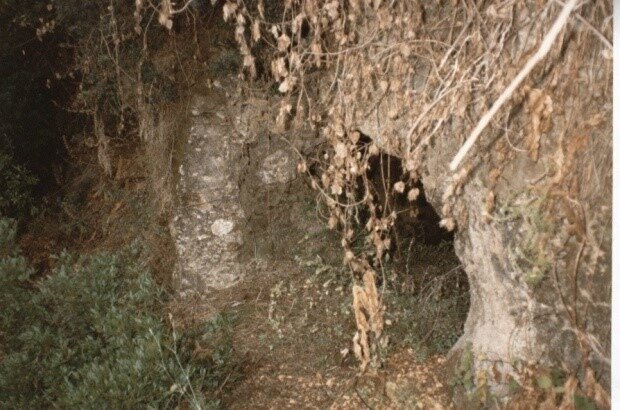
Entrance of Vallaretta Cave at Pignarelle with remains of its fortification wall.
The Basilica and Cave of the Altar
Across the stream stand the Basilica—with pillars, sleeping niches, and trilobed apse—and the Cave of the Altar, possibly an older Italic ancestor-cult sanctuary (Prof. Sarah Minuto).
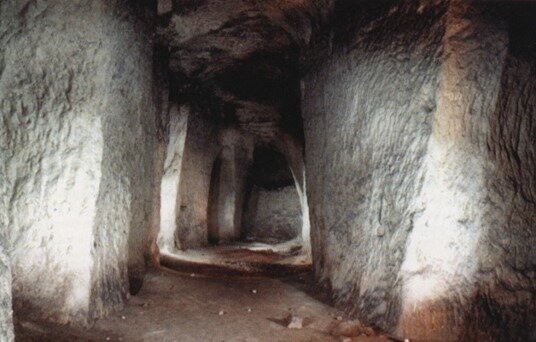
Interior of the rock-cut Basilica at Pignarelle showing sandstone pillars and vaulted corridors.
The Hegumen's Cave and Byzantine Sun
A finely carved lower cave displays a trilobed narthex, Greek cross, rock benches, unknown wall inscriptions, and a ceiling Byzantine Sun or labyrinth motif.
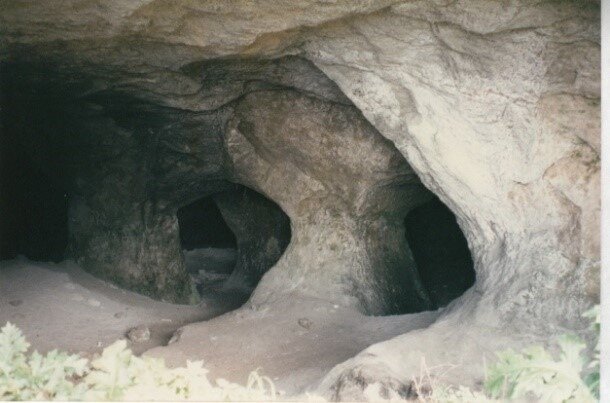
Upper chambers and carved details at Pignarelle.
Cave of Tunnels and Oral History
Eastward lies the Cave of Tunnels with a painted circular hall and burial niche. The 1991 testimony of Maria Grazia Todaro (b. 1908) confirms the caves served as WWII shelters and refutes the sand-quarry and 'Tarditi' myths, confirming the archival name Pignarelle.
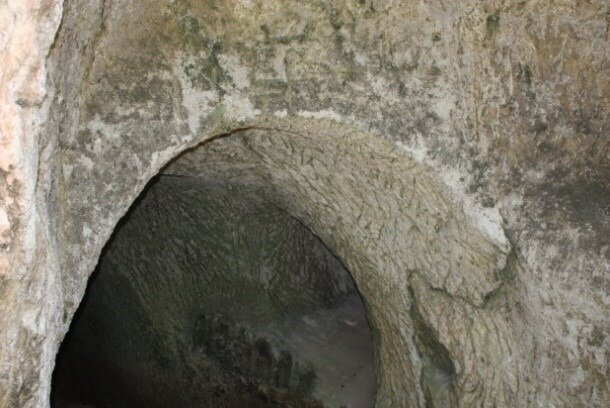
Sandstone galleries of the Cave of Tunnels in Pignarelle.
Heritage Protection
Proposed by Movimento Culturale San Fantino in 1996, Pignarelle was officially included in Palmi's 2017 municipal heritage plan.
Detail of the Pignarelle rock-cut cavities in Palmi.
Expert Assessments: Collet, Engels, Minuto, Curunis
Serge Collet (CNRS, 1991) compared Pignarelle to Cappadocia; Fr. Giacomo Engels (1993) noted sacred orientation and multi-period strata; Prof. Domenico Minuto (1993–95) linked it to Taureana's 591 AD refugees; Prof. Spiridione Curunis (1997) confirmed its oriented hypogeum basilica plan.
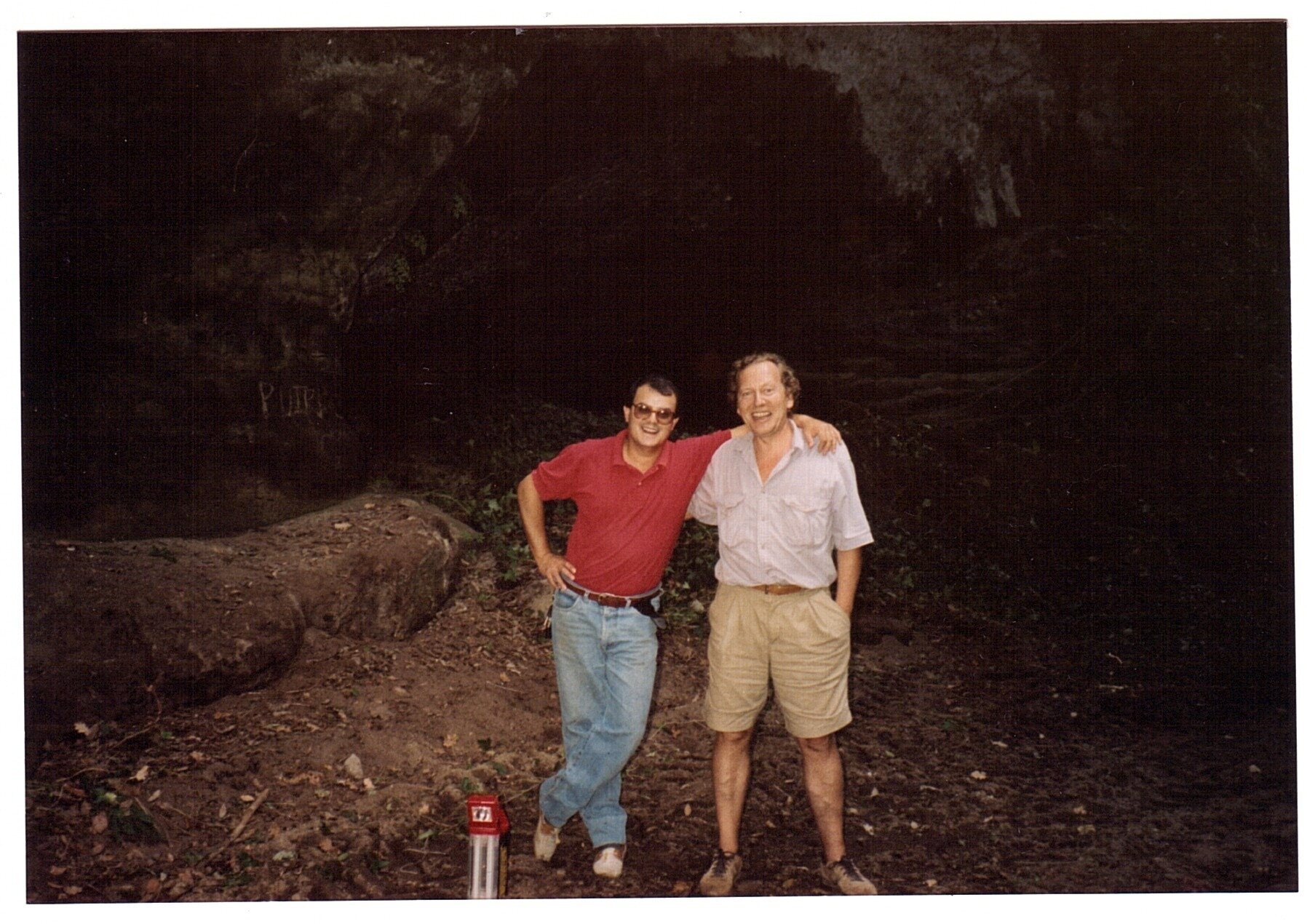
Domenico Bagalà and CNRS anthropologist Serge Collet at Pignarelle in 1991.