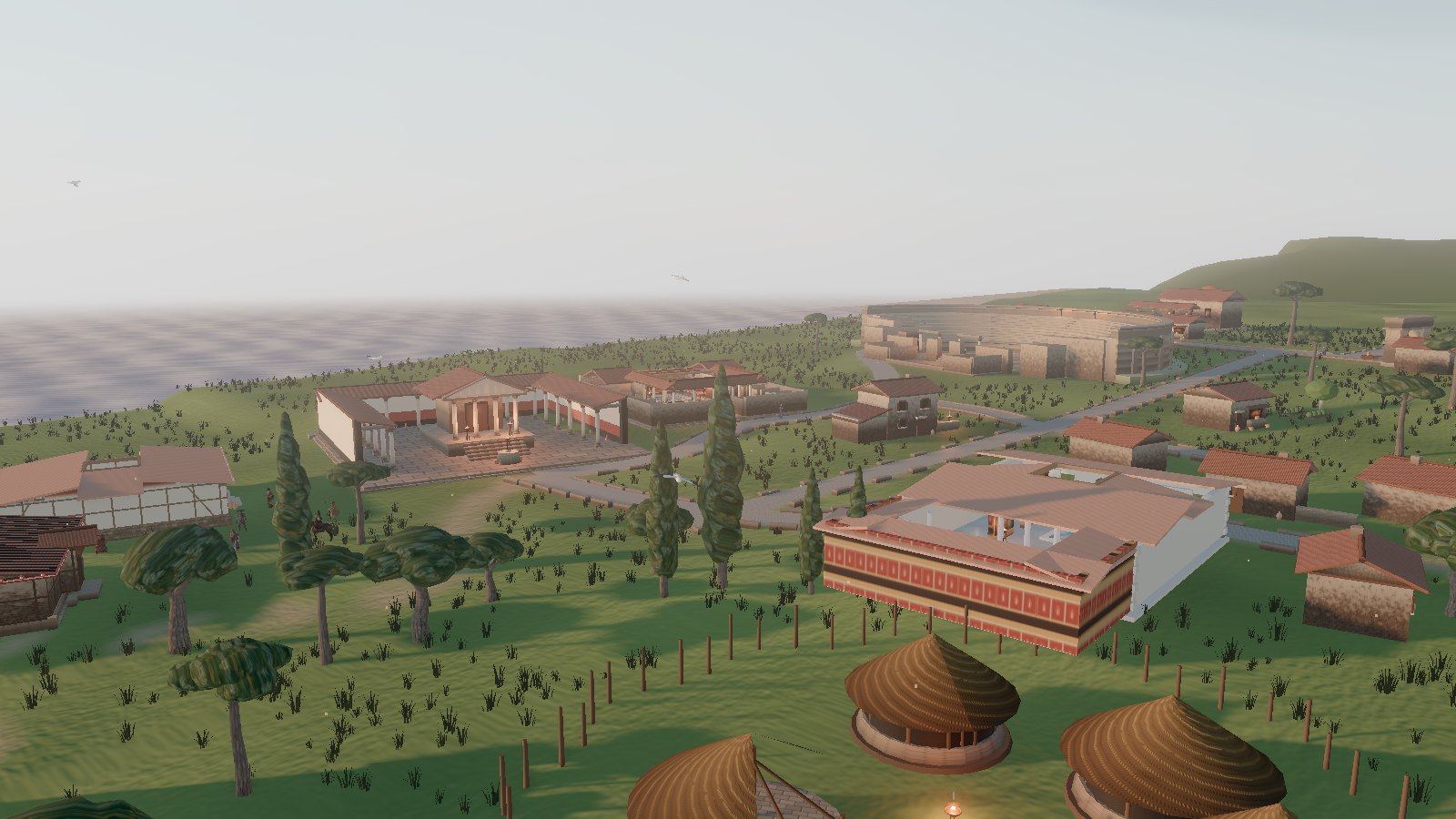
Archaeological Parks and Sites in Calabria: Complete Guide from Magna Graecia to the 3D Tour of Tauriana
From Sybaris and Capo Colonna to Scolacium, Locri Epizephyrii, Kaulon, Archeoderi and the Archaeological Park of the Tauriani in Palmi with our exclusive 3D Tour: the definitive guide to Calabria's greatest archaeological parks.
Calabria, Heart of Magna Graecia and Cradle of the Name Italia
Visiting the archaeological parks of Calabria means walking directly across the roots of Mediterranean civilization. Between the 8th and 6th centuries BCE, some of the wealthiest and most influential poleis of Magna Graecia rose along Calabria's Ionian and Tyrrhenian coastlines: Sybaris, Kroton, Locri Epizephyrii, Kaulon, Skylletion, Hipponion and Rhegion. Alongside Greek colonists lived ancient Italic peoples such as the Oenotrians, Tauriani and Bruttii, guardians of the inland mountains and the isthmus where, according to Aristotle and Antiochus of Syracuse, the name 'Italia' itself was born in honor of the mythical King Italus.
Unlike Italy's more crowded archaeological circuits, Calabria's parks offer an unhurried, deeply immersive experience: Doric temples perched above wild sea cliffs, Roman forums surrounded by centuries-old olive groves, early synagogues by the shore and excavations bathed in the light of the Strait of Messina.
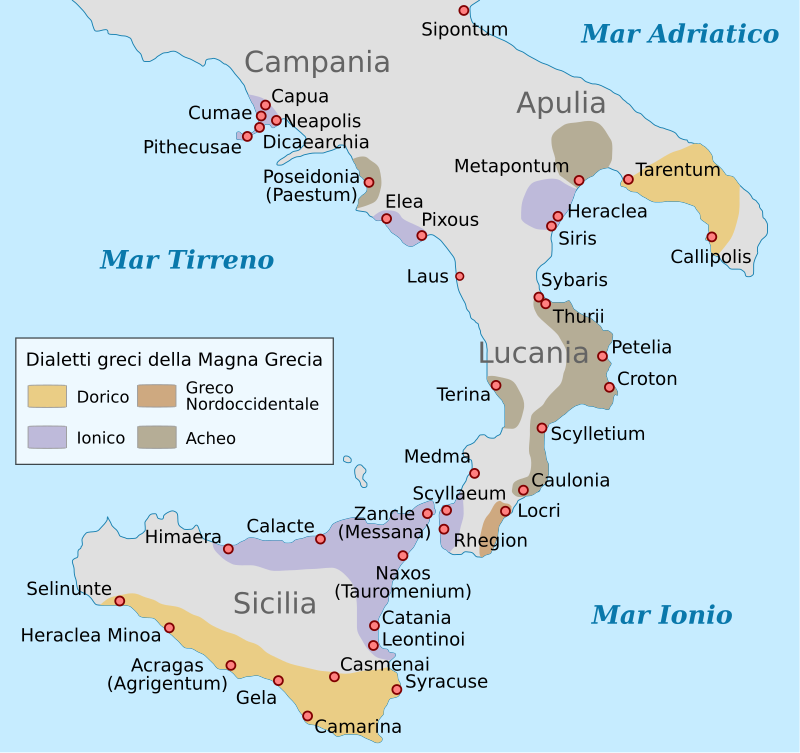
Ancient colonies of Magna Graecia between the Ionian and Tyrrhenian Seas: Sybaris, Kroton, Skylletion, Kaulon, Locri and Rhegion.
Archaeological Park of the Tauriani 'Antonio De Salvo' (Palmi) & Exclusive 3D Tour
Suspended on a panoramic plateau overlooking the Costa Viola and the Aeolian Islands, the Archaeological Park of the Tauriani 'Antonio De Salvo' in Taureana di Palmi (Reggio Calabria) is one of the most compelling sites on the Tyrrhenian coast. Over three thousand years of history coexist here: a Bronze Age settlement, the Italic city of the Tauriani (4th–2nd century BCE) with paved streets, a grand Roman domus with mosaics, a Hellenistic sanctuary and the medieval coastal watchtower (Torre di Pietrenere). Just steps away stands the Complex of San Fantino, housing the oldest early-Christian crypt in Calabria (4th century CE).
On Calabria Dreamin' you can explore the site even before you travel through our interactive 3D Tour dedicated to the Archaeological Park of the Tauriani:Explore the 3D Tour of Tauriana. A field-curated digital experience bringing Costa Viola's ancient heritage to travelers, students and researchers worldwide.
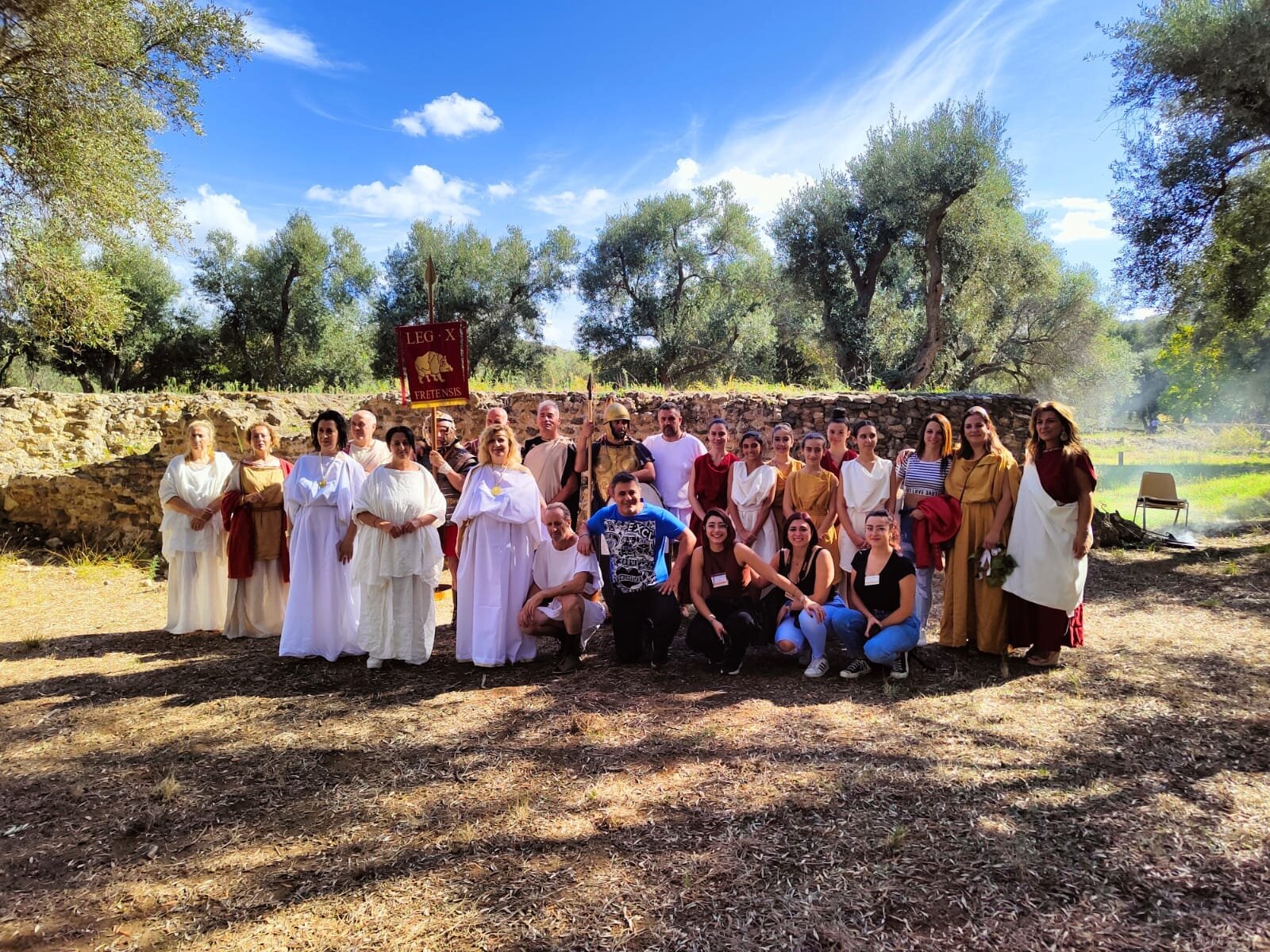
The Archaeological Park of the Tauriani in Taureana di Palmi, overlooking the Costa Viola and the Aeolian Islands.
Locri Epizephyrii and the National Archaeological Museum of Reggio Calabria (MArRC)
On the southern Ionian coast, the National Archaeological Park of Locri Epizephyrii preserves the Greek polis founded in the 7th century BCE, famous across the ancient world for adopting the West's first written law code drafted by Zaleucus. Spanning from the sea to the Mannella hills, the park reveals a Greco-Roman theater seating 4,500 spectators, the Ionic sanctuary of Marasà, monumental city walls and the Archaeological Museum displaying the celebrated Pinakes—terracotta votive tablets dedicated to Persephone.
To complete southern Calabria's archaeological journey, pair Locri with the National Archaeological Museum of Reggio Calabria (MArRC), home to the iconic Riace Bronzes, the Head of the Philosopher and treasures from Porticello, Medma, Metauros and Locri itself.
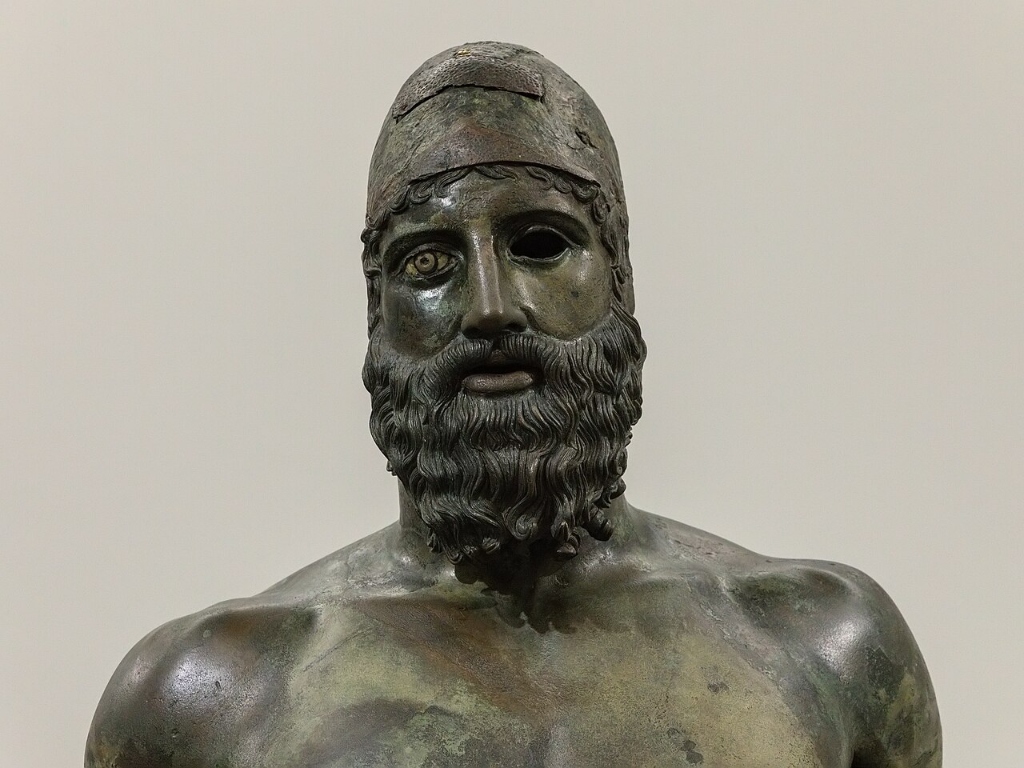
The Riace Bronzes at MArRC in Reggio Calabria, an unmissable pairing with the excavations of Locri Epizephyrii.
Capo Colonna Archaeological Park (Crotone) and the Temple of Hera Lacinia
Just outside Crotone, on the easternmost tip of the Lacinium promontory, rises Calabria's most iconic image of Magna Graecia: the sole surviving Doric column of the majestic Temple of Hera Lacinia, built in the 5th century BCE and originally crowned by 48 columns and a Parian marble roof. This was southern Italy's most revered sanctuary—a landmark for Greek sailors, Pythagoras' philosophical school in Kroton and even Hannibal, who erected a bilingual stele here before departing Italy.
Covering nearly 50 hectares of protected coastal headland, Capo Colonna Archaeological Park also preserves Building B, the Katagogion (ancient guesthouse for distinguished visitors), Roman baths with the dolphin mosaic and an Archaeological Museum exhibiting the golden Treasure of Hera.
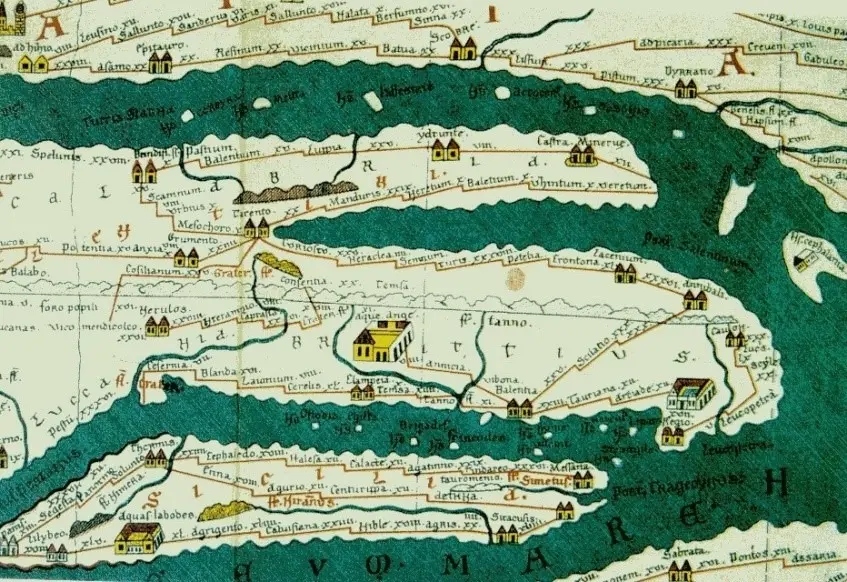
Ancient Roman road map of Calabria (Tabula Peutingeriana), charting ancient maritime and land routes to Kroton and Tauriana.
Scolacium Archaeological Park (Borgia): Ancient Olive Groves and Norman Grandeur
In the heart of the Gulf of Squillace at Roccelletta di Borgia (Catanzaro), Scolacium National Archaeological Park is arguably Calabria's most atmospheric site. Walking through a monumental grove of centuries-old olive trees brings you face to face with the soaring Norman Basilica of Santa Maria della Roccella, its unfinished red-brick apses framing the Ionian sky.
Following the paved decumanus of the Roman colony Minervia Scolacium (built over Greek Skylletion), you explore the Forum, Curia, Capitolium, aqueduct, a hillside Roman theater and the remains of the only known Roman amphitheater in Calabria. This is also the birthplace of Cassiodorus, the 6th-century statesman who founded the renowned Vivarium Monastery nearby.
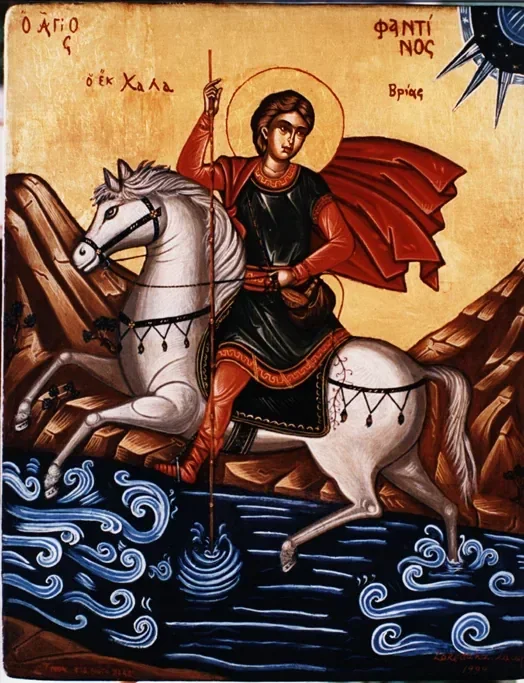
Early Christian and medieval layers in Calabria: from San Fantino's crypt to the Norman basilica of Scolacium.
Sybaris, Kaulon (Monasterace) and the Ancient Synagogue of Archeoderi (Bova Marina)
Three extraordinary sites round out Calabria's archaeological map, each holding a unique historical record:
- Sybaris Archaeological Park (Cassano all'Ionio, Cosenza): reveals three stacked ancient cities—legendary Sybaris (founded 720 BCE, synonymous with luxury), the pan-Hellenic colony of Thurii (planned by Hippodamus of Miletus with Herodotus among its citizens) and Roman Copia. Pair it with the National Archaeological Museum of the Sibaritide.
- Ancient Kaulon Archaeological Park (Monasterace Marina, Reggio Calabria): set directly on the Ionian beach, preserving the Doric temple basement and the celebrated Dragon Mosaic (3rd century BCE), one of the largest and best-preserved Hellenistic mosaics in Magna Graecia.
- Archeoderi Archaeological Park (Bova Marina, Reggio Calabria): along the Grecanic coast lies one of Europe's most remarkable archaeological discoveries—the 4th-century CE Synagogue with its Menorah mosaic floor, recognized as the second-oldest synagogue in Europe after Ostia Antica.
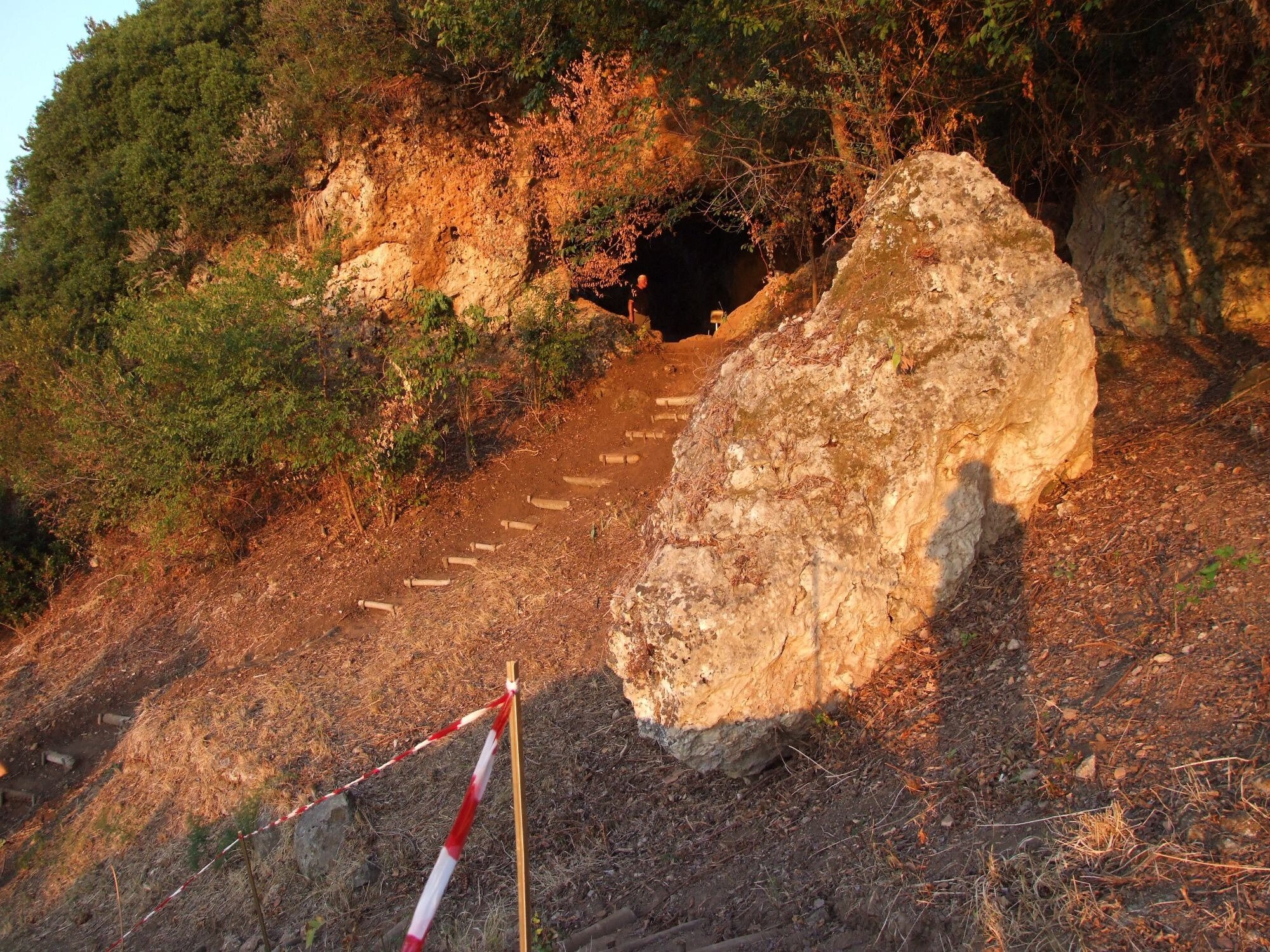
Ancient coastal settlements and Mediterranean heritage between the Ionian and Tyrrhenian Seas.
Practical Tips, Tickets and Planning Your Archaeological Itinerary
To make the most of an archaeological road trip in Calabria, split your journey into two routes—the Ionian Coast (Sybaris, Capo Colonna, Scolacium, Kaulon, Locri, Archeoderi) and the Tyrrhenian Coast & Strait (Tauriana in Palmi and MArRC in Reggio Calabria).
- Free admission on the first Sunday of the month: all state-run archaeological parks and museums participate in Italy's #DomenicalMuseo initiative with free entry on the first Sunday of every month.
- Best seasons to visit: spring (April–June) and early autumn (September–October) deliver golden light and comfortable temperatures for open-air walks.
- Sea + Archaeology pairing: nearly every park lies within 10 minutes of the sea, making it effortless to explore ruins in the morning and swim in the afternoon.
- Digital preview before you go: launch our interactive 3D Tour of Tauriana at https://tauriana.calabriadreamin.com and pair your cultural trip with an authentic countryside stay through our Calabria Agriturismi directory.
Frequently Asked Questions about Calabria's Archaeological Parks
What are the most important archaeological parks in Calabria?
Calabria's seven premier archaeological parks are Sybaris (Cosenza), Capo Colonna in Crotone, Scolacium in Roccelletta di Borgia (Catanzaro), Ancient Kaulon in Monasterace, Locri Epizephyrii, Archeoderi in Bova Marina and the Archaeological Park of the Tauriani 'Antonio De Salvo' in Palmi (Reggio Calabria).
Where can I take an online 3D Tour of a Calabrian archaeological park?
You can explore the Archaeological Park of the Tauriani in Palmi free online through Calabria Dreamin's interactive 3D Tour at tauriana.calabriadreamin.com, complete with spatial reconstructions and Costa Viola historical notes.
When is admission free at Calabria's archaeological parks?
All Italian state archaeological parks and museums offer free entry on the first Sunday of every month under #DomenicalMuseo, while EU citizens under 18 enjoy free admission year-round.
What is the oldest archaeological site in Calabria?
Long before the 8th-century BCE Greek colonies, Calabria was home to major prehistoric sites: the Grotta del Romito in Papasidero (Cosenza) preserves one of Europe's finest Paleolithic engravings (the Bos Primigenius, ca. 12,000 years old), while Tauriana and Torre Galli document thriving Bronze Age settlements.
How much time should I budget for Scolacium, Capo Colonna or Locri Epizephyrii?
Plan between 1.5 and 2.5 hours for each major archaeological park (Scolacium, Capo Colonna, Locri, Sybaris or Tauriana), including its adjacent Archaeological Museum or Antiquarium.
Where are the Riace Bronzes displayed?
The Riace Bronzes are exhibited in a dedicated climate-controlled gallery on the ground floor of the National Archaeological Museum of Reggio Calabria (MArRC), Piazza Giuseppe De Nava, open Tuesday through Sunday.
Antonio Magazzù
Food Technologist · Independent Researcher · Founder Studio Anthos Alba
Born in Palmi on the Costa Viola and graduated in Food Science & Technology at the Mediterranea University of Reggio Calabria, Antonio blends historical research, gastronomic heritage, and AI innovation to share authentic Calabria worldwide.
Amazon Author · Creator of the 3D Tauriana Archaeological Tour
Get hidden itineraries, villages & weekend festivals
One curated email per week with new guides, upcoming events, and real Calabrian makers. Zero spam.
By subscribing you accept our Privacy Policy. Unsubscribe anytime.